Category archive

Frankfort Municipal Utilities

Clinton County Commissioners Table Data Center Vote, Split Over Last-Minute Data Center Site Visit
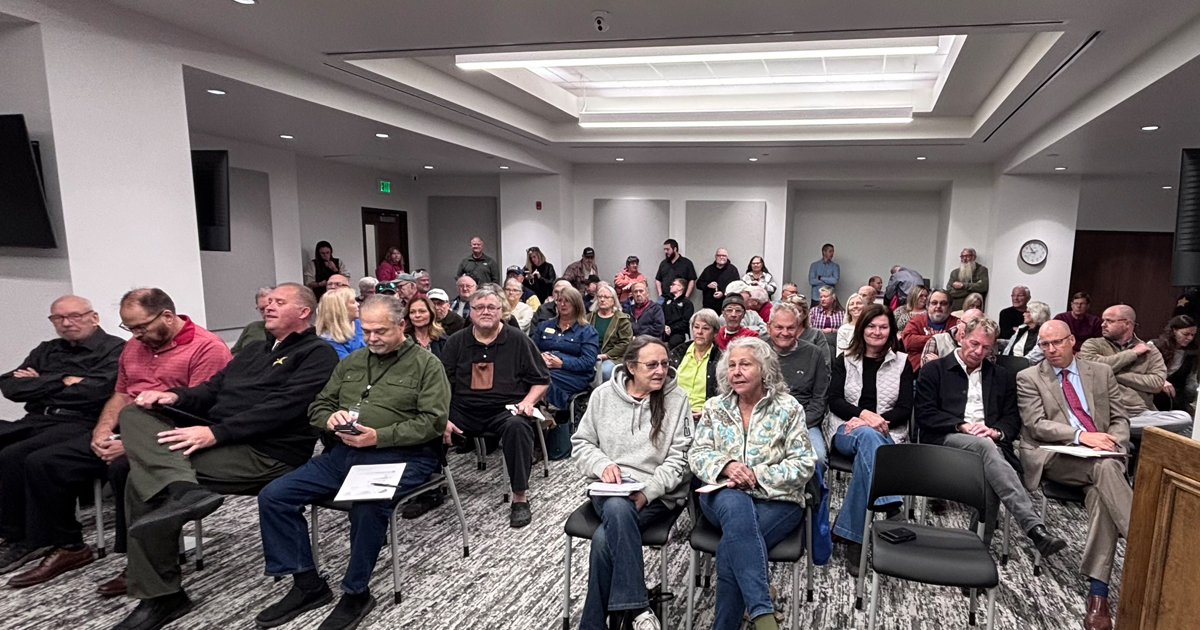
Amid intense local opposition and a rapidly approaching legislative deadline, Clinton County commissioners are undertaking urgent efforts at due diligence concerning a massive proposed data center project, including a planned trip to an operational site in New Jersey. The controversy centers on the proposed rezoning of agricultural land for a project being developed by DataOne and Logistix partner Doug Swain. (photo/Brett W. Todd)

CLINTON COUNTY, Ind. (November 5, 2025) — Amid intense local opposition and a rapidly approaching legislative deadline, Clinton County commissioners are undertaking urgent efforts at due diligence concerning a massive proposed data center project, including a planned trip to an operational site in New Jersey. The controversy centers on the proposed rezoning of agricultural land for a project being developed by DataOne and Logistix partner Doug Swain.

The urgency stems from the fact that the commission has a 90-day period to act on the rezoning recommendation; if no decision is reached by approximately November 18th, the request dies. The time constraints have fueled commissioner disagreement over the feasibility of adequate research.

The New Jersey site visit, scheduled for today, Wednesday, following the Tuesday commissioner meeting, targets a DataOne development located in Vineland, New Jersey. Scott Wolf, an Indiana businessman associated with Logistix, presented DataOne as the company intending to come to Clinton County. The purpose of the trip is to allow officials to meet the real people on the other end of the transaction and gain first-hand information on infrastructure and community impact.

“We’re going to take a number of people out to do due diligence [Wednesday],” Wolf stated. The delegation plans to speak with officials in Vineland regarding power rates, water consumption, and noise, and to “actually meet the real people on the other end who are to do the development.”

The flight manifest of the trip, obtained by Clinton County Today, reflects a broad cross section of Clinton County and City of Frankfort elected officials, appointed officials as well as employees along with community members. The manifest identifies the following individuals as scheduled to make the trip: Kevin Myers, Bert Weaver, Alan Dunn, Carol Price, Todd Corrie, Dan Sheets, Liz Stitzel, Mary King, Tammy Sander, Russ Kaspar, Kimberly Black, Jeff Chynoweth, Steve Beardsley, Clarence Warthan, Robert Joe Stevens, Eric Woods, Joe Palmer, John Virtue, and Shan Sheridan.

Two commissioners identified in the manifest voiced support for participating in the trip, emphasizing the need for comprehensive research before making a final determination.

Commissioner Bert Weaver confirmed his intent to travel, stating he felt obsessed with the issue and was still gathering information. “I am going on the trip to New Jersey tomorrow because I want to find out this stuff,” he said. He noted that while the project was handled poorly initially, he is “not prepared to make a decision today.”

Another commissioner, Commissioner Kevin Myers, who had previously been wary of the project, explained that communication with the New Jersey location had altered his perspective. “We have an opportunity to visit a like plant that’s going there. We have an opportunity to visit with the mayor. We have an opportunity to meet with the commissioners of that location. We have an opportunity to see and listen to the people They’re there,” he commented, stressing the importance of doing their due diligence before a vote.

However, Commissioner Jordan Brewer, who has been highly critical of the developer’s handling of the process, strongly disagreed with the value of a rushed, last-minute trip.

“I’m not doing that for the record,” Brewer said regarding the trip. He argued that attempting to complete the necessary research in the time remaining is futile, given the project’s scope. Brewer cited new estimates suggesting the project could be worth as much as $50 billion—three times the size of the nearby LEAP project—making a decision by November 18th virtually impossible.

“How can you then do enough due diligence from now until November 18th for a size and scope of a project this large? It’s just not possible,” Brewer asserted. He believes that undertaking due diligence under current circumstances “provide no benefit.”

The board ultimately voted 2-1 to table the resolution, with Brewer being the ‘no’ vote, continuing to take no action on the rezoning request and allowing the remaining days of the 90-day period for research to elapse. If they fail to act by the deadline, the rezoning request will automatically expire.

Editor’s note: Dan Sheets provided a statement that he “did not attend the meeting in New Jersey today.”
Will The Digital Frontier Come to Frankfort? A Call for ‘Suspension of Disbelief’

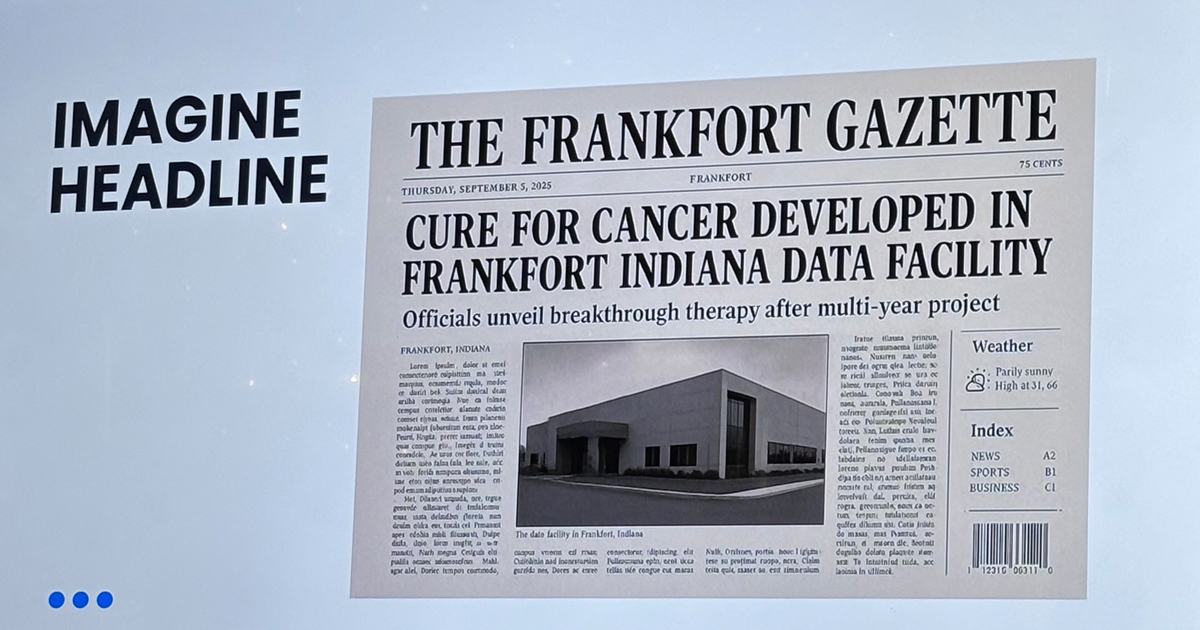
Doug Swain, president of Logistix, who at a recent public gathering held at Willow Creek Barn on September 15th, shared his vision on the rezoning of 154 acres north of ConAgra for a massive data center development. His pitch isn't just about servers and fiber optics; it's about a headline-grabbing future: "Cure for cancer developed in Frankfort, Indiana data facility." While he admits this won't happen next year, he puts forward that as AI evolves into quantum computing, these facilities are "widely expected to generate cures for some widely known diseases, medical advances, advanced technology." It sounds like science fiction, but Swain insists it's "not really beyond the realm of possibility." (photo/Brett W. Todd)

Frankfort, Ind. (September 29, 2025) – The air in Clinton County, usually thick with the scent of agriculture and the rhythm of rural life, is now buzzing with a different kind of current: the promise of a digital revolution. Doug Swain, a seasoned developer with a vision as expansive as the Indiana cornfields, stands at the forefront, pitching a future where Frankfort isn’t just a dot on the map, but a nexus of quantum computing and artificial intelligence. But like any bold venture, this one comes with a chorus of questions, concerns, and a healthy dose of skepticism from a community wary of trading their peace for progress.

Swain, president of Logistix, who at a recent public gathering held at Willow Creek Barn on September 15th, shared his vision on the rezoning of 154 acres north of ConAgra for a massive data center development. His pitch isn’t just about servers and fiber optics; it’s about a headline-grabbing future: “Cure for cancer developed in Frankfort, Indiana data facility.” While he admits this won’t happen next year, he puts forward that as AI evolves into quantum computing, these facilities are “widely expected to generate cures for some widely known diseases, medical advances, advanced technology.” It sounds like science fiction, but Swain insists it’s “not really beyond the realm of possibility.”

The Hum of Progress: A Vision of Prosperity

What exactly are data centers? Swain describes them as being “most like industrial warehouses” but housed with “a lot of processing units, GPUs, CPUs” that process vast amounts of data. They are the silent powerhouses behind everything from your daily ChatGPT query to cloud services like Google, Apple, and Facebook. The companies involved are “hyperscalers” like Amazon (AWS), Meta (Facebook), Google, and Microsoft, or “collocation” facilities serving multiple enterprise users. These are not small players; companies like Digital Realty boast market caps of $56 billion.

The economic promise, according to Swain, is substantial. An economic impact analysis, based on similar projects, projects nearly $1.5 billion invested to build 1.4 million square feet. Over a quarter-century, this could generate $265 million in gross property taxes and $6.3 million in new local income taxes. The project is slated to create 170 direct full-time positions within the data center, with an average wage of $85,000, almost 40% higher than Indiana’s average. Beyond that, over 300 indirect jobs and a thousand-plus construction jobs are anticipated.

“This is a new industry sector to Indiana that’s already advanced elsewhere in the country, and we have a chance now to change our game,” quoted a director of economic development from Morgan County, Indiana, describing a similar project. Swain points to examples in Hamilton and New Albany, Ohio, where mayors and economic directors lauded “significant” economic impact, “real growth not just in jobs but in the tax base.”

Furthermore, the proposed site lies within a TIF (Tax Increment Financing) district, meaning the generated property tax revenue could be funneled by the county’s redevelopment commission into infrastructure that supports housing development, a critical need exacerbated by property tax reductions from Senate Bill One. This, Swain believes, would encourage data center employees, who require 24/7 proximity to their work, to live locally.

Beyond the raw numbers, these companies are presented as committed community partners. Google, for instance, has given over $14 million in philanthropic grants in Ohio, focusing on STEM education and workforce development. AWS and Microsoft have similar programs, aiming to train local talent for high-paying tech jobs that are “expected to be there for a long long time.”

“We think it’s a game changer for the community,” Swain concludes, envisioning “quality development,” “high paying jobs,” and a “clean industry” that will lead to “other housing, retail, other opportunities” while maintaining Frankfort’s charm.

Shadows of Uncertainty: The Community’s Unanswered Questions
But the vision of a gleaming digital future casts long shadows of concern for Frankfort’s residents. At a public meeting, the mood was tense, with one resident openly declaring, “You sound like a used car salesman. I’m not buying your car.” The skepticism is palpable, rooted in fears about resources, health, and the unknown.

The Power Problem: A central concern revolves around energy. While Swain assures that the project will be powered by a dedicated transmission line and a 15-year-plus power agreement, with no costs anticipated to be borne by the community for utilities. Residents recall comments from Indiana’s governor about power grid strain and the possibility of nuclear reactors. Swain swiftly dismisses the nuclear option as “extremely expensive” and “not practical,” citing heavy regulation and logistical challenges. He clarifies that the grid is heavily regulated by MISO (Midcontinent Independent System Operator) to prevent strain and that utility companies are actively seeking clean energy solutions like natural gas and fuel cells to supplement the grid. Rick Gunyon, a Frankfort Utility Service Board member, corroborates this, stating, “We have more than enough electrical energy available for this data center and then some well into the future.” The location even offers redundancy with two different electric companies, Frankfort Municipal Power and Tipmont, and the option for natural gas generators as backup.

The Water Worry: “We hear a lot about the water,” Swain concedes, acknowledging widespread concerns. Residents are troubled by reports of data centers consuming “a million gallons or 2 million gallons a day.” Swain argues that these figures are based on older designs. The current “trend in data centers is to move away from these water intensive towers towards more sustainable closed loop system that recirculates and reuses the water,” with a goal of “near zero” water utilization. He cites examples like Vantage and Aligned data centers that use “highly efficient closed loops water systems” or “waterless cooling technologies.” However, residents question if these advanced systems will definitively be implemented in Frankfort and what happens during hot summer days. There’s also anxiety about potential aquifer depletion, especially for those outside city water limits who rely on private wells. Swain states they are working with the city and county to ensure comfort with water usage, and the utility company will monitor and ensure capacity isn’t harmed.

The Noise Nuisance: Another significant concern is constant noise. Residents report that similar facilities in other towns cause “non-stop” noise, leading to health issues like “anxiety and thousands of people” and even physical illness. Swain’s proposal suggests a 65 dB noise level, which he equates to “street traffic when you’re standing on a corner.” Mitigation efforts include increased setbacks, landscaping, and mounting around residences.

Jobs and Tax Breaks: The promise of 170 direct jobs is met with skepticism, with one resident claiming centers house only “12 to 50” people. Swain clarifies that 170 is for a fully operational facility of this specific type, not smaller enterprise data centers. The idea of “thousand plus construction jobs” is also questioned, given the common practice of bringing in out-of-state specialized contractors. Swain counters that while general contractors might be from out of town, they employ local staff and subcontractors for various trades, and workers will spend money in the local economy.

The mention of tax incentives further fuels resident frustration. While the state offers a “data center sales tax exemption” for 25-50 years on equipment, local property tax abatements are also on the table. Residents question how the community will benefit if these centers receive substantial tax breaks, essentially “stealing from us anyway” regarding state sales tax. Swain explains that local property tax abatements (typically 10 years, 50% reduction) are a local decision and part of a competitive landscape to attract investment. He reiterates the TIF district’s role in local infrastructure development as a primary benefit.

Transparency and Health: The “chicken and egg” problem of requiring zoning approval before revealing a specific buyer deeply frustrates residents, who want to “know before they make the vote.” Concerns about potential health issues, including cancer among workers and nearby residents, were also voiced, though Swain said he had “not seen any information” on such concerns with data centers.

A Community at a Crossroads

Rick Gunyon, the utility board member and long-time resident, offers a historical perspective, reminding the community of past anxieties about new technologies like McDonald’s or the railroad. “We’ve had this conversation before. The subjects have changed over the years and it’s very natural for everyone to have different points of view of this,” he says, encouraging “suspension of disbelief” and seeing the project as an opportunity.

Doug Swain and his team are attempting to navigate a complex landscape, balancing the allure of a high-tech, high-revenue future with the deep-seated concerns of a community clinging to its character. The meetings are ongoing, the questions are plentiful, and the answers are, for many, still insufficient. Frankfort, like many communities across the country, stands at a crossroads, weighing the tangible risks against the tantalizing promise of the digital frontier. Whether it’s a cure for cancer or simply a new economic engine, the decision will shape the community’s identity for decades to come.

Next Up

The Clinton County Commissioners will have the final say on the rezoning request. By Indiana law, the commissioners were presented with the Area Plan Commission’s “neutral” recommendation at its September 16th meeting and have 90-days to make a decision. Commissioners president Jordan Brewer stated that the topic will come up at either the first or second meeting in October. His remarks came while speaking to community member at Paul Phillippe Resource Center on September 10th.

The commissioners are next scheduled to meet on October 7th at 9am in the Courthouse.

Frankfort Utilities Board: Unique Aquifer Discovery

Frankfort Utilities Board: Unique Aquifer Discovery
A significant development emerged from an aquifer study, which is expected to be finalized by September. Engineers conducting pump tests discovered a rare hydrological phenomenon where the community sits on two completely independent aquifers, separated by approximately 150 feet of clay.

FRANKFORT, Ind. (September 15, 2025) – The Frankfort Utility Service Board voted to uphold its 4 p.m. meeting schedule, prioritizing staff convenience, while also hearing about a “very unique” aquifer study revealing independent water sources. The board addressed a range of operational and administrative matters, including water utility updates, and ongoing infrastructure projects.

The decision to retain the 4 p.m. meeting time came after an inquiry raised concerns about public accessibility due to work schedules. Board members acknowledged the feedback but emphasized the efficiency gained by allowing employees to attend directly from work, avoiding a return trip for a later meeting. They also highlighted that meetings are live-streamed and archived online, and that written statements or special evening meetings could accommodate public input. A motion to continue with the 4 p.m. schedule passed, framed as aligning with “the voice of the business.”

Unique Aquifer Discovery Boosts Water Outlook

A significant development emerged from an aquifer study, which is expected to be finalized by September. Engineers conducting pump tests discovered a rare hydrological phenomenon where the community sits on two completely independent aquifers, separated by approximately 150 feet of clay. “When they pump from the top, the bottom one levels rise. When they pump from the bottom aquifer, you would think that the top aquifer would lower, but it actually increases in recovers,” Todd Corrie, general manager of FMU explained. This “very, very good news” indicates robust and independent water resources. The water plant currently operates at around 46% of its 9 million gallons per day capacity, with a “firm capacity” of 7.2 million gallons per day, allowing “a lot of headroom” for future needs.

Water Works Reports and Public Safety Warning

The Water Works department reported consistent operations, with a monthly average of 3,672,350 gallons for August, and a high day of 4.27 million gallons, comparable to figures from the past three years. Efforts to upgrade infrastructure include the replacement of 133 residential meters in just over two weeks and ongoing work to address difficult-to-shut-off old iron lines.

A public safety alert was issued regarding an individual in a van on the southwest side of town, reportedly going door-to-door telling residents their water was unsafe and offering to perform checks. The board clarified that this is not a waterworks or utility-identified individual and advised residents not to allow them on their property.

Infrastructure and Operational Updates

Preparations are underway for the annual truck testing scheduled for Monday, which will assess the dielectric strength of booms and “hot sticks” used in electrical work. Ongoing projects include full change-outs on the east side of the county and the replacement of portal cutouts prone to cracking.

The board addressed a question about utility poles being used to hold stop signs at some intersections, noting this practice often occurs where space is limited for standalone stop sign poles.

On the administrative side, the utility sent out 9,986 bills in August, welcomed 52 new customers, and issued 1,777 disconnect notices. A quote is being sought for cloud-based video recording to provide backup beyond the current 10-day limit, which is insufficient for addressing long-standing customer complaints. The implementation of an Interactive Voice Response (IVR) system for payments is anticipated by the end of the month, offering customers more direct payment options.

Frankfort Utility Board Dispels Water Misinformation, Eyes Significant New User South of NHK at I-65

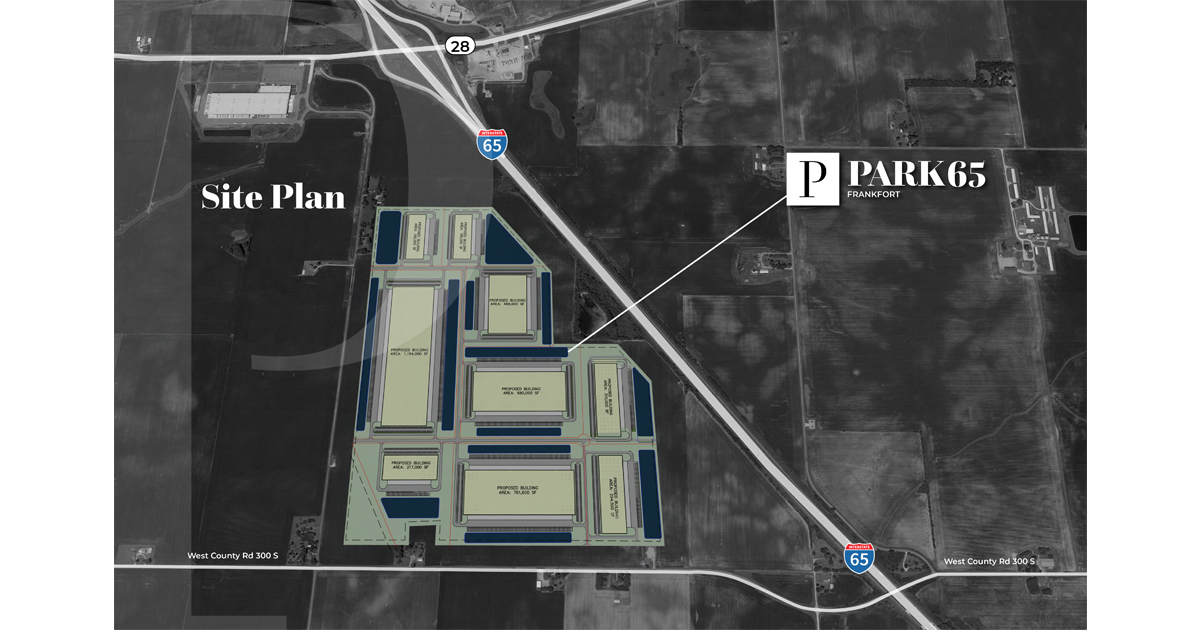
An illustration of a proposed hydroponics development in Clinton County, Indiana. (Illustration/LoopNet "Park 65")

FRANKFORT, Ind. (August 4, 2025) — The Frankfort Utility Service Board is advancing discussions for a new, sizable industrial development slated for an area south of NHK, near I-65 and State Road 28, while also actively working to counter what board members describe as “misrepresented facts” circulating on social media regarding the city’s water capacity and aquifer health.

Discussions regarding the new, potential developer have been ongoing for approximately 18 months to two years according to Todd Corrie, general manager of Frankfort Municipal Utilities. Corrie added the project is anticipated to be a “good electric user” and a “good water user,” though it will have “very little wastewater user” requirements. The utility is currently awaiting further information to determine the size of the necessary substation, which the developer will be responsible for installing.

A source familiar with the project confirmed the proposed land is the titled “Park 65” on LoopNet and would be developed for a single user. The LoopNet “property facts” reveal a total of 9 separate buildings in various sizes totaling 4.3 million square feet on 400 acres of land situated between County Road 800 west and I-65 on the west and east respectively with NHK to the north and County Road 300 South to the south. The listing first appeared on LoopNet on January 12, 2024.

The source added the property would be developed for a hydroponics grower of lettuce. The United States Department of Agriculture defines hydroponics as “the technique of growing plants using a water-based nutrient solution rather than soil, and can include an aggregate substrate, or growing media.”

Final determination on the proposed project has yet to be made and would first have to receive approvals from the various county boards.

Concerns about water usage and utility capacity, particularly in relation to potential data center developments, have gained traction on social media according to board members. In response, the board has committed to an “engineering-based response based on the facts” rather than an emotional one. They plan to conduct a “due diligence evaluation” by assessing developers’ projected utility needs (water, electric, wastewater treatment) against existing capacities. The ultimate goal is to publish a “case study or update” for the public, detailing Frankfort’s utility situation and the projected usage by new developments.

Corrie shared current water usage data with the board. The water plant’s rated capacity is 9 million gallons per day, with a firm capacity of 7.2 million gallons per day to account for equipment failures. Over the last 18 months, the average pumping rate has been 3.78 million gallons per day, with the highest monthly average recorded in August 2024 at 3.908 million gallons. The three highest single-day pumping rates in the same period were 4.585 million gallons on September 26, 2024, 4.4 million on July 2, 2024, and 4.3 million on July 24, 2024. Corrie added the current usage operates at just over half of the firm capacity. The five largest existing customers collectively average just over 2 million gallons per day.

Regarding the aquifers, an aquifer study conducted last year confirmed that a “significant amount of untouched water available” exists beneath the city. Board members clarified that aquifers are “continually replenished” and do not contain a finite amount of water. The area benefits from two aquifers, one approximately 160 feet deep and another around 300 feet deep. This abundance supports the board’s belief that there is “plenty of water available” for future industrial, commercial, and residential development. The water is also noted for its “very high quality” and is inexpensive, with only Tipton, Indiana, having lower rates. Corrie shared FMU water rates are among the lowest 1-2 percentile statewide for water rates.

The board reiterated that aspects like light pollution, noise pollution, and groundwater contamination fall outside their purview and are governed by county ordinances, the Indiana Department of Environmental Management (IDEM), and the federal EPA. The board intends to provide the promised due diligence evaluation and case study/update in a structured manner, acknowledging that it will take time to compile.

Frankfort Mayor Judy Sheets: ‘I’m doing my due diligence. I’m doing my research.’

Frankfort Mayor Judy Sheets confirmed the proposed data center project remains in its preliminary stages, with the city actively conducting "due diligence" to assess its potential impact on the community. Sheets emphasized that despite public speculation, no official agreements or paperwork for annexation have been presented to the City Council.

FRANKFORT, Ind. (July 22, 2025) – Frankfort Mayor Judy Sheets confirmed the proposed data center project remains in its preliminary stages, with the city actively conducting “due diligence” to assess its potential impact on the community. Sheets emphasized that despite public speculation, no official agreements or paperwork for annexation have been presented to the City Council.

Mayor Sheets provided the update after Monday’s Utility Service Board meeting.

The Mayor highlighted that the city’s focus is on understanding the financial implications of the project, including how Indiana’s Senate Bill 1 (SB1) will affect the budget in the coming years, and clarifying the impact of a Tax Increment Financing (TIF) area on land requesting voluntary annexation into the city. While finances are a significant consideration, Sheets noted that “it’s not all about the finances,” as the city is also evaluating other potential effects on Frankfort and Clinton County.

A specific parcel of land, already within Frankfort city limits and adjacent to Conagra, is a key component of the proposed development. The developer has successfully obtained a variance from the Board of Zoning Appeals (BZA) to permit a data center on this land. This specific portion alone is touted as a $1.7 billion investment. Furthermore, the utility service board has issued a “will serve” letter for this site. Despite this, Mayor Sheets stated she doesn’t know if the developer would “even move forward” with just this parcel if the larger annexation request fails.

Sheets also made it clear that there has been “no talk of any abatements, any incentives” from the developer. She noted that the city conveyed “pretty well told to them from the beginning we’re not interested in that type of a thing”. This stance is influenced by a previous “long abatement” granted to Conagra.

Key points regarding the project’s current status:
* The city does not yet know the identity of the end user for the data center, whether it be a major tech company like Meta, Alphabet, Oracle, or Amazon.
* The land for the broader project has not yet annexed or heard before the city plan commission.
* A required fiscal plan as part of annexation has not been submitted to the council.
* Mayor Sheets expressed frustration with public perception that decisions have already been made, stating, “we have no official agreements, no official paperwork has come before the Council for annexation”.

The Mayor anticipates a clearer understanding of the project’s future direction “after city plan commission” hearing Wednesday, July 23 at 5:30 pm.

You can read the interview below. The interview was edited for clarity.

Clinton County Today: Can you give a brief overview of where the proposed data center project stands?

Frankfort Mayor Judy Sheets: I’m doing my due diligence. I’m doing my research. I’m trying to figure out the financial impact on your city. And you know other things that this might make happen or not happen for a city.

So I think it’s important that people just realize that we are always looking out for the best of our community. Sometimes it comes a little more quickly than we expected and so I have a lot of work I’m trying to work on to make sure – like I said – we’re doing our due diligence. We want to make sure that we’re making the right decision.

CCT: The city council recently had a work session with Reedy Financial. What type of impact might this project have on the city’s budget?

Mayor: I think what we’re looking at right now, and the reason why we have Reedy at the work session was so that we can realize how SB1 is going to affect us not only next year, but the years thereafter.

And you know, we never know things could change, who knows, but I think that that’s what we’re looking at right now.

Also, part of that is a TIF area for the county. So I want some clarification on that. What effect will that have on the city as well? So there’s a lot of things to look at, you know, and it’s not all about the finances. It’s all sort of the other things that could affect our city or our county depending on what happens with the annexation.

CCT: One part of the proposed data center is land that is currently within the city limit and is next to Conagra. The developer went in front of the BZA and asked for a variance so a data center could be placed on that land and received the variance. Could a data center be built on the land even if the request for the 700 acres received a negative recommendation from the city plan commission or the land fails to be annexed in by the city council? There’s still some options?

Mayor: Yeah, I guess there is. I mean, because they did get the variance. So right now that land is in the city. So, you know, it depends. Would they even move forward with it. I don’t know if they could move on into the next phase. I don’t know.

CCT: The developer stated that portion alone would be a $1.7 billion investment to the city, seems rather
significant, already inside the city, and it’s received its variance to put a data center there. The utility service board has given their “will serve” letter to it.

Mayor: I want to clarify something. There has been no, no talk of any abatements, any incentives. Nothing like that. They’ve never even asked that. I mean, but I think it was pretty well told to them from the beginning we’re not interested in that type of a thing, you know, right now, because as we know, Conagra, got a long abatement, a nice abatement. And so I think we’ve let them know right off – this is not gonna be the same situation here.

CCT: I would imagine it’s difficult to even say yes to an abatement when you don’t know who the end user will be whether it’s Meta, Alphabet, Oracle or Amazon. It’s hard to say who you’re going to work with.

Mayor: At this point we don’t even know and also it’s my understanding that that land has not been transferred over. I wish people would realize, they all have their opinion that we’ve already decided that we know it, but, we have no official agreements, no official paperwork has come before the Council for annexation.

They have to have a fiscal plan. None of this has come to the council at all. I mean, it’s in so much of a preliminary state right now, but everybody has all this stuff – ‘how we’re all lighting our pockets or how we know this or that’ – and we don’t.

After city plan, I think we’ll have a better idea depending on what they do.

Frankfort Utilities Approves Non-binding Power Agreement for Potential Data Center

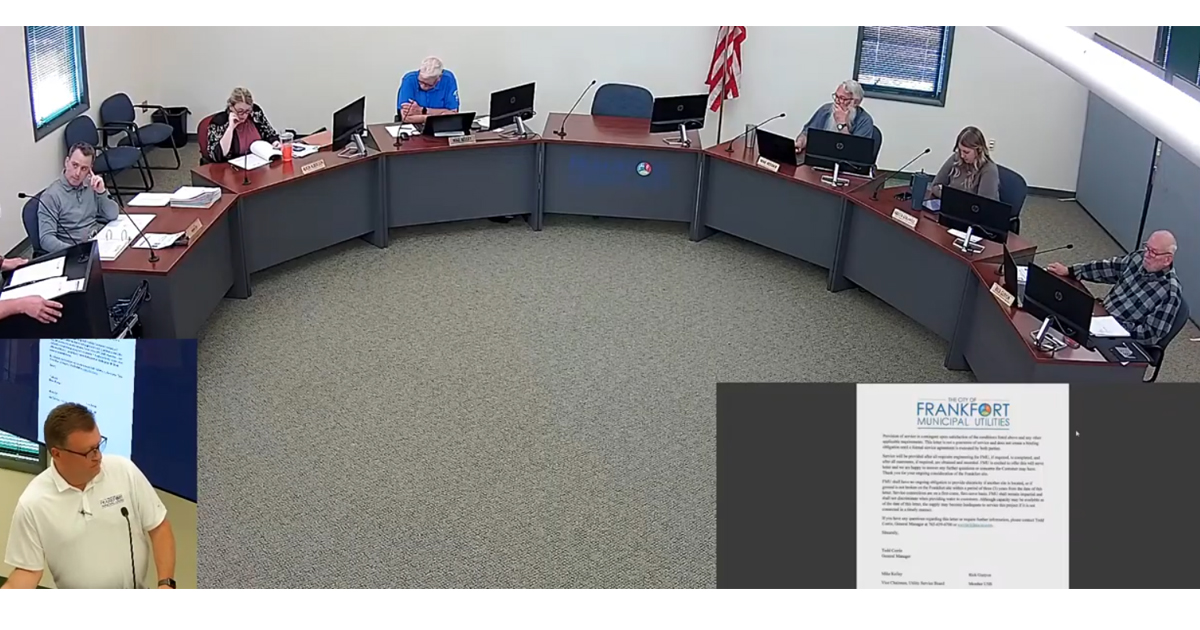
A screen capture of a Frankfort Utility Service Board meeting conducted on May 19, 2025 where the members gave its approval to a non-binding "will serve" letter for a prospective large data center, signaling the municipal utility's capability and willingness to provide up to 300 megawatts of electrical capacity to the site.

FRANKFORT, Ind. (July 19, 2025) – The Frankfort Utility Service Board (USB) has given its approval to a non-binding “will serve” letter for a prospective large data center, signaling the municipal utility’s capability and willingness to provide up to 300 megawatts of electrical capacity to the site. The vote took place during a May 19, 2025 meeting with Frankfort Mayor Judy Sheets in attendance.

Todd Corrie, General Manager of Frankfort Municipal Utilities, made the request on behalf of the developer, Logistix. The “will serve” letter is essential for the developer to demonstrate to investors that they are “shovel ready,” a necessary requirement to move forward with their process.

However, the utility’s commitment to serve is contingent upon several conditions, ensuring the agreement remains non-binding if these are not met, according to the USB and City of Frankfort attorney Alicia Albertson:
* The execution of all agreements between the developer and Frankfort Municipal Utilities.
* The developer’s donation of land for a substation and the execution of a land contribution agreement.
* The construction of a power line for service use.
* The customer’s payment of all associated costs and fees.
* Successful implementation of a new rate class for a user of this size, which may require approval from the Indiana Utility Regulatory Commission (IURC).
* Appropriate power provision by the Indiana Municipal Power Agency (IMPA), as the local utility cannot supply the customer if IMPA cannot supply them.

Albertson further explained, the “will serve” letter remains valid for a period of three years from its signing date. If ground is not broken within this timeframe, the letter becomes invalid. The utility will not be obligated for equipment purchases or construction until all contingencies are met and ground is broken within the specified three-year period.

The request for a “will-serve” letter came after the Frankfort Board of Zoning Appeals (BZA) unanimously approved a special exception to permit a data processing center in the industrial zone and granted a developmental standard variance due to the proposed impervious surface ratio exceeding 50% during a special meeting of the BZA on April 23, 2025.

During a June 2, 2025 USB meeting Corrie, while providing an update to board members said while looking back at those in attendance, “Mayor, you were in a couple of meetings? It sounds like a pretty big deal to where they are even looking at more property than what they have secured right now.”

According to an article by Inside INdiana Business published July 17, 2025 with Doug Swain, president of Logistix, contained the following passage, “over a year ago, Logistix bought 100 acres … the area is directly north of the Frito Lay plant and northeast of the Conagra facility along the railroad tracks.”

A review of online records available from Beacon, does not show a property transaction recorded involving Logistix.

Corrie also shared with board members during the June 2 meeting, “… [Logistix] electrical engineering firm is now in contact with our electrical engineering firm for the substation design… I’m orchestrating all these people talking to each other and staying up-to-date…”

Corrie clarified to board members the substation north of Conagra, on the other side of the rail tracks, is a JTS substation and the power that would supply a yet to be constructed substation for the proposed data center would be a JTS line.

On July 23, 2025, the Frankfort city plan commission will hear a petition from Logix Realty, LLC for nearly 715 acres to change from zoning A1 (county) to General Business (city). Currently the land sits in the county and would have to first be annexed into the city for any change in zoning to take place.

The city plan commission meets at 5:30 in Old Stoney.

State to Pump Water Through Clinton County To Boone County

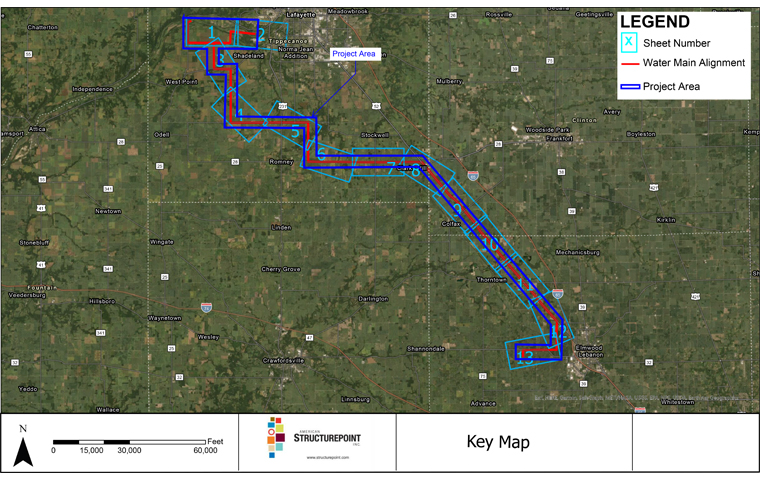
Image from Project LEAP dual water main project document attached to an email dated Monday, March 20, 2023 3:20 PM from Shaiza Sajjad, Staff Engineer with American Structurepoint, Inc. The email from American Structurepoint, Inc., states it has been tasked to perform utility coordination for 277,600 feet (52.6 miles) long dual water mains design project starting at the Wabash River near the intersection of W 200 S and S 500 W, and terminating at the intersection of State Road 32 and 500 W. The water mains pass through Tippecanoe, Clinton and Boone counties.

FRANKFORT, Ind. (March 21, 2023) – The State of Indiana has given Frankfort Municipal Utilities (FMU) 21-days to respond to requests for information on a 52.6 mile long dual water mains design project for Project LEAP starting at the Wabash River near the intersection of W 200 S and S 500 W in Tippecanoe County and terminating at the intersection of State Road 32 and 500 W in Boone County; the water mains will pass through Clinton County on both sides of U.S. 52 according to project maps reviewed.

The request for information came via email to FMU from American Structurepoint, Inc. – tasked to perform utility coordination – according to FMU Utility Service Board chairman Kent Brewer during Monday’s USB meeting, March 20th.

“We received an email that was forwarded around 3:30 to 3:45 [Monday] from American Structurepoint,” stated chairman Brewer during the meeting. “We, as a utility, … only have some electric crossing 52. I don’t believe we have any underground stuff – we don’t have water out that far, we definitely don’t have sewer out that far. As far as an effect on our utilities, we don’t see that.”

Brewer stated the Clinton County government was not made aware of this.

“I forwarded that email to my son (Jordan Brewer, president of the Clinton County commissioners) and was totally shocked. He claimed they – the County – has not received anything. I forwarded it to Dan Sheets (county surveyor) as well.”

The specific items requested according to the email shared by chairman Brewer with Clinton County Today include: map(s) of the size, material, and location of the facilities within the limits of the proposed project and copies of any as-builts or easement documents. The email does not contain information as to when the project would begin.

Project LEAP is an economic development zone consisting of over 10,000 acres in Boone County to the west and north of Lebanon. Eli Lilly has started construction on a $2.1 Billion project in the area. The dual water mains are vital to provide the necessary water to the planned development area.

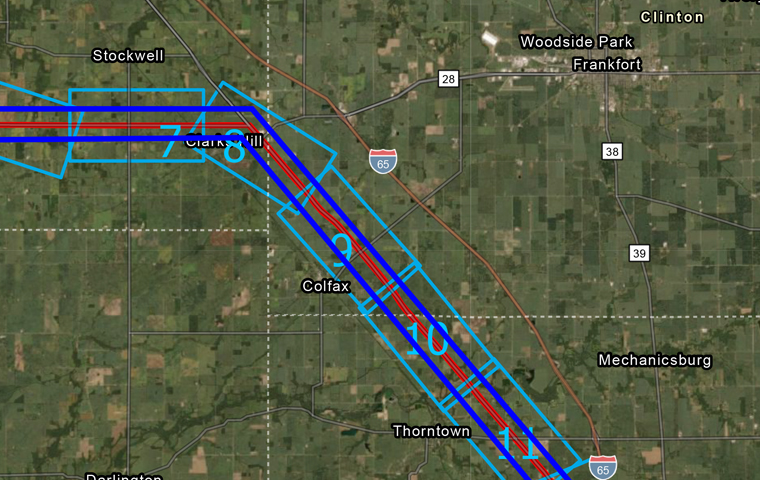
This is a zoom-in view of the Clinton County portion of the Project LEAP dual water main project moving water from Tippecanoe County to Boone County. Original image from Shaiza Sajjad, Staff Engineer with American Structurepoint, Inc. email attachment. Email dated Monday, March 20, 2023 3:20 PM.

Clinton County Water Will Not Flow Into Boone County, Wabash River Water Will Be Used – “Hundred Million Gallon A Day”

Clinton County Water Will Not Flow Into Boone County, Wabash River Water Will Be Used - "Hundred Million Gallon A Day"
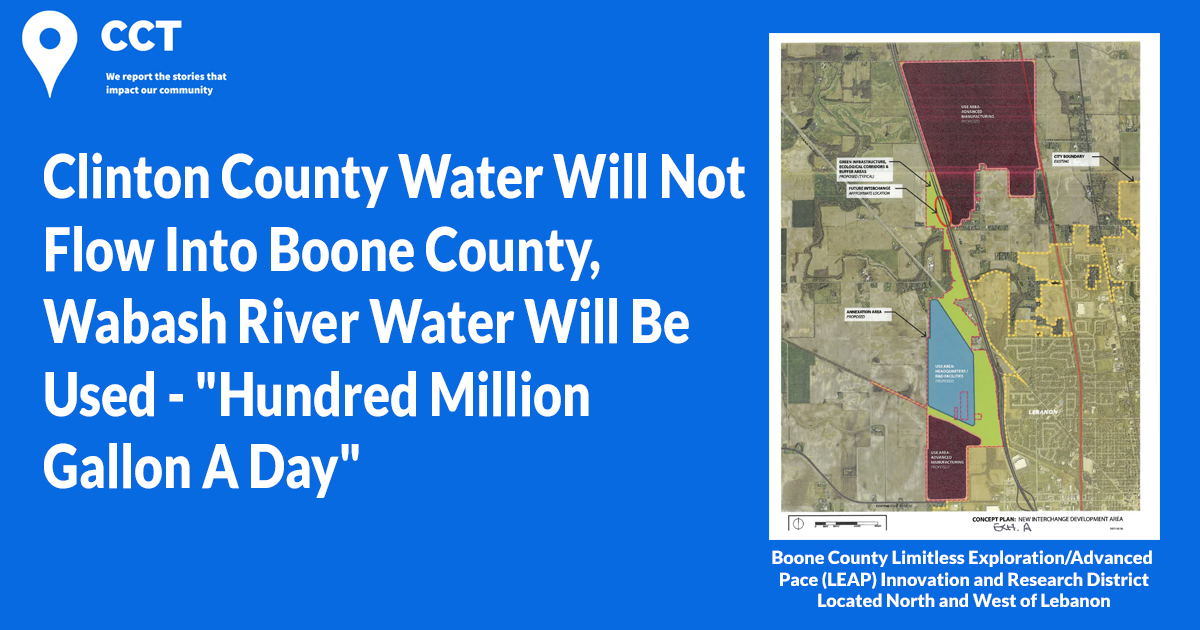
Kent Brewer, chairman of the Frankfort Utility Service Board (USB) provided an update on the aquifer study conducted in Clinton County, Indiana on water that could be used to fuel the growth in neighboring Boone County due to a planned 6,000 acre Limitless Exploration/Advanced Pace (LEAP) Innovation and Research District. Map depicts the LEAP zone as presented to the Lebanon City Council

FRANKFORT, Ind. – Officials from the State of Indiana have notified the Frankfort Utility Services that Clinton County water will not be directed to Boone County as part of the Lebanon area Limitless Exploration/Advanced Pace (LEAP) Innovation and Research District.

As previously reported, the State of Indiana was looking to source water for the designated 6,000 acre development.

Kent Brewer, chairman of the Frankfort Utility Service Board (USB) provided an update on the aquifer study at the conclusion of the USB meeting on Monday, September 19. The USB and Clinton County Commissioners are participants in a State Water Infrastructure Fund (SWIF) grant and the state is test drilling in a southwest portion of the county.

Brewer said, “about two weeks ago, we were notified that they’re not gonna be taken water from Clinton County.”

The State of Indiana provided the information during a brief, 10-minute zoom meeting with Brewer, Todd Corrie – general manager of Frankfort Utilities, and Alicia Albertson – attorney for the USB.

The State has one remaining test well and will share the data once the study is completed.

“The state notified Todd and Alicia, and I in a zoom meeting… they’re gonna give us that data, but they are going to get 10 million gallon a day from south of Lebanon, bring it up from the south and they’re going to tap the Wabash River and they’re gonna bring a hundred million gallon a day up through Tippecanoe County. They’re gonna hit US 52 and take it straight to Lebanon right down US 52.”

Brewer said the State did not provide any indication as to why the decision was made not to use water from Clinton County; however, he did provide some ideas as to why the State might have gone with different alternatives.

“No, they didn’t give a whole lot of indication. I believe they’d done like seven to eight wells out that way and I don’t believe they hit the depths that they wanted to hit – where they felt there would be the quantity of the water. The one they’re doing, I do know was like 335-feet [deep] and they hit a second aquifer there, but some of the other ones they didn’t hit the water that they really want.”

“So at that point, I think they decided, why invest in that right there and not get eight, 10 million gallon a day was what they originally had told us they were gonna get out of there.”

“Obviously we had no say. The Utilities, the County, none of us had a say. They just showed up, started land rental agreements, drilling.”

Painting of Elevated Water Tank at I-65 to Begin

Painting of Elevated Water Tank at I-65 to Begin
Photo of the 500,000-gallon elevated water tank at I-65 & S.R. 28 is nearing the painting phase of the construction process. The contractor, Maquire Iron, had made assurances to have painting completed prior to weather turning cold. (Photo by Brett W. Todd / September 13, 2022)

FRANKFORT, Ind. – The 500,000-gallon elevated water tank located off of State Road 28 and Interstate 65 is approaching the painting phase of the project and should be completed prior to the winter season.

As previously reported, the contractor for the project, Maquire Iron, had asked the Clinton County commissioners for a project extension to December 31 of this year with the agreement the tower would be painted prior to weather turning cold. The County is funding the project build with Frankfort Utility Services providing day-to-day operation upon project completion.

At the conclusion of the Frankfort Utility Service Board (USB) meeting on Monday (September 19), Kent Brewer, chairman of the Frankfort USB was asked about the status of painting of the constructed tank and whether or not painting completion will meet the deadline.

“Yes, depending on the weather,” said Brewer. “If we continue to have weather like this, they say that it shouldn’t be a problem.”

Much of the prep-work was done while the tank was being constructed while still on the ground.

“From my understanding, the tank’s primed. It was sand blasted and primed while it was on the ground and then they done some x-ray machines and they had one little area that they had to address the welds and then they’d have to re-prime that.”

Once those areas are addressed, Brewer expects a protective tent to go up for the painting process.

“My speculation would be that they would be putting a tent up and over it, like we did ours out here on the west edge of Frankfort and get started on paint.”

In terms of when the tank would be filled and come online is still being discussed.

“I really don’t know how much more works left before it would be water ready.”

FMU Resumes Utility Disconnections

Frankfort – The Frankfort Municipal Utilities resumed its disconnection of services for failure to pay on Monday, Sep 14 – as of Monday, Sep 21, thirty-seven customers have had services disconnected according to FMU Billing Manager Stacy Uitts.

Uitts provided this information during the Monday, Utility Service Board meeting. She noted 92 payment plans have been set-up for customers that had applied for the assistance. She stated, of the 92, less than five were from customers who came in after being disconnected.

Customers facing disconnection were notified that payment plans, of up to 6-months, were available to avoid disconnection.

“Last week we were booked,” said Uitts when she shared with USB members what the demand has been from customers requesting to take advantage of the payment plan. “We were doing two payment plans every half-hour, with the exception of lunch hours, and our entire day was booked with appointments of people trying to get in before being disconnected.”

She also noted there are 236 remaining to be disconnected. Of that count, 43 customers are 31 to 45 days late, 194 are more than 45 days late, and 15 are more than 200 days late with the oldest delinquent account being 269 days past due.

The billing office has had its 1st payment plan already paid off close to $500.

“We’re happy,” said Uitts when asked how she felt the payment plan had been going. “I think the payment plan has been a good option for a lot of people and I think it seems very promising.”

Until October 15th, the FMU is not charging a disconnect fee according to Uitts. She said people still have time to call and set-up an appointment to avoid being disconnected and for those that have been disconnected, they can still have a payment plan set-up.

Uitts explained: “They have to come in before their disconnect (date) to avoid being disconnected to get their payment plan set-up. If they come in after (being disconnected), they will not be turned back on until they come in and sign a payment plan.”

The FMU Billing Office can be contacted at (765) 659-3361 to arrange an appointment to go to the Billing Office – located at 1405 E Wabash St, Frankfort – to create a payment plan.

Utility disconnections were placed on hold during the pandemic due to a moratorium put in place by Indiana Governor Eric Holcomb’s executive order issued March 19 which expired on August 14.

Go to Top