Category archive

Clinton County Commissioners - page 2

Banderas Point Development Stalls: Funding Woes

Developers behind the Banderas Point project, Good Oil Company, at Interstate 65 and State Road 28 are currently facing a significant financial setback according to Commissioners President Jordan Brewer, leading to a halt in activity at the site. The project reportedly lacks the necessary financial backing to proceed. (image/provided)

FRANKFORT, Ind. (August 27, 2025) — Developers behind the Banderas Point project, Good Oil Company, at Interstate 65 and State Road 28 are currently facing a financial setback according to Commissioners President Jordan Brewer, leading to a halt in activity at the site. The project reportedly lacks the necessary financial backing to proceed.

According to Brewer, speaking to a group in Kirklin in July, there has been “not much activity” at the project site near I-65 and State Road 28. When questioned about the project’s status and the potential for new restaurants in the area, Brewer indicated that the developers “do not have the financial backing to move forward at the moment.” He clarified that while he was unsure if the project was “canceled,” the developers “just don’t have money right now to do anything more.”

Brewer recounted an instance where a Hilton-brand hotel was interested in locating at I-65 and State Road 28. The developer of the hotel was seeking to purchase a parcel of real estate from the developer of Banderas Point and required a 10.5% return on investment. The county was asked if it would contribute financially every year to meet that. The county declined. Brewer stated, the county “didn’t feel like that was a great return for Clinton County to give them money every single year just for a hotel” for the developer to make their desired profit margin. Consequently, “there’s no hotel” at that location.

Adding to their current challenges, the developers are still required to complete an incomplete retention pond at the site. Brewer noted that the Indiana Department of Environmental Management (IDEM) is expected to compel them to finish this task.

The area at I-65 and State Road 28 has seen significant infrastructure investment, including a $3 million water tower and $35 million for sewer and water, primarily funded by the county, plus a multi-million dollar roundabout east of the I-65 interchange.
Stitzel Talks Moratorium on Battery Farms and Wind Turbines, Upcoming Data Center Public Hearing

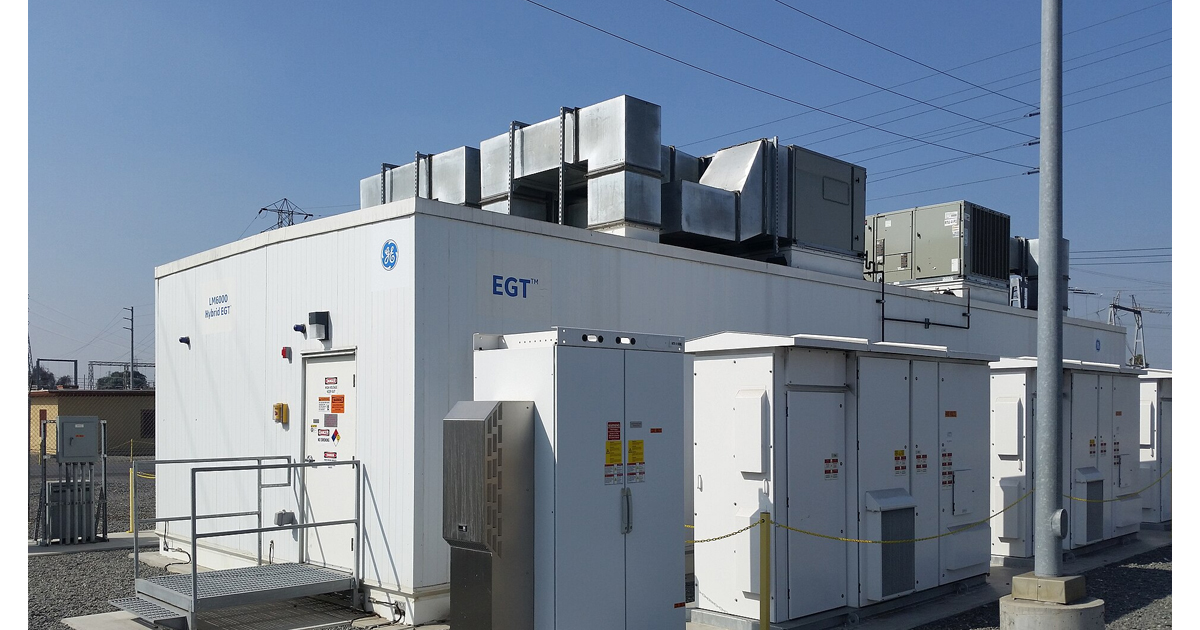
Clinton County has enacted a moratorium on new battery energy storage system (BESS) developments, commonly known as battery farms, to allow officials time to draft specific zoning ordinances for the emerging technology. The measure is designed to create a regulatory framework for these facilities, not to block their development, according to Liz Stitzel, the Clinton County Area Plan Director. 9photo/Wikipedia)

CLINTON COUNTY, Ind. (August 26, 2025) — Clinton County has enacted a moratorium on new battery energy storage system (BESS) developments, commonly known as battery farms, to allow officials time to draft specific zoning ordinances for the emerging technology. The measure is designed to create a regulatory framework for these facilities, not to block their development, according to Liz Stitzel, the Clinton County Area Plan Director.

Battery farms are designed to address imbalances in the U.S. electric grid, storing excess electricity when production outstrips demand and discharging it during peak hours or outages. Stitzel explained that this prevents energy waste and can provide crucial backup power, potentially supplying four to six hours of electricity during a substation failure, thereby preventing “life-threatening power loss or inconvenience.” These systems are typically found near large power generation sites (nuclear, coal, solar, wind, water dams) but are also appearing on smaller grid lines.

The moratorium, a tool to “pause development” while ordinances are prepared, is crucial because existing county regulations do not adequately address battery farms. Under state law, a moratorium cannot be a permanent ban and is limited to one year, as a ban would be considered an illegal “taking” according to Stitzel. Without specific rules, new applications would be processed under the “most similar rule,” likely falling under solar or wind ordinances. However, Stitzel noted, battery farms are “really pretty different from both” solar and wind, with distinct characteristics that don’t align with existing setback or design requirements for those technologies.

“It’s not about wanting or not wanting something,” Stitzel said, but about ensuring the county has “a set of rules that allows us to consider something honestly in something that big in a hearing format rather than just issuing a permit and not having any opportunity for public input.” For instance, without the moratorium, a battery farm at an existing solar site might be issued a permit as a permitted use, bypassing public review.

Stitzel clarified a common misconception regarding wind development in the county, stating “there was never a wind moratorium adopted.” Instead, the county’s ordinance requires economic development and road agreements with county commissioners before wind rezoning applications can proceed. The commissioners have “simply refused to negotiate,” effectively halting wind projects without a formal moratorium.

For large-scale projects, Stitzel advocates for a rezoning process, which allows decisions to be made by the legislative body (County Commissioners) who are accountable to voters. Unlike the Plan Commission, which is restricted to land use and comprehensive plan considerations, the legislative body can weigh a much broader range of factors, including financial and fiscal impacts to the community. Stitzel cited the landfill expansion as an example, where commissioners approved the project despite a negative Plan Commission recommendation, considering the broader economic impact and public welfare, including preventing community fiscal issues from a previous operator’s liabilities.

Public participation is a cornerstone of the process. Stitzel emphasized her job is to ensure “a fair hearing and a process where people can get at least the information we have.” For an upcoming September 2nd hearing on a data center, the petition from Logix Reality, LLC is for approximately 150 acres north of ConAgra to be rezoned from A-1, Agricultural to I-1, Light Industrial, Stitzel anticipates a crowd of 80 to 150 people. While the courthouse chambers can accommodate around 100, she affirmed that if an unexpectedly large crowd, potentially hundreds, were to attend, the hearing would be continued to a larger venue to ensure everyone can hear and participate, even if it means rescheduling. Past large hearings, such as the landfill (700 people) and wind projects (500-600 people), necessitated larger venues like the fairgrounds. Solar projects generally draw smaller crowds of 100-200 people.

Stitzel maintains a neutral stance in her role, stating her job is not to approve or disapprove, but to facilitate a fair process and provide recommendations based on data and planning logic, even if it differs from personal opinions.

Developer of Data Center Files Petition with Area Plan Commission, Hearing Set for September 2

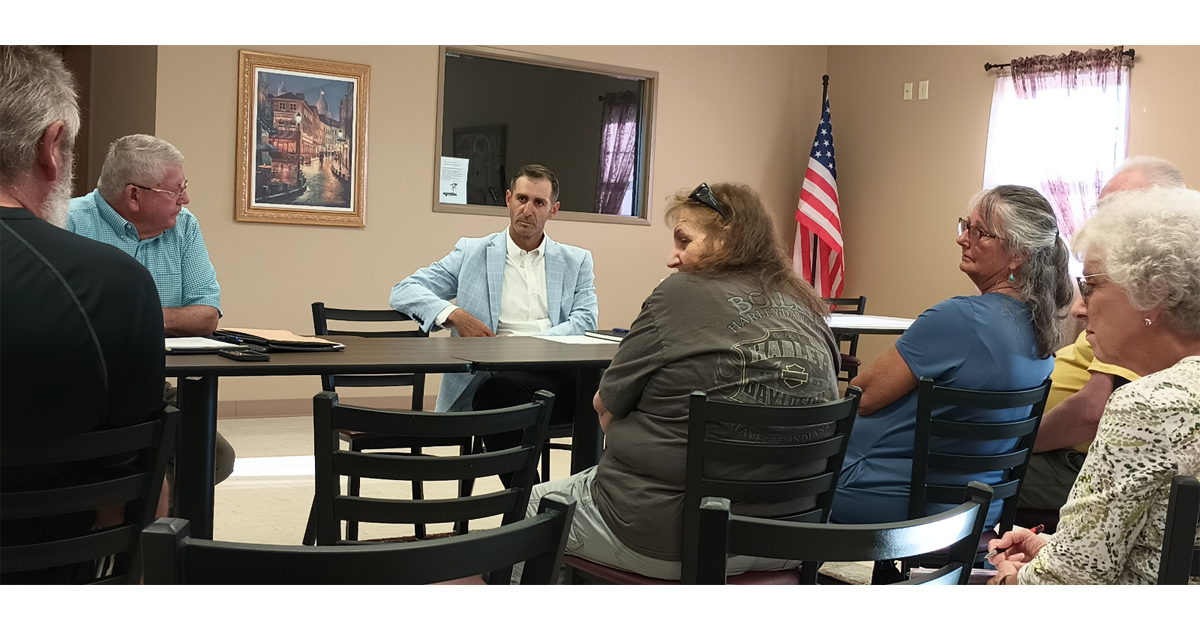
Clinton County Commissioner Jordan Brewer addressed a community meeting in Rossville Thursday evening, offering insights into the proposed data center project and engaging residents on broader issues of economic development, water resources, and public participation. The "Convo with a Commish" event, a format designed for open dialogue, saw the commissioner candidly discuss the complexities of balancing growth with community values. (photo/Brett W. Todd)

ROSSVILLE, Ind. (August 14, 2025) – Clinton County Commissioner Jordan Brewer addressed a community meeting in Rossville Thursday evening, offering insights into the proposed data center project and engaging residents on broader issues of economic development, water resources, and public participation. The “Convo with a Commish” event, a format designed for open dialogue, saw the commissioner candidly discuss the complexities of balancing growth with community values.

Data Center Development Under Scrutiny

The controversial data center proposal, spearheaded by developer Logix, is seeking to establish a large-scale operation in Clinton County.

• A 115-acre parcel of land in the city of Frankfort, east of Conagra, has already been rezoned for a data center by the city, a move that occurred with little public attendance at initial meetings. This city project, if an end-user is found, is projected to be a $1.4 billion investment over six years, potentially using one million gallons of water per day.

• Brewer stated he believes Frito Lay uses an estimated 1.5 to 1.6 million gallons of water per day when asked. He noted that this figure is not exact, but he believes they are the largest user within the city’s infrastructure.

• Logix has now filed a petition with the Clinton County Area Plan to rezone an additional 150 acres adjacent to the previously rezoned city property. This county proposal is expected to be reviewed at the September 2nd Area Plan meeting.

Commissioner Brewer expressed significant frustration with the developer’s approach, stating they “effed this whole thing up” by moving too quickly without providing adequate information. He noted that typically, such projects involve numerous in-depth meetings before reaching the public. Brewer also reiterated the county’s historical stance against rezoning land without a known end-user, to prevent broad zoning that could allow for undesirable industries. When asked how he would vote today on the county’s proposed rezoning, Brewer stated he would not vote yes due to the lack of an end-user and limited information.

Water Supply: A Growing Concern

A major point of contention from residents was the potential impact on local water supplies, specifically the Tippecanoe River Basin aquifer. Residents highlighted that the nearby LEAP project in Lebanon is slated to pull 100 million gallons of water daily, while Tippecanoe County currently uses 35 million gallons per day.

While Frankfort utilities have conducted an aquifer study, Commissioner Brewer stated he has not seen it, and it is not publicly available. He noted that a prior study, related to the LEAP District exploring Clinton County as a water source, indicated the county could only supply 10 million gallons per day from tested areas. Brewer acknowledged the difficulty of conducting a county-wide water study, estimating it would cost “six figures” and would require access to private land. He questioned who would be accountable if a study proved inaccurate over time.

Economic Development and Community Vision

The discussion broadened to the county’s overall economic development strategy, particularly along the I-65 and State Road 28 corridor, where the county has invested $35 million in utility infrastructure. Commissioner Brewer indicated that the focus shifted to this area due to this significant investment.

However, he also expressed a personal vision for growth centered around the county’s small towns like Rossville, Kirklin, and Mulberry, rather than sprawling development across rural farmland. The recent Senate Bill One, aimed at property tax relief, has changed the “rules of the game” for economic development, shifting the emphasis from assessed property value to population growth (income tax). This new dynamic, Brewer suggested, might make investing in infrastructure for housing more appealing, especially for homes valued at $300,000 to $500,000, which are needed to generate sufficient tax revenue to offset services.

Residents expressed a desire to preserve Clinton County’s rural character, citing it as a primary reason for choosing to live there. One resident stated that “carbon sequestration, data centers, lithium mining, like are all things that they don’t want because it goes against that rural type feel”. Commissioner Brewer challenged attendees to articulate not just what they don’t want, but “what do you want” for the county’s future and its ideal population size.

Public Engagement and Voting

The meeting underscored the importance of public involvement in local governance. A Frankfort city employee highlighted that voter turnout in primary elections is “inexcusable,” ranging from 23% to 27%. She emphasized that voting is the primary means for citizens to influence elected officials and shape community outcomes. Residents were encouraged to actively seek information, attend meetings (which are often available online), and review agendas, as official public notices are often limited to local newspapers.

Other Development Considerations

Other topics touched upon included:

• Solar Farms: The large-scale solar project near Rossville was noted as being “all but dead,” with no recent activity. The commissioner differentiated this project, owned by a New York investment company, from other solar developments (Hardy Hills) where local landowners are involved.

• Battery Storage: Concerns were raised about lithium battery storage, particularly fire risks and the need for specific zoning regulations. The county is working on a moratorium to develop specific zoning for battery storage, as current ordinances lack clear classifications.

• Agricultural Future: Discussion included the challenges of monocropping, the need for diversified agricultural processing, and the changing labor force in farming. Commissioner Brewer also noted the increasing trend of land being used as an investment tool rather than solely for production.

Commissioner Weaver: ‘We Don’t Know When We’re Moving’ to the Annex

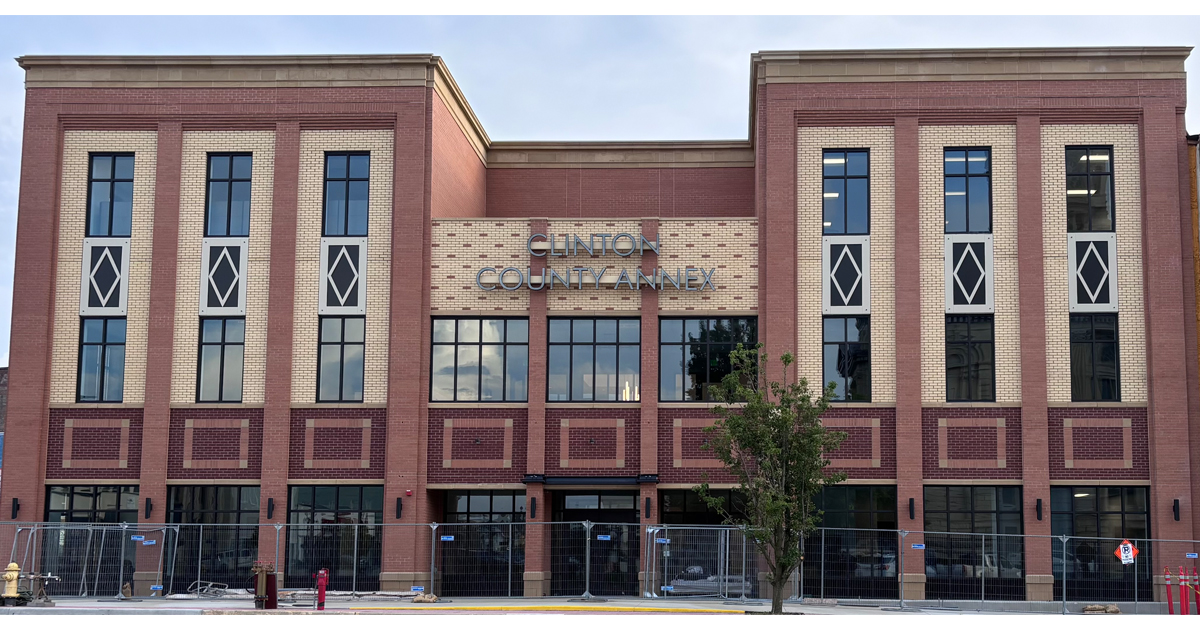
Clinton County Commissioners are grappling with significant delays and a host of unresolved issues concerning the county's new annex building. Located at the intersection of Washington St and Main St in downtown Frankfort, Indiana. the nearly $18 million building was to take 13 months to complete, ground breaking took place in August 2023.

CLINTON COUNTY, Ind. (August 12, 2025) – Clinton County Commissioners are grappling with significant delays and a host of unresolved issues concerning the county’s new annex building, according to comments made during today’s Clinton County Council meeting.

Commissioner Bert Weaver took to the microphone during the commissioners report portion and delivered the news, “we don’t know when we’re moving.” He offered a personal prediction that the move is “a month away yet.” Weaver had previously offered the same prediction in the months of June and July.

Earlier this year, the Clinton County Commissioners hired an independent “owner’s representative” to oversee the completion of the new county annex and the upcoming courthouse renovation project.

The Peterson Company acts as the as an intermediary between the Commissioners and Envoy, providing “day-to-day oversight” to ensure that the buildings are completed to the required specifications.

“We have a standard and expectation that we want that building to be built to. And at this point, every aspect of it has not been met,” explained Commissioners president Jordan Brewer after hiring Peterson, emphasizing the need for expert eyes to “make sure every eye is dotted [and] t is crossed.”

Brewer shared there is no additional costs to taxpayers when hiring Peterson as the commissioners will use the interest generated from the bonds for the project to pay for consulting services. Peterson offered three personnel at hourly rates of $145 (Project Manager), $195 (Director of Operations), and $215 (Vice President).

“We just need someone there to be our eyes and ears because we’re not able to do that on a daily basis and it’s outside our skill set,” said Brewer. Adding, that such oversight “probably hindsight should have happened sooner, but it is where we’re at now.”

Commissioner Weaver shared with the Council a few of the items that are being addressed in the nearly $18 million annex.

“We’re still working with the city because of some issues with the entrance and the sidewalk and the road,” Weaver stated, noting that the county’s ideas do not align with the city’s proposals. Among the points of contention are the city’s suggestions for a handrail at the entrance, which the county is “opposed big time against,” and a flower pot placed across the front, which the county also disfavors. A suggestion to paint the sidewalk orange was dismissed as “pretty tacky.”

Inside the new facility, “a lot of TLC” (tender loving care) is required due to an “enormous” punch list of corrections. Issues include:
• Drywall pop-outs.
• Leaking windows.
• Water running from the second floor to the first, which damaged both levels. This damage occurred because drywall and painting were completed before windows were installed, allowing heavy rain and wind to cause dampness and water intrusion.

Originally Envoy said construction would take 13 months from ground breaking to ribbon cutting. Ground breaking took place August 9, 2023.

Elected officials and department heads have communicated their desire that a move not take place during County budget sessions, September 9 and 10.

Commissioner Brewer Learned of Proposed Data Center “at the end of May”

Clinton County Commissioner President Jordan Brewer answers questions regarding a proposed data center in Kirklin, Indiana, Tuesday, July 22, 2025, at the Kirklin Community Center during a "Coffee with the Commish." (photo/Brett W. Todd)

KIRKLIN, Ind. – A proposed data center was a topic of discussion at the Kirklin Community Center Tuesday evening during a “Coffee with the Commish” hosted by Clinton County Commissioner President Jordan Brewer.

Brewer first learned about the data center project at the end of May during a Partners in Progress (PIP) meeting, a key group for economic development in Clinton County comprising both county and city elected officials. While most economic development proposals typically take two to three years to develop, this data center project was an exception, moving very rapidly.

Initially, developers indicated their desire to locate the data center within the city of Frankfort, not the county. Brewer “pushed back” against this idea, stating he would “never support annexation.” His opposition stems from a past annexation that took place along the I-65 and State Road 28 corridor, where the county developed infrastructure only for the city to annex the area, leading to a near-doubling of taxes (approximately 2.65% city rate), which Brewer believes “hurt the development in that area.”

Following that initial meeting, Brewer reported having no further direct communication with the developer. He later learned, via screenshots, that the developer was proceeding with a city planning commission meeting for 700 acres, a development that caused the situation to “blow up.” Furthermore, no county official was invited to the developer’s social event, and the county has largely been “on the exterior of any conversations lately.”

Brewer described to attendees that a data center “just houses a lot of computers that are going to service all these AI systems” and involves “a lot of processors.” He noted that the county is dealing with a real estate company that procures sites, not the actual “end user” like Google, Meta, Apple, or Amazon. The developer had initially stated they “weren’t coming here if they didn’t have a thousand acres.”

Specific details regarding water usage for cooling and electricity were not discussed in the initial meeting, commented Brewer. Concerns about aquifer studies and water reuse were raised by a participant, which Brewer acknowledged as unknowns, expecting utilities to conduct such studies. He also mentioned unverified reports that modern data centers are “more efficient than they’ve ever been,” using less water and more air cooling.

The financial impact of the project remains uncertain due to recent state legislature changes, particularly Senate Bill 1 (SB1), which is reforming how property tax and county revenue function. The county is “in flux” and does not “even know the rules to the game going into the future” regarding economic development, as revenue appears to be shifting more towards income tax than property tax.

While the project is expected to provide assessed value, Brewer is unsure about the accuracy of job creation claims, as the initial presentation was “high level” and lacked such details.

Brewer also noted that data centers are a “pretty contentious” topic in other areas. Adding, this specific project was “rejected in Greenfield, Indiana,” and he heard of another contentious one in Morgan County. Personally, Brewer believes it would be “better as a city project” due to its geography, as the first 115 acres are already within the city and it physically touches the city.

Financially, the county would be in “basically the same position regardless if it’s a county project or a city project” because the county collects assessed value revenue through a TIF district on the difference between current and new assessed value, irrespective of jurisdiction.

Current Project Status and Location:
* The proposed site is described as “a little northwest of Frito Lay”.
* The developer, Logix Reality, LLC, has since pulled their zoning permit for an upcoming meeting on Wednesday.
* Brewer believes the developer is attempting to “start over the process” by bringing the project through county zoning via the Area Planning Commission.
* The proposed location is north of Conagra, encompassing 700 to 800 acres.
* An additional 115 acres to the east of Conagra have already been rezoned and are currently within the city of Frankfort.
* According to Brewer, the reported financial value of the development changes “daily,” ranging from a billion to four billion to ten billion dollars, with no clarification provided since the original meeting.

Clinton County Names Interim EMA Director, Public Safety Veteran Renee Crick Tapped for New Role

Clinton County Commissioners announced at its June 17, 2025, meeting that Clinton County Dispatch Director Renee Crick will serve as Interim Director of Clinton County Dispatch. Crick will continue her role as director of Clinton County Dispatch.

FRANKFORT, Ind. (June 17, 2025) – The Clinton County Commissioners have named Renee Crick, Director of Clinton County 911 Central Dispatch, interim director of the Clinton County Emergency Management Agency (EMA), following the retirement of longtime EMA Director Darrell Sanders.

Crick brings more than 35 years of public safety experience to the role, including 15 years at the helm of Central Dispatch, where she led the consolidation of Frankfort Police, Fire, and the Clinton County Sheriff’s Office into a unified emergency communications center in 2010. A former dispatcher for Frankfort Police and volunteer EMT with Mulberry Ambulance, Crick has also served on the county’s Local Emergency Planning Committee (LEPC) for the past 15 years.

“Renee was the obvious choice,” says Jordan Brewer, president of the Clinton County Commissioners. “She’s a proven leader who understands how to bring agencies together and has a deep, personal investment in the safety of our residents. Her background in dispatch and long-standing relationships throughout the public safety community make her an ideal fit during this transitional period.”

As interim EMA director, Crick will focus on strengthening relationships between emergency management and public safety partners across the county, as well as engaging both public and private sectors in emergency preparedness efforts. She will continue serving as Director of Central Dispatch—a role she remains deeply passionate about.

“My heart is still in dispatch, and I’m not stepping away from that, but I’m up for this new challenge” Crick says. “I’m coming into this with an open mind and a willingness to listen and learn. I love Clinton County and welcome the opportunity to further serve its residents.”

The interim appointment gives county leaders time to assess the future of the EMA office and determine the best long-term path forward.

Commissioners Declares today as Clinton Prairie Boys Basketball Team Day In Clinton County

Clinton County Commissioners declare June 17, 2025, as Clinton Prairie Boys Basketball Team Day. Pictured left to right are commissioner Kevin Myers, commissioner Jordan Brewer, CP Boys Basketball Head Coach Chad Peckinpaugh, and commissioner Bert Weaver.

FRANKFORT, Ind. (June 17, 2025) – The Clinton County Commissioners have declared today as Clinton Prairie Boys Basketball Team Day.

The recognition was based on the achievement of the team during the 2024-2025 season which resulted in being the 1A State Runners Up.

Along the way to State the team accomplished a number of other titles: Hoosier Heartland Conference Championship, Sectional Championship, Regional Championship, and Semi-State Championship.

The team consisted of Head Coach Chad Peckinpaugh, Assistant Coach Ruas Doyle, Assistant Coach Bailey Good, and Assistant Coach Dirk Shaw, Managers Bella White, Adalen Reeder and Dejah Johnson, along with the players, Alex Farley, Ryan Harshbarger, Jake McGraw, Jake Swinford, Kyle Harshbarger, Evan Smock, Nick Curtin, Hunter Haynes, Nick Ewing, Rhett Whitlock, Jaymon Crick, Conner Haynes, Gaige Kuzmicz, Brady Allen, and Conner Rios.

Commissioner Bert Weaver Passes Note: “Ask for a 10-Minute Break”

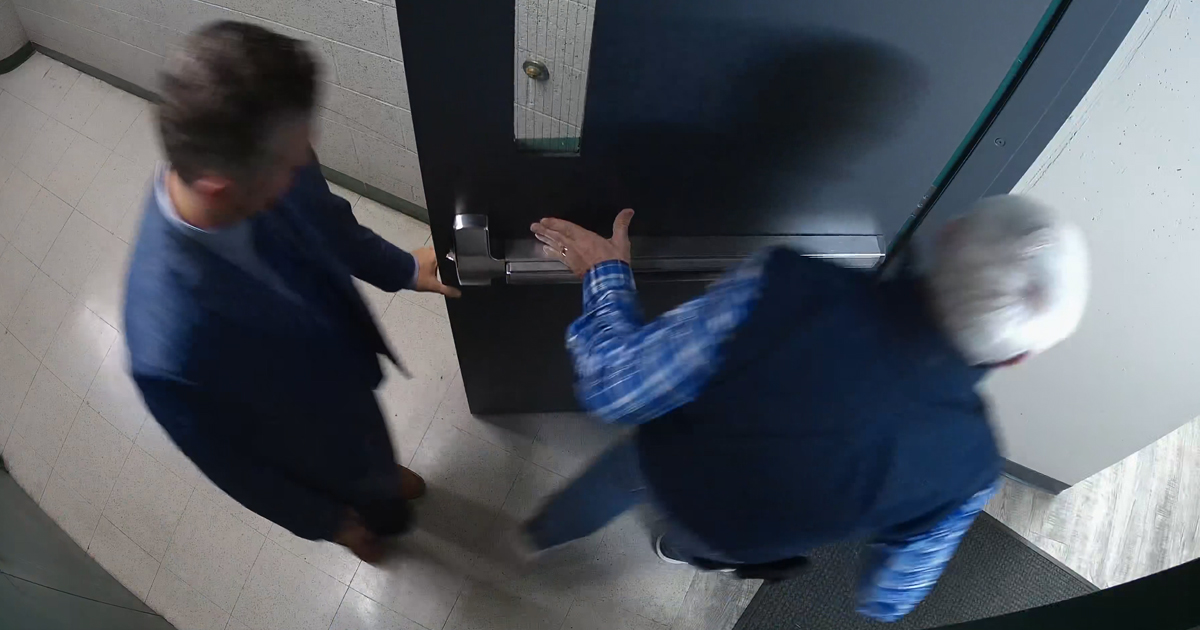
Clinton County Commissioner Bert Weaver, right, holds the door open for Clinton County Deputy Melissa Trump's attorney Adam Brower. Weaver passed a note to Brower during the October 16th Merit Board hearing so he could talk to him. The meeting took place inside Central Dispatch in the basement of the Clinton County Sheriff's Office. (Image from video obtained by CCT via Indiana Access to Public Records Act)

FRANKFORT, Ind. (November 18, 2024) – Since the conclusion of the Clinton County Commissioners meeting on November 7th – where commissioner Bert Weaver criticized sheriff Rich Kelly for his handling of the investigation of Deputy Melissa Trump along with the reassignment of her K9 partner, Tiko, to another Deputy plus the costs of the investigation that Weaver estimates exceeds $100,000 – Weaver has admitted to passing a note to Deputy Trump’s attorney during the Merit Board hearing conducted on October 16th.

Weaver told Clinton County Today the note he handed to Adam Brower read, “ask for a 10-minute break.” Weaver wanted the break so he could address a statement by Brower at the beginning of the hearing regarding whether or not the commissioners and the sheriff got into an argument during a commissioners meeting.

Weaver indicated he and Brower spoke in a secured area of the Sheriff’s Office – specifically, Central Dispatch. A review of the Merit Board hearing confirms Brower asked for the break saying, “do you want to take a break,” during a pause in testimony of Detective Dan Roudebush.

Video from the Central Dispatch door camera, obtained under the Indiana Access to Public Records Act, shows Weaver opening the door and beginning to enter Central Dispatch while pressing the door open allowing Brower to enter behind him.

The admission by Weaver came after CCT asked Weaver if he had been in contact with Brower regarding the return of Tiko to Deputy Trump.

During the November 7th commissioners meeting, Deputy Trump shared publicly Brower told her at some point after the Merit Board hearing “it sounds like you’re getting your dog back… you just need to be quiet about it.”

Commissioner Uitts asked Deputy Trump, “I am curious how your attorney gained that knowledge?” Deputy Trump replied, “I’m not sure. He just told me to kind of not talk about it.”

Weaver told CCT he has not had any conversations with Brower regarding Tiko; however, Weaver is supporting the return of K9 Tiko to Deputy Trump.

Regarding the $100,000 or more in costs associated with the investigation into the alleged actions of Deputy Trump, Weaver shared the items consisting of that figure include salary and benefits paid to Deputy Trump as well as overtime costs associated with covering Deputy Trump’s shifts while she has been on either administrative duties or paid administrative leave.

A document provided by the Clinton County Auditor’s office to CCT details how Weaver came to the amount he shared. The amount for eight months (March 26th – November 30th) is $62,193.50 for Deputy Trump; including salary, medical and life insurance (county’s portion), county’s match on taxes and pension contribution.

The document contains information for overtime to cover shifts that Deputy Trump was not on the road and is a very broad range from $53,431.26 to $80,155.79 that would add to the cost.

CCT has asked the Sheriff’s Office and Auditor’s Office how much of the overtime budget has been used in 2024 and how that amount compares to previous years as well as how much of the overtime was the result of covering Deputy Trump’s shift currently. CCT is working to determine the answer.

Commissioner Jordan Brewer shared the situation has been mismanaged and should have been handled within the Sheriff’s Office and not have to escalate to the Commissioners adding if Deputy Trump had been allowed to resign and purchase Tiko, the county could have avoided the costs associated with her suspension and the merit board hearings.

Brewer stated, “I’m stepping back and looking at it from a county perspective. If I’m making a financial decision and if this individual has offered me – making the assumption all this is true – offered to resign, will purchase the dog for $6,000. So now, I get money to get a new dog and I am now x amount of months ahead in the hiring process of getting somebody [new].

“Obviously [the sheriff] took charges to remove her from her position so they don’t want her at the department anymore. Now you can hire someone new to be in that place and you’ve expedited the whole process instead of taking eight months like it has.

“I’m just stepping back as a business person – that’s how I look at it. Okay it cost me, I get rid of you know the ‘bad apple’ if that’s how I feel as the decision maker; they’re going to pay for the dog, I get to go get a new dog and hire a new person so that my Department’s not under manned.

“That’s how I would look at it instead of wanting to go through a whole process that is all fair but then ultimately has to come to us and we really don’t even need to be a part of it.”

Regarding the offer of Deputy Trump to resign and purchase Tiko in the quote above. Brewer and CCT spoke as to whether or not the comment was made by her in the meeting. A review of the meeting reveals Deputy Trump did not mention “resign.”

She said, “I, through my lawyer Adam Brower, asked the sheriff’s office if I could purchase Tiko. I was told no because they had too much invested in him.”

CCT followed-up by phone with Deputy Trump to clarify the offer to resign and purchase Tiko in exchange for Merit Board charges to be dropped.

Deputy Trump shared that the sheriff’s attorney – Tonya Bond – called her attorney asking about resignation twice. The second inquiry is when Deputy Trump reportedly asked about resigning but only if she could purchase Tiko – she could not recall the timeline as to when that offer was made.

K9 Tiko has been reassigned to Deputy Preston Hillman for the past two months. The two have recently achieved certification from the North American Police Work Dog Association (NAPWDA).

Deputy Trump surrendered K9 Tiko on May 31st.

Sheriff Kelly responded to Deputy Trump’s statements by emphasizing that the situation was purely about disciplinary issues – not a personal vengeance. He stated that when the Sheriff’s Office receives complaints about officers’ behavior or discipline, they must uphold the rules and regulations outlined in the Sheriff’s Office policies and Merit rules. He attributed the extended timeframe of the investigation to the need for both an internal and criminal investigation, with the latter taking precedence.

Kelly explained that finding an unbiased prosecutor outside the county further prolonged the process, and once the prosecutor decided not to file charges, the case was passed to the Merit board, who also needed time to conduct their own proceedings.

Kelly asserted that K9 Tiko was an asset meant to serve the community, not for “popularity votes” or “likes on the internet”. He argued that Deputy Trump was using the dog for personal gain, and that this behavior necessitated the K9’s reassignment.

Kelly highlighted that finding a volunteer to take on the responsibility of handling a K9 was an “extreme ask”, requiring significant personal and private commitment. He emphasized that K9 Tiko was not medically unfit for service and had several years of service left. He also addressed the cost of training K9s, noting that it had increased due to the need to use an outside facility. This cost included not only the initial purchase price of the dog but also man-hours, travel time, and housing for both the dog and the handler.

Kelly concluded by stating that K9 Tiko was a valuable asset to the community and that the decision to reassign him was made to ensure he could continue working. He expressed his willingness to discuss the timeline of the investigation with Commissioner Weaver at a later time.

Deputy Trump asked the commissioners at the November 7th meeting that K9 Tiko be retired and allow her to purchase him, adding “just name your price.”

The Clinton County Commissioners are scheduled to meet November 19th to decide the fate of K9 Tiko.

Background

Deputy Trump has been paid since March 2024 after allegations of underage drinking at her residence and dishonesty during the ensuing internal investigation. She also faced both an internal and criminal investigation into her alleged use of county assets in social media posts to either receive product and/or compensation. The social media investigation was forwarded to a special prosecutor for consideration of charges to be filed; however, no charges were filed.

At the October 16th Merit Board Hearing, sheriff Kelly’s attorney announced the social media charges had been removed, but stated sheriff Kelly would file those charges should Deputy Trump be allowed to keep her job.

The Merit Board found Deputy Trump violated four Merit Board Rules and Regulations of the five charges filed by Sheriff Kelly – including Truthfulness and Conduct Unbecoming to An Officer.

The Merit Board voted 3-1 to impose a disciplinary penalty of 30 working days without pay based on its preceding findings – equates to two months without pay. Deputy Trump begins her suspension on November 25.

Annex Basement Wall that Failed Had Previously Passed County Inspection

Annex Basement Wall that Failed Had Previously Passed County Inspection
The north-side basement wall of the new Clinton County Annex failed when concrete leaked from the form. Photo taken April 9, 2024, showing work taking place to remove the wall to allow for a repour. (Photo: Brett W. Todd)

FRANKFORT, Ind. (April 17, 2024) – The north-side basement wall of the new Clinton County Annex that failed when concrete escaped the form – not allowing the wall to meet standards – had previously passed county inspection prior to the concrete pour.

During Tuesday’s commissioners meeting, commissioners President Jordan Brewer stated “the wall did not collapse.” Commissioner Bert Weaver previously stated it had when speaking during the April 9th County Council meeting.

Brewer added, “a form was not properly installed and it had a little plug that allowed for the concrete to leak out. It leaked out all weekend – we received the rain which then put pressure on the uncured portion of it and continued out.”

After the meeting Brewer was asked if there had been a determination that led to the issue.

“Human error,” Brewer responded. “I’ll just be honest – it was done on a Friday afternoon. If I am being really honest about it – we got lazy and wanted to get done as soon as possible and didn’t double check our work.

“I don’t believe there’s any inspection of the forms – like the inspection doesn’t come until after they’re pulled off and they inspect the work of the concrete. If I understand correctly.”

Clinton County Area Plan Commission executive director Liz Stitzel stated that her office inspected the rebar and forms prior to the concrete pour.

“When you inspect a wall – you inspect the forms and rebar to make sure everything is tied together before concrete is poured,” commented Stitzel. “So, we did that inspection. They poured the concrete and the pour failed. We were notified and we went out and documented it.”

The County is able to perform its own building inspection of the Annex despite the structure being built within the City of Frankfort via an inter-local agreement between the City and the County Area Plan Commission.

The north-side wall will be removed and repoured to correct the issue.

Both Brewer and County Council President Alan Dunn each stated taxpayers will not be asked to pay more as this additional cost is covered by Envoy – the company overseeing the project via the Build, Operate, Transfer procurement ad build process where overages that are deemed the result of Envoy will not be passed on to the county.

The $16+ Million, three-story building being built at the corners of Main St and Washington St is slated to be completed in early 2025.

County Commissioners Forced to Find New Insurance Coverage

County Commissioners Forced to Find New Insurance Coverage
Archive photo of the Clinton County Indiana Courthouse located in Frankfort, Indiana. The Clinton County Commissioners selected a new insurance carrier for properties and assets. Great American was selected during a special meeting Thursday, February 1, 2024. (Photo Brett W. Todd/September 2023)

FRANKFORT, Ind. (Feb. 2, 2024) – The Clinton County Commissioners were presented with only two insurance companies willing to insure county properties and assets during a special meeting of the commissioners held Thursday at the Clinton County Courthouse.

The force to find new coverage was the result of being served with a 60-day non-renewal notice from Tokio Marine, the county insurer for the past three years. The county received the letter on November 27, 2023, stating Tokio Marine was withdrawing from the market place.

Todd Jackson with McGowan Insurance Group, the county insurance broker, made the presentation and commented only two companies presented offers – Trident and Great American. He recommended the commissioners select Great American with a 15 percent premium increase over 2023, while Trident was 22.7 percent.

Jackson shared only “ten to twelve” companies work to insure public entities with the “least desirable being counties due to landfills, county homes, and jails.”

The new coverage comes with an additional “$9 million in property value that needed to be done to maintain replacement cost on everything” according to Jackson.

The coverage went into effect Thursday – running February 1, 2024 through January 31, 2025.

The 2024 premium at the time of signing on February 1st was quoted at $636,457 which will fluctuate with additional assets purchased or new employees due to workers compensation coverage.

The premium includes the Great American coverage as well as carriers for workers compensation, cyber security, and liability coverage for the county home – the county home property is covered in the Great American policy.

Jackson explained the “real rate” increase to be closer to “ten to eleven” percent.

“I would say the property bump, exposure we added probably accounts for three-and-a-half to four percent of that and pull the payroll rate back and we are at ten to eleven percent,” Jackson said.

The county had budgeted an insurance premium cost increase during its August 2023 budget sessions.

Commissioner Jordan Brewer shared his thoughts on the increase and what might be a “silver lining” in all of this.

“We list the prior premiums and it looks like a large jump, but that prior doesn’t include what an increase would have been if Tokio Marine would have stayed,” Brewer said. “The silver lining is – I don’t know if this is a good thing or a bad thing – we budgeted enough so we don’t have to go back and ask for more from council.”

Go to Top