Author

Brett W. Todd - page 6

Brett W. Todd has 984 articles published.

Brett W. Todd is the managing editor of Clinton County Today. Clinton County Today is a community-focused website to provide individuals of Clinton County Indiana and surrounding areas with information impacting their lives. Clinton County Today is a service of Progressive Partners of Indiana, LLC where Brett W. Todd is its managing member.

Frankfort Traffic Stop Leads to Drug Arrest

FRANKFORT, Ind. (May 18, 2025) – A traffic stop earlier this month resulted in the arrest of a Frankfort man on multiple drug charges, according to information from the Frankfort Police Department.

The arrest followed a stop conducted by Squad B night shift on May 12, 2025. The initial reason for the traffic stop was for driving left of center.

The individual arrested was identified as 60-year-old Larry Cunningham of Frankfort. He faces the following charges, which have been filed:
* Dealing in Methamphetamine more than 10 grams, a Level 2 Felony
* Possession of Methamphetamine, a Level 3 Felony
* Possession of Cocaine, a Level 6 Felony

The Frankfort Police Department issued a press release regarding the arrest on May 16, 2025.

Frankfort Man Dies After Striking Parked Car

FRANKFORT, Ind. (May 18, 2025) – A single-vehicle crash in Frankfort on Friday morning resulted in one fatality. The incident occurred on May 16, 2025, at approximately 5:30 am in the 800 block of North Jackson Street.

Authorities, including Frankfort Police, Frankfort Fire, and Clinton County EMS, were dispatched to the scene following reports of a serious crash.

According to a press release from the Frankfort Police Department, a passenger car driven by 66-year-old Michael Radkovic of Frankfort struck a parked vehicle. The reason the vehicle struck the parked car is currently unknown.

Mr. Radkovic was pronounced deceased at the scene.

The cause and manner of death are under investigation by Clinton County Coroner Ed Cripe. The crash investigation is being conducted by officers from the Frankfort Police Department.

No further information is available at this time.

Jeff Irwin Named Frankfort High School Athletic Director

Jeff Irwin (center) was named Athletic Director for Frankfort High School at the May 13, 2025, Community Schools of Frankfort school Board. Irwin comes from Babcock Neighborhood School in Punta Gorda, Florida and replaces Ed Ed Niehaus, who is retiring.

FRANKFORT, Ind. (May 14, 2025) – Jeff Irwin has been named the new athletic director for Frankfort High School, following a unanimous vote by the Community Schools of Frankfort board. The decision was made upon the recommendation of CSF Superintendent Dr. Matt Rhoda. Irwin replaces Ed Niehaus, who is retiring.

Irwin brings over 20 years of experience in sports management and business leadership to the role. His expertise includes athlete development, financial oversight, project management, revenue generation, and strategic leadership. He is recognized for his ability to build and execute strategic plans, foster collaboration, and manage budgets, fundraising, and financial risk. Irwin is passionate about helping sports organizations develop leadership, evaluate strategic direction, and enhance performance outcomes.

Throughout his career, Irwin has achieved significant professional milestones. He secured a record-breaking $500,000 corporate sponsorship with Ray Skillman Buick for Lawrence Township Schools, which was noted as setting a historical precedent for athletic funding across numerous schools and approximately 20,000 students. At Purdue University, he spearheaded 20 major maintenance and renovation projects, aiming to elevate Big Ten Athletics Facilities to meet competitive standards.

Irwin also played a role in achieving the first-ever state football title for Lawrence Central High School at the 5A level, an accomplishment recognized as groundbreaking for both the school and the township.

Most recently, at Babcock Neighborhood School in Punta Gorda, Florida, Irwin spearheaded the creation of the athletic department for grades 6-12 from the ground up. This involved establishing 30 sports programs and recruiting over 300 student athletes and 50 coaches within 3.5 years. He also oversaw a $1.2 million budget and directed 48 coaches.

Irwin’s achievements at Babcock include securing over $100,000 in corporate sponsorships, implementing a $4.4 million Capital Campaign for athletics and the arts, establishing the Trailblazer Athletics Booster Club to raise $30,000 annually, and providing financial analysis for a new outdoor athletics facility complex. He also developed community engagement initiatives for middle school teams joining a new athletic conference.

Prior to Babcock, Irwin served at the MSD of Lawrence Township from July 2012 to July 2017. There, he designed strategic plans for 850 athletes and 110 coaches, oversaw programs, and orchestrated the joining of a new conference of Indiana’s six largest high schools. He directed a $1.5 million budget covering salary, transportation, and departmental costs. Beyond the record $500,000 sponsorship, he helped student-athletes achieve a GPA of 3.3/4.0, significantly higher than the rest of the student body, by creating the Bears Athletics Student Services Program (BASS) which provided tutors and support.

He also created a five-year strategic plan and organized events supporting state championships in football and Girls Track and Field. During this time, he also achieved the first athletic department apparel deal with ADIDAS and the largest corporate sponsorship agreement in the Metropolitan Interscholastic Conference (MIC) history.

From July 2009 to July 2012, Irwin led daily operations at Western Boone Jr-Sr High School, overseeing 85 coaches across 20 sports and developing a strategic plan. He guided budgeting, fundraising, partnerships, and facility improvements.

Irwin implemented an extensive professional development plan for coaches and achieved the best Sagamore Athletic Conference All-Sports Standings finish in 14 years for both boys and girls athletics.

His earlier experience includes leading multiple athletic facility construction renovations and creating professional development plans at Southmont High School from 2007 to 2009. From 2001 to 2007, he was the Game Management and Championships Director at Purdue University, overseeing operations for various sports including football, basketball, baseball, softball, wrestling, and track and field.

Allegations of Editing State Board of Accounts Audit Report, New Trial Date Set

LEBANON, Ind. (April 23, 2025) – Attorneys for Clinton County Sheriff Richard Kelly and Jail Matron Ashley Kelly were in a Boone County courtroom to provide a status update on the large document drop just days prior to the start of the April 8 trial which resulted in the trial being delayed.

In the April 14 hearing, in answering questions from Boone County Judge Lori Schein, attorney for Mrs. Kelly, Mario Massillamany, shared that Clinton County Prosecutor Anthony Sommer and Clinton County attorney Tom Little were sending emails to the Attorney General office asking for the AG to join the civil case.

Attorney for Sheriff Kelly, Theodore Minch, added that in addition to those emails, new documents show they were actively editing the State Board of Accounts audit report on the Kellys and passing it back-and-forth.

A hearing on sanctions was not set – allowing the attorneys for Little and the Kellys to receive the promised privilege log of the newly received documents and to review the contents.

In an additional matter, Massillamany filed a motion to dismiss count #3 – criminal conversion – against Mrs. Kelly.

Criminal conversion is the act of knowingly or intentionally exerting unauthorized control over someone else’s property.

Massillamany’s argument was based on two documents he entered as exhibits A & B showing that Mrs. Kelly had authorized authority over the commissary funds.

Exhibit A was a 2021 written contract from an oral agreement between Sheriff Kelly and Mrs. Kelly to be the commissary manager at the same pay and duties as previous commissary managers.

Exhibit B was a written contract between Sheriff Jeff Ward and Nancy Ward, his wife, to perform the duties of commissary manager.

Massillamany noted the two agreements were identical but for paragraph 5 of Mrs. Kelly’s contract that made it retroactive to January 1, 2019.

Judge Schein asked special prosecutor Stanley Levco if Mrs. Kelly had a contract in place at the time she was put in place as commissary manager would he have filed conversion charges.

Levco was not the special prosecutor when charges were filed. Levco was appointed to the case in October 2024 after the previous special prosecutor – David Thomas – was elected judge in his home county.

Levco replied, had she had a contract at the time charges were filed – “maybe not. But she didn’t.”

The State filed its charges in 2022.

According to online case entries, the State filed a brief in response to defendant’s motion to drop count #3 on April 16.

Judge Schein took the matter under advisement.

A new trial date was set during the hearing.

Judge Schein informed the parties that the Clinton County courthouse will begin renovations soon and asked if there were objections to selecting a Clinton County jury and having the case in Boone County.

There were no objections and Tuesday, October 14 was selected after conferring with both sides on scheduling conflicts.

State Dismisses Count #4 in the Kellys Case, Judge Grants Continuance

State Dismisses Count #4 in the Kellys Case, Judge Grants Continuance
State Dismisses Count #4 in the Kellys Case, Judge Grants Continuance during a pretrial hearing Monday, April 7, 2025, at the Clinton County courthouse.

FRANKFORT, Ind. (April 7, 2025) – The Special Prosecutors handling the case against Sheriff Richard Kelly and his wife Ashley have dismissed count #4 – “signed under penalties of perjury statements related to their relationship with each other, in violation of the criminal offense of Perjury” – today during a pretrial hearing in the Clinton County courthouse.

The Kellys also filed with the Court to have the case continued after a large document drop – including audio files – were made available to them late last week.

The documents and audios were part of a discovery request that was two years old. And comes after assurances were made to Special Judge Lori Schein – during an in-chamber review, including attorneys representing County Attorney Tom Little – that all documents had been turned over during the August 2024 gathering.

This new data drop is described as a collection of 3,000 documents comprising some 10,000 pages plus audio files. Many of the documents contain redacted sections and a promised privilege log has yet to be turned over to the defense.

Judge Schein stated she was not pleased with granting the continuance noting the amount of time that has been spent to have the trial start this week. Judge Schein noted that balancing an ineffective council argument along with charges that are felonies that carry jail time outweigh continuing the case this week.

Attorney for Ashley Kelly – Mario Massillamany – asked the court to conduct a hearing on sanctions against attorney Tom Little, the Law Firm of Power, Little, Little, Little, and the attorneys that represent Tom Little as to why the delay in complying with the court’s order. Massillamany requested attorney’s fees paid by the Kellys among other items be considered as a remedy.

Judge Schein has set April 14 as a pretrial hearing to determine next steps as well setting a hearing on sanctions.

An additional item that will be discussed on April 14 is the defense motion to drop count #3 – “engaged in a violation of the Criminal Conversion statute (IC 35-43-4-3 (a) by Richard L. Kelly receiving commissary funds through his ownership in Leonne LLC.”

State, Kellys Trial to Start

Kellys criminal trail to being
The three-year-old criminal case involving Clinton County Sheriff Richard Kelly and his wife, Ashley, is set to begin on Tuesday, April 8, 2025, with selecting six jurors and three alternates. They are each facing four level 6 Felonies.

FRANKFORT, Ind. (April 6, 2025) – The three-year-old criminal case involving Sheriff Richard Kelly and his wife, Ashley, is set to begin on Tuesday with selecting six jurors and three alternates.

But first the State and the Kellys will face off in a hearing Monday morning to hear the State’s motion to limit the introduction of evidence in the case according to online court entries.

This is in response to the Kellys having notified the State of their intention to use an affirmative defense – mistake of fact – to the four charges. An affirmative defense places the burden of proof on the defense.

The Kellys each face one count each of the following (all are Felony 6):

1. as public servants knowingly or intentionally had a pecuniary interest in or derived a profit from a contract connected with their governmental entity served by the public servant;

2. engaged in a violation of the criminal Conflict of Interest statute;

3. engaged in a violation of the Criminal Conversion statute (IC 35-43-4-3 (a) by Richard L. Kelly receiving commissary funds through his ownership in Leonne LLC; and

4. signed under penalties of perjury statements related to their relationship with each other, in violation of the criminal offense of Perjury.

Although the court documents are not available, Clinton County Today was in the courtroom for the final pretrial hearing on March 12th when attorneys Theodore Minch and Mario Massillamany representing Sheriff Kelly and Ashley, respectively, were going back and forth with Special Judge Lori Schein.

The defense attorneys were asking for evidence to be allowed that the Kellys relied on attorney Little to perform the required work.

Attorney Massillamany to Judge Schein: “We filed a notice of affirmative defense – mistake of facts. And I think that would go into the arguments of affirmative defense – mistake of fact.”

Judge Schein: “Meaning what?”

Attorney Massillamany: “They relied on Mr. Little to fill-out the conflict waiver on their behalf.”

Later in the hearing, Judge Schein said to attorney Minch: “I’ve seen the emails. It looked like there was a conflict of interest form sent by Mr. Little on behalf of your clients before he took office.”

At the Monday hearing, the Kellys could argue that other county officials have not uploaded conflict of interest forms to the State Board of Accounts website.

Here are examples of missing conflict forms:

County Council President Alan Dunn was awarded a cash rent farming contract to farm the county farm in 2021. Dunn paid the county $325 per acre each for four years. He was able to collect any amounts above the $325 minus expenses. The 136-acres is located behind Parkview Home and the conflict form was presented at a commissioners meeting on February 1, 2021 – yet was never uploaded to the SBOA.

Not until June 26, 2024, was the conflict form uploaded to the SBOA disclosing his monetary interest from the contract.

Commissioners President Jordan Brewer presented not one, but two conflict forms acknowledging his father, Kent Brewer, is sole owner of KB Ditching and as a member of the Clinton County Drainage Board his father had been contracted previously prior to becoming a commissioner and could be selected to do work in the future through a competitive bid process.

The first was during a Commissioners meeting on February 17, 2021, where he stated, “Tom felt it best if we at least had a conflict of interest statement that we filed with the state.” County Attorney Tom Little was not at the meeting.

The second was during a Drainage Board meeting on March 1, 2021, where county attorney Tom Little was present. Attorney Little stated, “Just to be safe we will have it done twice. Once within the Board of Commissioners and again with the Drainage Board.”

Neither of those two forms were uploaded to the SBOA. A “full disclosure statement, contract disclosure requirement” for Commissioner Brewer was uploaded to the SBOA website on October 11, 2024.

With both the Dunn and Brewer conflict forms, it is unknown at this time who is responsible for uploading the document to the SBOA.

Audio Between Prosecutor and Journalist Released, Indiana Appeals Court Revives Defamation Suit Against Prosecutor Over Jail Fund Comments

Clinton County Prosecutor Anthony Sommer and Clinton County Sheriff Richard Kelly
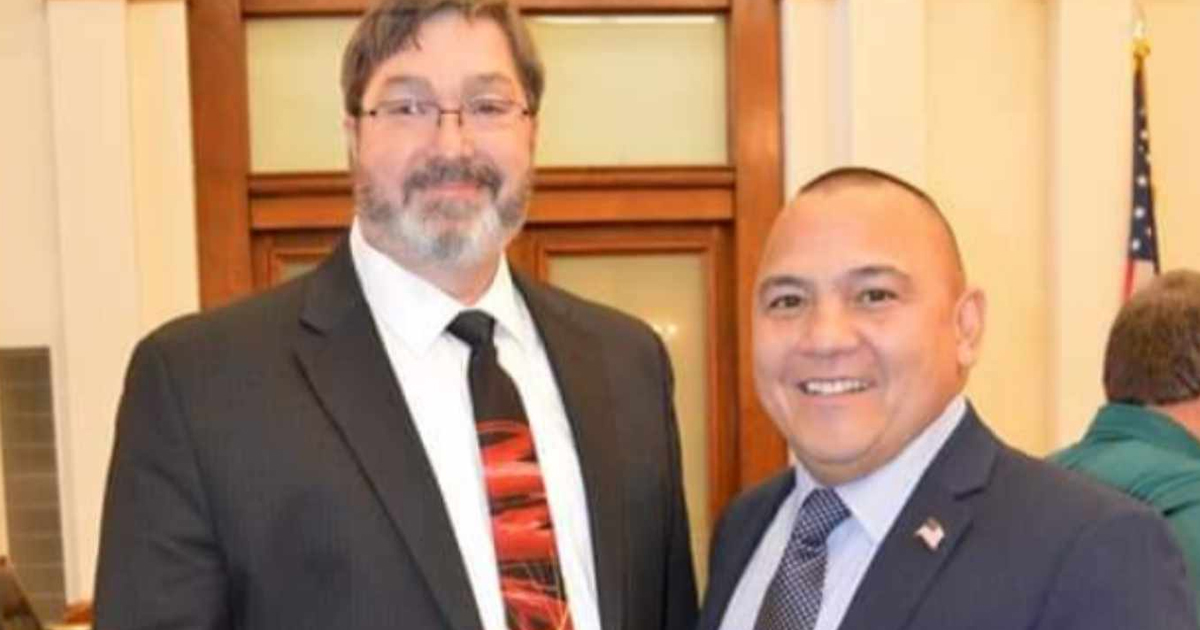
Clinton County Indiana Prosecutor Anthony Sommer (L) and Clinton County Indiana Sheriff Richard Kelly pose for a photo after the December 2018 swearing-in of elected officials held inside the Clinton County Indiana courthouse. (Photo/Facebook)

FRANKFORT, Ind. (March 26, 2025) — A recent ruling by the Indiana Court of Appeals has revived a defamation lawsuit filed by Clinton County Sheriff Richard Kelly and his wife, Ashley Kelly, against County Prosecutor Anthony Sommer. The appellate court reversed a lower court’s decision to dismiss the case, finding that questions remain regarding whether Sommer’s statements to the media about an investigation into the Kellys’ management of jail funds were protected by prosecutorial immunity.

Today, we released the audio between the prosecutor and the journalist.

The audio is from an October 8, 2021, encounter where Prosecutor Sommer invited the journalist to view a “publicly available commissary report” for the first six months of 2021 in his office.

However, it was not the publicly available commissary report as promised – it was a fabricated report.

Over the next week of October 2021, the actual report submitted by Sheriff Richard Kelly during the July 13, 2021, County Council meeting was requested from both the county auditor and sheriff’s office revealing the report provided by the prosecutor was fabricated.

The fabricated report showed incorrect disbursements, incorrect deposits, a wrong check number, a missing check number and even a million dollar change in balance.

As a note, the fabricated report was uploaded as evidence in the county’s lawsuit against Sheriff Kelly and Matron Ashley Kelly on October 25, 2021, 79C01-2104-PL-000035. In the motion to dismiss its case, the county – through their attorney Tom Little – wrote: “Defendants submitted a detailed report of the Clinton County Sheriff’s Commissary Fund with listed activity for the first six months of 2021 to the Clinton County Council, attached here to as “Exhibit A”

An email dated December 27, 2021, between County Council President Alan Dunn and county attorney Little – in which the journalist was copied on – Dunn wrote to Little, “… I spent some time yesterday going over the spreadsheet and I did find several errors, which I have corrected in the version that is attached. … I was not aware at the time that my work would be submitted to the Court as an official County document, so now knowing that it has been I think we need to submit this corrected version as soon as possible. If you could do so, I would really appreciate it.”

The journalist is the author of this post.

Click here to be directed to Spotify or listen to the audio below:

FHS Names Justin Kenzie New Head Varsity Football Coach

Community Schools of Frankfort introduced Justin Kinzie (far left) during the school board meeting conducted February 11, 2025. Also standing are members of his family from left to right: his wife, Allision, and two sons Broderick and Mason.

FRANKFORT, Ind. (February 12, 2025) – Justin Kenzie was introduced as the 2025 Frankfort Varsity Head Coach during the Tuesday school board meeting.

Coming from Niles, Michigan where he coached the Brandywine Bobcats, Kenzie has experience in Indiana high school football.

He spent two years as interim head coach at South Bend Riley, prior to that was an assistant coach with Mishawaka Marian, South Bend Adams, and South Bend Washington. 

Kenzie has experience both on and off the field with 17 years of experience in the classroom and 22 years of experience in education based athletics. 

“I am excited to be here,” FHS Head Football coach Justin Kenzie said after he was introduced. “I know first-hand how important this position is. I know what it means to represent a community and have the title of head football coach. I want everyone in this community to know that won’t be lost on me. I am ready to come – two feet on the ground ready to work. I know there is a lot of work to be done but I have a strong back and coming with a shovel and ready to go to work.”

Kinzie will teach social studies at the high school. He and his wife, Allision, have two sons Broderick and Mason.

Five Candidates Vie for District 1 Frankfort School Board Seat

FRANKFORT, Ind. (January 29, 2025) – The Community Schools of Frankfort school board conducted interviews with five candidates Tuesday evening at the Administrative building for the open District 1 seat caused by the resignation of Karen Sutton. Sutton ran unopposed in the 2024 general election held in November.

The candidates (listed in the order they interviewed) included Billy Birge, who runs a local non-profit, Beth Hardebeck, a former CSF school board member from the 1990’s, Mark Sanders, a pastor, Mark Timmons, a former county commissioner, and Peggy Williams, a retired librarian.

The format for the interviews was structured – asking each candidate the same set of questions – ensuring each candidate had an equal opportunity to express their views. The board members, including Kristen Beardsley, Bud McQuade, Bob Marcum, Sandy Miller, Mandi Mitchell, and Joel Tatum, posed questions in four distinct categories: background and reasons for seeking appointment; governance and the role of the board; communications and conflict; and educational program and student achievement. Each candidate also faced a final question about student retention in the district.

Below is a summary of the interview for each of the five candidates.

Billy Birge

Birge entered the interview process with a clear vision of community engagement and a hands-on approach. He stated that he had considered running for a seat in 2022. He believes he is well-known in the community and brings many assets to the board. As the head of a large non-profit organization, he has a strong understanding of community needs. He also has a personal connection to the school district as a long-time alumnus and successful athlete.

He is committed to being visible and accessible, stating, “I want to spend time in each school in different classes.” His commitment extends beyond mere observation; he aims to actively engage with teachers, staff, and students to understand their needs. He emphasized, “When I get behind something, I’m 100% behind it.” He is also a strong proponent of school board members exhibiting high quality and strong character. He stated that, “People are going to back the people that they believe in.”

Birge’s experience working with parents and community members on a daily basis through the non-profit is a strong asset. He also understands the need for strong oversight, believing the school system should be run like a business. However, it should be noted that he thinks that the school is failing in athletics.

He is also very passionate about retaining students in the district as well as attracting new students with the expansion of Eli Lilly in Boone County, stating, “We cannot let them get to Prairie. We cannot let them get to Central. We can’t let them get to Rossville.” He wants to educate the community that Frankfort schools offer “more courses, high level courses than anyone else in the community” and suggests setting up meetings in different districts to get out in front of the community and explain what the schools offer.

Beth Hardebeck

Hardebeck brings a different type of experience to the table as a former school board member from the 90’s. Her previous service provides her with a deep understanding of how the school board operates. She emphasizes the importance of teamwork, saying, “I really like working as a team. I like working with our superintendent. I like working with the board as a team.” She is also aware of the limitations of individual power, noting, “you don’t really have any power to act on your own. You act as the board.” Her experience also makes her aware that board members need to support decisions even if they disagree with them. She stated, “And if you disagree, then you support that decision as a board.”

She views education as a “pathway out of poverty.” She believes school board members should be good community members, role models, and be approachable. She also has experience working with the public through various jobs. Being retired, she has the time to dedicate to the school board and believes the budget is a major responsibility of the board and wants to spend taxpayer money responsibly.

While she doesn’t have a specific issue she wants to solve, she is keen to learn the current board’s mission statement and understand their challenges and sees graduation rates and feedback from staff as a measure of success. She also noted that she would bring a lot of experience to the position and that she “was on the first elected board.” She mentioned that she is a “proponent of a college education.”

Regarding the retention of students within CSF, Hardebeck acknowledged the challenge of families choosing other schools, stating, “it’s different now. You can go to any school in the county, right?” She did not offer a specific solution, but she highlighted the importance of the arts in saving students and keeping them interested.

Mark Sanders

Sanders is a pastor with a strong connection to public education. He stated that his father, who was the first in his family to graduate high school, instilled a value for public education in him adding “public school changed my life through changing my dad’s life.” This personal connection is evident in his active support for schools through volunteering and donations.

Sanders is passionate about “cradle to career” – a concept CSF has attempted to launch – and the idea of multiple pathways for students. He believes that school board members should be leaders, have integrity, and be good listeners. He also believes that “vision drives everything.”

He has experience working with businesses and community leaders through his role as a pastor. He has a vast network of educators in his family who keep him up to date on the current issues of education. Sanders emphasized the school board’s role as a “guard rail for the community,” ensuring “excellence for every student every day.”

He is committed to open communication and team work, adding “debate in private unity in public” and is also willing to support a board decision, even if he disagreed with it.

Sanders believes that student retention is an issue stating that families are leaving the school system at a rate of “15 to 20%” and have to ask “hard questions – why?” He also mentioned that he does not like seeing another county school putting up billboards across from the elementary school.

Mark Timmons

Timmons is a lifelong resident of Frankfort with a deep passion for his community. He brings a wealth of experience from various public service positions, including the BZA and as a county commissioner. He believes school board members should be good examples, leaders, and approachable. He is also very passionate about being involved in the community and bringing new ideas to the table, adding he believes that the school board’s role is to oversee the education system and provide teachers with the resources they need to succeed.

Timmons is committed to staying informed by attending meetings, reading emails, and being active in the community. He is comfortable with supporting decisions that he didn’t agree with, as he thinks, “the board’s not meant to all have the same conclusion.” He also believes in listening to community members and communicating openly with them. He spoke of being a strong believer in community involvement and that the school should make Frankfort a place where people want to move to. He believes that a lack of parent involvement and discipline is a major issue in the school district. He also thinks that the school is doing its best at education and retaining teachers.

When it comes to retaining students within CSF, Timmons provided he thinks it comes down to the parents’ choice and he is “not real sure” on how to address the issue – adding “the more you talk to people and you find out the reasons, you try to fix those reasons.”

Peggy Willimas

Williams was recommended to apply by a community member and has a background in public service – 30-years as a public librarian. She doesn’t have a specific agenda and is open to serving if she is the best candidate for the job.

She brings a strong understanding of education, with experience as both a teacher and a librarian and believes school board members should be good listeners and pay attention to what is going on in the community. She also has a background in customer service through working at Kramer’s.

Williams is retired, giving her the time to commit to the school board with a strong understanding of the importance of being an active participant in decisions. She stated, “I assume it’s to be here and when things happen to be an active participant in those decisions” when addressing the board’s question. She believes that the school should offer students many different activities and wants every student to have a chance to go to school and have teachers who are connected to them.

She explained school choice “wasn’t that way when I was a child” adding she does not know why parents are making that choice.

Next Step

At the conclusion of the five interviews, the board moved into executive session to discuss the candidates. A vote for the person to fill the open seat is not allowed in an executive session under Indiana law. Miller, the board president, told the candidates the board would make a decision in a few days and contact the candidates. The selected candidate will be sworn in at the February 11 meeting.

Kellys v Sommer: Appeals Court to Examine Boundaries of Prosecutorial Immunity

Clinton County Prosecutor Anthony Sommer and Clinton County Sheriff Richard Kelly
Clinton County Indiana Prosecutor Anthony Sommer (L) and Clinton County Indiana Sheriff Richard Kelly pose for a photo after the December 2018 swearing-in of elected officials held inside the Clinton County Indiana courthouse. (Photo/Facebook)

FRANKFORT, Ind. (January 15, 2025) – The Indiana Court of Appeals is set to hear oral arguments Thursday in a case that raises critical questions about the scope of prosecutorial immunity. The case, Richard Kelly and Ashley Kelly v. Anthony Sommer, stems from a dispute between the Clinton County Sheriff, Richard Kelly, his wife, Ashley Kelly, and Clinton County Prosecutor, Anthony Sommer.

At the heart of the dispute is a meeting between Sommer and a local journalist, Brett Todd, during which Sommer allegedly provided a fake jail commissary report. The Kellys contend that Sommer acted maliciously and outside the scope of his prosecutorial duties, while Sommer maintains that he is immune from liability for actions taken in his official capacity.

The lower court sided with Sommer, dismissing the Kellys’ claims for defamation and intentional infliction of emotional distress. Now, the Court of Appeals will determine whether the lower court erred in its application of the law.

The Allegations and Lower Court Findings

The Kellys’ Amended Complaint alleges that Sommer initiated a criminal investigation into their operation of the county jail commissary, driven by personal and political motivations. They further claim that Sommer, in a meeting with journalist Brett Todd, knowingly provided Todd with an alleged fake commissary report, falsely stating that the report originated from the Kellys. This report, they allege, was intended to damage their reputation.

Sommer, however, argued that his actions were within the scope of his prosecutorial authority and that he was immune from liability under both common law and the Indiana Tort Claims Act (ITCA).

The lower court, while acknowledging the gravity of the allegations against Sommer, ultimately agreed with his immunity defense. The court granted Sommer’s motion to dismiss, finding that his actions were within the function of the Prosecutor’s Office and therefore protected, regardless of motive.

Significantly, the lower court found the Kellys’ allegations that Sommer provided a falsified document to journalist Brett Todd to be “very disturbing.”

“This is very disturbing to this Court and certainly could expose Defendant to possible criminal prosecution and/or severe disciplinary actions if proven,” wrote Boone County Judge Bruce Petit in April 2024. Nevertheless, the court concluded that, under Indiana law, prosecutorial immunity provides absolute protection even in cases of malicious or corrupt acts.

The Kellys Appeal

The Kellys appealed the lower court’s decision, focusing their arguments on two key points:

1. Sommer admitted to acting outside his prosecutorial function.

The Kellys highlight statements made by Sommer to Todd and WLFI News 18, asserting that these statements demonstrate he was not acting in his official capacity. Specifically, Sommer allegedly told Todd that he did not want to be recorded or quoted in any story, that he did not want to comment on the status of any investigation, and that no such investigation existed in his office.

2. The scope of Sommer’s employment under the ITCA is a question of fact.

The Kellys argue that Sommer’s admissions create a genuine dispute about whether his actions were within the scope of his employment as prosecutor. They contend that this question should be resolved by a jury, not dismissed as a matter of law.

The Kellys further argue that the lower court misapplied the “functional approach” to prosecutorial immunity by finding that Sommer could enjoy immunity while acting in his “personal capacity.” They contend that this conclusion contradicts established Indiana law and would effectively grant prosecutors limitless immunity.

Sommer’s Response

In his response brief, Sommer argues that the lower court correctly determined that he was acting within the scope of his employment as prosecutor. He emphasizes his duty to keep the public informed about investigations and his right to correct misrepresentations in the media. Sommer contends that his statements to Mr. Todd were made in furtherance of this duty.

Sommer also disputes the Kellys’ characterization of his statements to Todd, arguing that he never abandoned his role as prosecutor. He maintains that his statement about not prosecuting the Kellys simply acknowledged the likelihood of a special prosecutor being appointed in such a high-profile case.

Key Questions Before the Court of Appeals

The Court of Appeals will now grapple with several key questions:

Did Sommer’s statements to Todd, in which he disavowed any official investigation, place him outside the scope of his prosecutorial function?

The Kellys argue that these statements, combined with Sommer’s later admission that he was not providing an official statement about any investigation, demonstrate he was acting for personal reasons. Sommer, however, contends that his statements should be viewed in light of his overall duty to inform the public.

Did the lower court err in finding that Sommer could enjoy immunity even while acting in his “personal capacity?”

The Kellys argue that this conclusion contradicts Indiana law and would essentially eliminate any boundaries to prosecutorial immunity. Sommer counters that the lower court correctly applied the “functional approach,” which focuses on the nature of the action rather than the subjective intent of the actor.

Does the Kellys’ claim that Sommer knowingly provided a falsified document create a genuine issue of fact regarding the scope of his employment?

If so, should this question be resolved by a jury rather than through a motion to dismiss?

The outcome of this case could have a significant impact on the limits of prosecutorial immunity in Indiana. A ruling in favor of the Kellys would potentially narrow the scope of immunity, holding prosecutors more accountable for actions taken outside their official duties. A ruling in favor of Sommer, however, would reaffirm the broad protections afforded to prosecutors, even in cases where they are alleged to have acted maliciously or corruptly.

There is no timeline as to when the Court of Appeals will issue a decision after hearing oral arguments.

Note: the author of this article is the journalist referenced in the case.

1 4 5 6 7 8 99
Go to Top