Author

Brett W. Todd - page 3

Brett W. Todd has 984 articles published.

Brett W. Todd is the managing editor of Clinton County Today. Clinton County Today is a community-focused website to provide individuals of Clinton County Indiana and surrounding areas with information impacting their lives. Clinton County Today is a service of Progressive Partners of Indiana, LLC where Brett W. Todd is its managing member.

Banderas Point Development Stalls: Funding Woes

Developers behind the Banderas Point project, Good Oil Company, at Interstate 65 and State Road 28 are currently facing a significant financial setback according to Commissioners President Jordan Brewer, leading to a halt in activity at the site. The project reportedly lacks the necessary financial backing to proceed. (image/provided)

FRANKFORT, Ind. (August 27, 2025) — Developers behind the Banderas Point project, Good Oil Company, at Interstate 65 and State Road 28 are currently facing a financial setback according to Commissioners President Jordan Brewer, leading to a halt in activity at the site. The project reportedly lacks the necessary financial backing to proceed.

According to Brewer, speaking to a group in Kirklin in July, there has been “not much activity” at the project site near I-65 and State Road 28. When questioned about the project’s status and the potential for new restaurants in the area, Brewer indicated that the developers “do not have the financial backing to move forward at the moment.” He clarified that while he was unsure if the project was “canceled,” the developers “just don’t have money right now to do anything more.”

Brewer recounted an instance where a Hilton-brand hotel was interested in locating at I-65 and State Road 28. The developer of the hotel was seeking to purchase a parcel of real estate from the developer of Banderas Point and required a 10.5% return on investment. The county was asked if it would contribute financially every year to meet that. The county declined. Brewer stated, the county “didn’t feel like that was a great return for Clinton County to give them money every single year just for a hotel” for the developer to make their desired profit margin. Consequently, “there’s no hotel” at that location.

Adding to their current challenges, the developers are still required to complete an incomplete retention pond at the site. Brewer noted that the Indiana Department of Environmental Management (IDEM) is expected to compel them to finish this task.

The area at I-65 and State Road 28 has seen significant infrastructure investment, including a $3 million water tower and $35 million for sewer and water, primarily funded by the county, plus a multi-million dollar roundabout east of the I-65 interchange.

Ed Cripe Retires from FFD after 29 Years

The Frankfort Board of Public Works and Safety officially acknowledged the retirement of Frankfurt Fire Department employee Ed Cripe during its meeting on Monday evening. Cripe, an engineer at Station 2, concluded 29 years of service with the department. (photo/Frankfort Fire Department)

FRANKFORT, Ind. (August 27, 2025) – The Frankfort Board of Public Works and Safety officially acknowledged the retirement of Frankfort Fire Department employee Ed Cripe during its meeting on Monday evening. Cripe, an engineer at Station 2, concluded 29 years of service with the department.

Chief Stidham presented the request for approval of Cripe’s retirement, noting that he had submitted his retirement on August 2nd. While he had taken a few weeks of vacation, his effective last day was August 24th, with his official retirement date being August 25th, 2025.

A motion was made to accept Cripe’s official retirement. Mayor Judy Sheets also personally thanked him for his “29 years of service and his dedication to our community,” extending best wishes for his future endeavors.

Frankfort’s 9/11 Memorial Walk to Honor Fallen Firefighters

The Frankfort Board of Public Works and Safety has approved plans for a "9/11 Memorial Walk" to be organized by the local firefighters' union on September 11th. The event aims to honor the 343 firefighters who lost their lives on September 11, 2001. (photo/Brett W. Todd)

FRANKFORT, Ind. (August 27, 2025) — The Frankfort Board of Public Works and Safety has approved plans for a “9/11 Memorial Walk” to be organized by the local firefighters’ union on September 11th. The event aims to honor the 343 firefighters who lost their lives on September 11, 2001.

The memorial walk, proposed by the Frankfort Local 705 Union, will cover a 3.43-mile route, a distance chosen to symbolize the 343 firefighters who perished. Organizers emphasized that the walk will stay exclusively on sidewalks and will not impact any roadways, adhering to all normal pedestrian requirements. Board members expressed strong support for the initiative, with member Jim Skinner remarking, “It’s a great idea” and Mayor Judy Sheets stating, “I love it. I think it’s great.”

The event is open to the public, with first responders and veterans particularly encouraged to participate. Those interested in joining the memorial walk can contact the Frankfort Local 705 Union for more information. Flyers and social media will also be utilized to spread details about the event. The Board’s approval was unanimous following a roll call vote Monday evening.

Frankfort Welcomes Newest Police Hire

The Frankfort Police Department officially welcomed a new officer, Kelli Sells (center in photo), to its ranks, with her hiring approved by the Board of Public Works and Safety and an effective start date of September 1, 2025. Sells, badge number 334, was sworn into her position by Mayor Judy Sheets during the Monday evening meeting. 9phot/Brett W. Todd)

FRANKFORT, Ind. (August 27, 2025) — The Frankfort Police Department officially welcomed a new officer, Kelli Sells, to its ranks, with her hiring approved by the Board of Public Works and Safety and an effective start date of September 1, 2025. Sells, badge number 334, was sworn into her position by Mayor Judy Sheets during the Monday evening meeting.

Chief Scott Shoemaker introduced Sells to the board and the community, highlighting her extensive experience. She is a lateral transfer who has been a police officer since 2015, serving in both patrol and detective divisions. Sells chose the Frankfort Police Department to continue her career in law enforcement after deciding to move from northern Indiana.

Chief Shoemaker expressed gratitude for her choice, noting that Sells comes highly recommended by her former department colleagues and background investigators. She was described as a “great asset” for the department, with her former colleagues reportedly “very sad to have lost her.”

Stitzel Talks Moratorium on Battery Farms and Wind Turbines, Upcoming Data Center Public Hearing

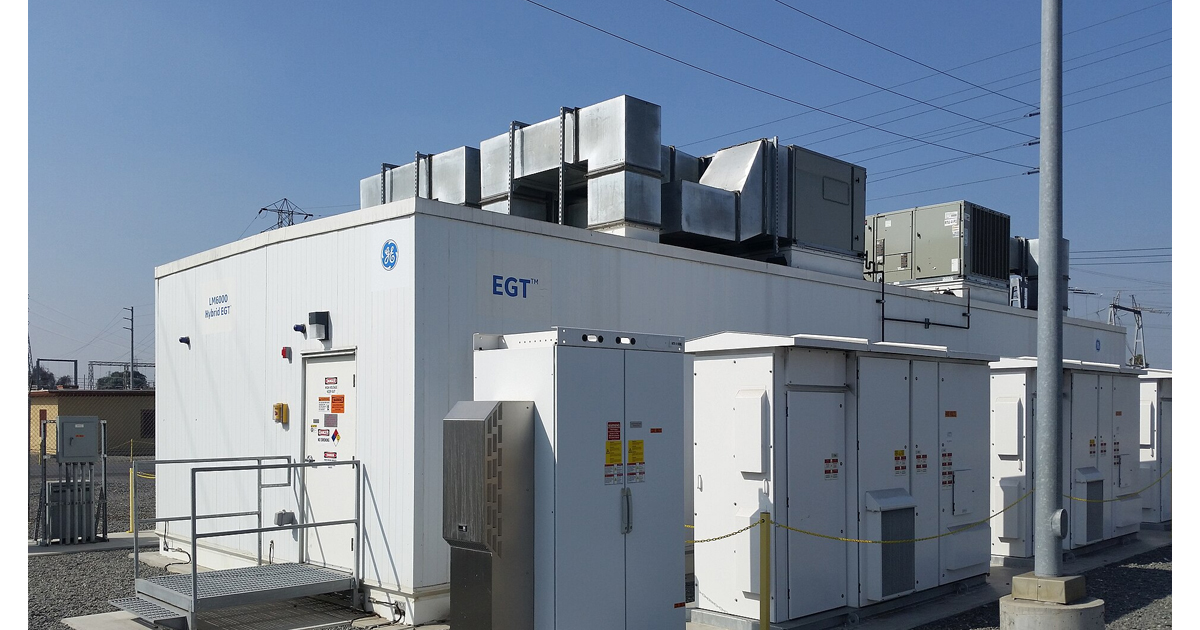
Clinton County has enacted a moratorium on new battery energy storage system (BESS) developments, commonly known as battery farms, to allow officials time to draft specific zoning ordinances for the emerging technology. The measure is designed to create a regulatory framework for these facilities, not to block their development, according to Liz Stitzel, the Clinton County Area Plan Director. 9photo/Wikipedia)

CLINTON COUNTY, Ind. (August 26, 2025) — Clinton County has enacted a moratorium on new battery energy storage system (BESS) developments, commonly known as battery farms, to allow officials time to draft specific zoning ordinances for the emerging technology. The measure is designed to create a regulatory framework for these facilities, not to block their development, according to Liz Stitzel, the Clinton County Area Plan Director.

Battery farms are designed to address imbalances in the U.S. electric grid, storing excess electricity when production outstrips demand and discharging it during peak hours or outages. Stitzel explained that this prevents energy waste and can provide crucial backup power, potentially supplying four to six hours of electricity during a substation failure, thereby preventing “life-threatening power loss or inconvenience.” These systems are typically found near large power generation sites (nuclear, coal, solar, wind, water dams) but are also appearing on smaller grid lines.

The moratorium, a tool to “pause development” while ordinances are prepared, is crucial because existing county regulations do not adequately address battery farms. Under state law, a moratorium cannot be a permanent ban and is limited to one year, as a ban would be considered an illegal “taking” according to Stitzel. Without specific rules, new applications would be processed under the “most similar rule,” likely falling under solar or wind ordinances. However, Stitzel noted, battery farms are “really pretty different from both” solar and wind, with distinct characteristics that don’t align with existing setback or design requirements for those technologies.

“It’s not about wanting or not wanting something,” Stitzel said, but about ensuring the county has “a set of rules that allows us to consider something honestly in something that big in a hearing format rather than just issuing a permit and not having any opportunity for public input.” For instance, without the moratorium, a battery farm at an existing solar site might be issued a permit as a permitted use, bypassing public review.

Stitzel clarified a common misconception regarding wind development in the county, stating “there was never a wind moratorium adopted.” Instead, the county’s ordinance requires economic development and road agreements with county commissioners before wind rezoning applications can proceed. The commissioners have “simply refused to negotiate,” effectively halting wind projects without a formal moratorium.

For large-scale projects, Stitzel advocates for a rezoning process, which allows decisions to be made by the legislative body (County Commissioners) who are accountable to voters. Unlike the Plan Commission, which is restricted to land use and comprehensive plan considerations, the legislative body can weigh a much broader range of factors, including financial and fiscal impacts to the community. Stitzel cited the landfill expansion as an example, where commissioners approved the project despite a negative Plan Commission recommendation, considering the broader economic impact and public welfare, including preventing community fiscal issues from a previous operator’s liabilities.

Public participation is a cornerstone of the process. Stitzel emphasized her job is to ensure “a fair hearing and a process where people can get at least the information we have.” For an upcoming September 2nd hearing on a data center, the petition from Logix Reality, LLC is for approximately 150 acres north of ConAgra to be rezoned from A-1, Agricultural to I-1, Light Industrial, Stitzel anticipates a crowd of 80 to 150 people. While the courthouse chambers can accommodate around 100, she affirmed that if an unexpectedly large crowd, potentially hundreds, were to attend, the hearing would be continued to a larger venue to ensure everyone can hear and participate, even if it means rescheduling. Past large hearings, such as the landfill (700 people) and wind projects (500-600 people), necessitated larger venues like the fairgrounds. Solar projects generally draw smaller crowds of 100-200 people.

Stitzel maintains a neutral stance in her role, stating her job is not to approve or disapprove, but to facilitate a fair process and provide recommendations based on data and planning logic, even if it differs from personal opinions.

Frankfort Fire Department’s Excellence Leads to Significant Insurance Savings for Homeowners

The Frankfort Fire Department has achieved a category 4 protection class rating from the Insurance Services Office (ISO), an evaluation that directly influences insurance costs. (photo/Brett W. Todd)

FRANKFORT, Ind. (August 26, 2025) — Homeowners within the Frankfort Fire Department’s coverage area are experiencing significant savings on their insurance premiums, a direct result of the department’s superior performance. The Frankfort Fire Department has achieved a category 4 protection class rating from the Insurance Services Office (ISO), an evaluation that directly influences insurance costs.

The ISO protection class rating system ranges from 1 (most protected) to 10 (unprotected). This favorable rating reflects the department’s outstanding response times, advanced firefighting equipment, and rigorous training programs.

Conservatively estimated, citizens in the department’s fire coverage territory are saving $2,900,000 annually in insurance premiums due to this ISO protection class rating. The department highlights this annual saving as an extraordinary return on investment when measured against its operating budget, offering both financial relief and enhanced peace of mind.

“Our dedicated team works tirelessly to ensure the safety of our community,” said Frankfort Fire Department Chief Matt Stidham. “We’re proud that our efforts not only protect lives and property but also help reduce costs for our residents”.

Looking ahead, the Frankfort Fire Department is requesting staffing increases for budget years 2026 and 2027 from the Frankfort City Council. This request is crucial for safely staffing a new station that the City of Frankfort decided to construct. Chief Stidham emphasized that adequate staffing is essential for both community and firefighter safety, and for residents to continue benefiting from reduced insurance premiums.

He warned that if the department cannot safely and adequately staff the new station, its ISO rating will “most assuredly be reduced,” which would likely lead to an increase in insurance rates. According to Stidham, these increased insurance costs would “far exceed the increase we are asking for in our annual budget”.

Homeowners are encouraged to contact their insurance providers to understand how these ratings specifically impact their premiums.

Tipton County Judge Hears Oral Arguments in Rokita, Kelly Case

A hearing took place on August 21 in front of Tipton Judge Thomas Lett to consider a motion for summary judgment and to strike evidence filed by the State of Indiana against Clinton County Sheriff Richard Kelly, his wife Ashley Kelly, and their LLC, Leonne, regarding alleged misappropriation of jail commissary funds. (photo/Brett W. Todd)

TIPTON, Ind. (August 25, 2025) – A hearing took place on August 21 in front of Tipton Judge Thomas Lett to consider a motion for summary judgment and to strike evidence filed by the State of Indiana against Clinton County Sheriff Richard Kelly, his wife Ashley Kelly, and their LLC, Leonne, regarding alleged misappropriation of jail commissary funds. The State, represented by the Attorney General’s office, is seeking to recover over $329,000, including audit costs, stemming from an investigation into the use of commissary profits. The defendants vigorously oppose the motion, arguing their actions were lawful, based on professional advice, and that the State’s case lacks the necessary element of intent.

The Attorney General’s office, represented by attorneys Marielle Riedle and Shana Tesnar, announced the State would only seek summary judgement on Count One (Malfeasance, Misfeasance, and/or Nonfeasance) and forgo the request to Counts Two thru Five to keep their arguments “clean and concise.” Count Two was the request for Treble Damage and could have seen the State recover three times the original amount, in excess of $800,000. Count Three dealt with Unjust Enrichment while Counts Four and Five were claims against the individual Bond holders which the county had taken out for Sheriff Kelly and Ashley Kelly.

The State continued by stating the facts in this case are “undisputed.” They highlighted a trial court’s declaratory judgment and a Court of Appeals decision which found that payments from commissary profits were made without necessary county approval.

Attorney Riedle emphasized that for the primary charge (malfeasance, misfeasance, or nonfeasance) criminal intent is not a required element. They highlighted a prior ruling stating that recovery of misappropriated funds is “irrespective of whether the person who wrongfully received public money knew that he or she was not lawfully entitled to receive it.” The State also moved to strike the defense’s affidavits and exhibits, citing issues with proper designation, timeliness, and authentication.

Theodore Minch, attorney representing Richard and Ashley Kelly, addressed the court saying “multiple attempts to obtain documents which are relevant to Count One” were made available on the eve of the criminal trial in April by “third party” discovery from Clinton County Prosecutor Anthony Sommer and Attorney Thomas Little. He added Boone County Judge Lori Schein issued a “denial of protective order a day or two ago” in the criminal case involving the Kellys. According to Minch, those documents are now available for the State to review in the Tipton County case. He said in regards to striking the evidence it is “responsive evidence in of itself” that the motion is “abuse of Trial [Rule] 56” and the Kellys authenticate the very documents in their “affidavits.”

Minch continued saying mens rea or criminal intent is moot because “there’s been no malfeasance, there’s been improper conduct.”

On December 18, 2018, Attorney Little sent a text message to Richard Kelly with regards to a conflict form, which is at the “crux of the criminal case and the malfeasance as alleged by the attorney generals office”, and asked for the Kellys address. Unknown to the Kellys, at a “public meeting” held on December 27, 2018, the commissioners “met” and placed the conflict form “on the agenda” and the item was “heard for two-and-half minutes” and the conflict form “was accepted.”

Regarding the commissary contracts, Minch said those contracts have been “tendered and approved” under the “same terms” used by sheriff’s prior in Clinton County adding Ashley Kelly was last paid on September 15, 2021, under the “contracts the State alleges had not been accepted or approved by the commissioners.”

The State’s case is “predicated” on a SBOA report that “frankly is factually incorrect, never been corrected,” continued Minch. Adding, “we now have emails showing red-lining.” The Court of Appeal decisions that the State cited are part of an “ongoing litigation” that [Brian] Dehem (attorney for the Kellys in lawsuits against Sommer and Little) is now “being challenged” as a result of this new discovery having been “brought forth.”

Judge Lett took the matter under advisement and will review all written documents and arguments. He gave each side 14-days to issue proposed orders and will issue an order as soon as possible.

Developer of Data Center Files Petition with Area Plan Commission, Hearing Set for September 2

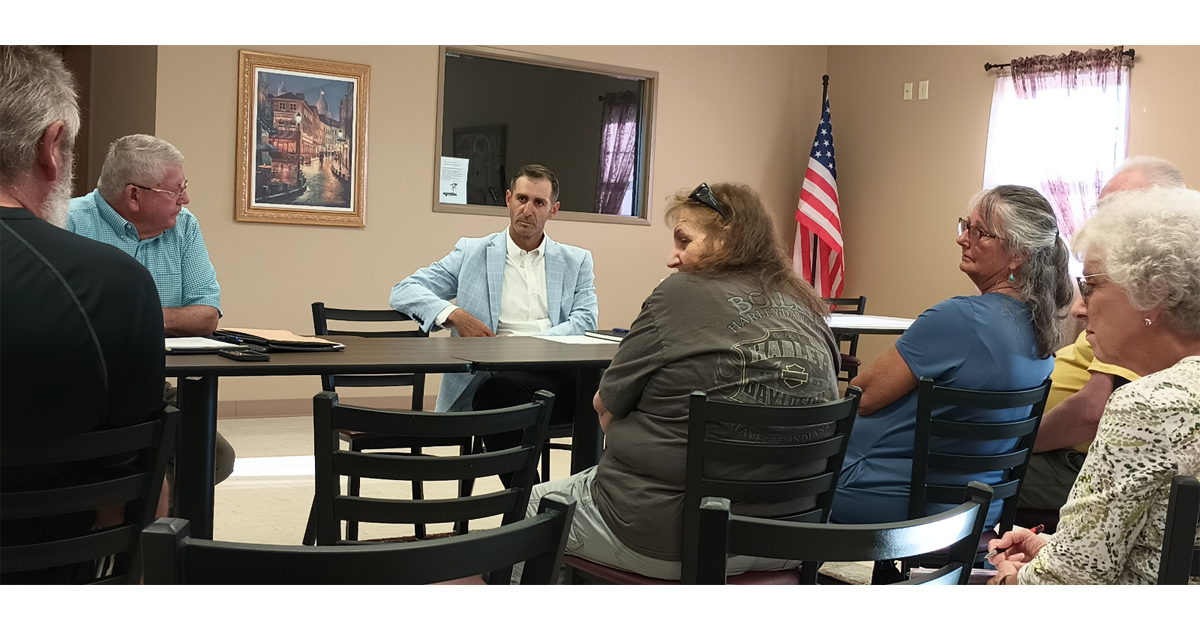
Clinton County Commissioner Jordan Brewer addressed a community meeting in Rossville Thursday evening, offering insights into the proposed data center project and engaging residents on broader issues of economic development, water resources, and public participation. The "Convo with a Commish" event, a format designed for open dialogue, saw the commissioner candidly discuss the complexities of balancing growth with community values. (photo/Brett W. Todd)

ROSSVILLE, Ind. (August 14, 2025) – Clinton County Commissioner Jordan Brewer addressed a community meeting in Rossville Thursday evening, offering insights into the proposed data center project and engaging residents on broader issues of economic development, water resources, and public participation. The “Convo with a Commish” event, a format designed for open dialogue, saw the commissioner candidly discuss the complexities of balancing growth with community values.

Data Center Development Under Scrutiny

The controversial data center proposal, spearheaded by developer Logix, is seeking to establish a large-scale operation in Clinton County.

• A 115-acre parcel of land in the city of Frankfort, east of Conagra, has already been rezoned for a data center by the city, a move that occurred with little public attendance at initial meetings. This city project, if an end-user is found, is projected to be a $1.4 billion investment over six years, potentially using one million gallons of water per day.

• Brewer stated he believes Frito Lay uses an estimated 1.5 to 1.6 million gallons of water per day when asked. He noted that this figure is not exact, but he believes they are the largest user within the city’s infrastructure.

• Logix has now filed a petition with the Clinton County Area Plan to rezone an additional 150 acres adjacent to the previously rezoned city property. This county proposal is expected to be reviewed at the September 2nd Area Plan meeting.

Commissioner Brewer expressed significant frustration with the developer’s approach, stating they “effed this whole thing up” by moving too quickly without providing adequate information. He noted that typically, such projects involve numerous in-depth meetings before reaching the public. Brewer also reiterated the county’s historical stance against rezoning land without a known end-user, to prevent broad zoning that could allow for undesirable industries. When asked how he would vote today on the county’s proposed rezoning, Brewer stated he would not vote yes due to the lack of an end-user and limited information.

Water Supply: A Growing Concern

A major point of contention from residents was the potential impact on local water supplies, specifically the Tippecanoe River Basin aquifer. Residents highlighted that the nearby LEAP project in Lebanon is slated to pull 100 million gallons of water daily, while Tippecanoe County currently uses 35 million gallons per day.

While Frankfort utilities have conducted an aquifer study, Commissioner Brewer stated he has not seen it, and it is not publicly available. He noted that a prior study, related to the LEAP District exploring Clinton County as a water source, indicated the county could only supply 10 million gallons per day from tested areas. Brewer acknowledged the difficulty of conducting a county-wide water study, estimating it would cost “six figures” and would require access to private land. He questioned who would be accountable if a study proved inaccurate over time.

Economic Development and Community Vision

The discussion broadened to the county’s overall economic development strategy, particularly along the I-65 and State Road 28 corridor, where the county has invested $35 million in utility infrastructure. Commissioner Brewer indicated that the focus shifted to this area due to this significant investment.

However, he also expressed a personal vision for growth centered around the county’s small towns like Rossville, Kirklin, and Mulberry, rather than sprawling development across rural farmland. The recent Senate Bill One, aimed at property tax relief, has changed the “rules of the game” for economic development, shifting the emphasis from assessed property value to population growth (income tax). This new dynamic, Brewer suggested, might make investing in infrastructure for housing more appealing, especially for homes valued at $300,000 to $500,000, which are needed to generate sufficient tax revenue to offset services.

Residents expressed a desire to preserve Clinton County’s rural character, citing it as a primary reason for choosing to live there. One resident stated that “carbon sequestration, data centers, lithium mining, like are all things that they don’t want because it goes against that rural type feel”. Commissioner Brewer challenged attendees to articulate not just what they don’t want, but “what do you want” for the county’s future and its ideal population size.

Public Engagement and Voting

The meeting underscored the importance of public involvement in local governance. A Frankfort city employee highlighted that voter turnout in primary elections is “inexcusable,” ranging from 23% to 27%. She emphasized that voting is the primary means for citizens to influence elected officials and shape community outcomes. Residents were encouraged to actively seek information, attend meetings (which are often available online), and review agendas, as official public notices are often limited to local newspapers.

Other Development Considerations

Other topics touched upon included:

• Solar Farms: The large-scale solar project near Rossville was noted as being “all but dead,” with no recent activity. The commissioner differentiated this project, owned by a New York investment company, from other solar developments (Hardy Hills) where local landowners are involved.

• Battery Storage: Concerns were raised about lithium battery storage, particularly fire risks and the need for specific zoning regulations. The county is working on a moratorium to develop specific zoning for battery storage, as current ordinances lack clear classifications.

• Agricultural Future: Discussion included the challenges of monocropping, the need for diversified agricultural processing, and the changing labor force in farming. Commissioner Brewer also noted the increasing trend of land being used as an investment tool rather than solely for production.

Commissioner Weaver: ‘We Don’t Know When We’re Moving’ to the Annex

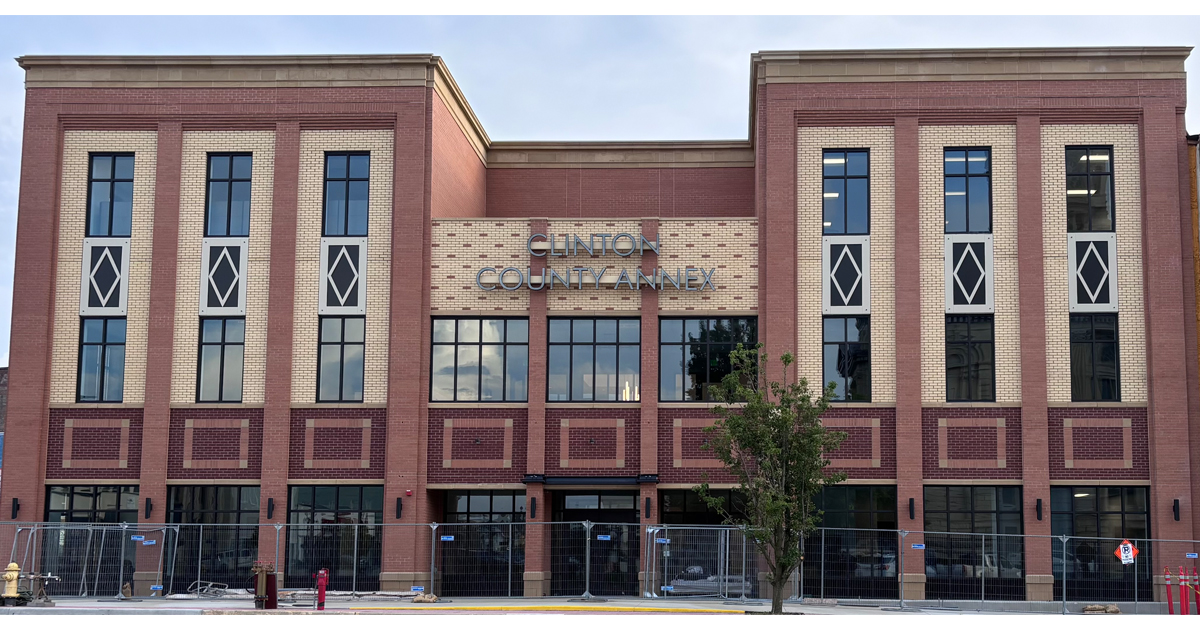
Clinton County Commissioners are grappling with significant delays and a host of unresolved issues concerning the county's new annex building. Located at the intersection of Washington St and Main St in downtown Frankfort, Indiana. the nearly $18 million building was to take 13 months to complete, ground breaking took place in August 2023.

CLINTON COUNTY, Ind. (August 12, 2025) – Clinton County Commissioners are grappling with significant delays and a host of unresolved issues concerning the county’s new annex building, according to comments made during today’s Clinton County Council meeting.

Commissioner Bert Weaver took to the microphone during the commissioners report portion and delivered the news, “we don’t know when we’re moving.” He offered a personal prediction that the move is “a month away yet.” Weaver had previously offered the same prediction in the months of June and July.

Earlier this year, the Clinton County Commissioners hired an independent “owner’s representative” to oversee the completion of the new county annex and the upcoming courthouse renovation project.

The Peterson Company acts as the as an intermediary between the Commissioners and Envoy, providing “day-to-day oversight” to ensure that the buildings are completed to the required specifications.

“We have a standard and expectation that we want that building to be built to. And at this point, every aspect of it has not been met,” explained Commissioners president Jordan Brewer after hiring Peterson, emphasizing the need for expert eyes to “make sure every eye is dotted [and] t is crossed.”

Brewer shared there is no additional costs to taxpayers when hiring Peterson as the commissioners will use the interest generated from the bonds for the project to pay for consulting services. Peterson offered three personnel at hourly rates of $145 (Project Manager), $195 (Director of Operations), and $215 (Vice President).

“We just need someone there to be our eyes and ears because we’re not able to do that on a daily basis and it’s outside our skill set,” said Brewer. Adding, that such oversight “probably hindsight should have happened sooner, but it is where we’re at now.”

Commissioner Weaver shared with the Council a few of the items that are being addressed in the nearly $18 million annex.

“We’re still working with the city because of some issues with the entrance and the sidewalk and the road,” Weaver stated, noting that the county’s ideas do not align with the city’s proposals. Among the points of contention are the city’s suggestions for a handrail at the entrance, which the county is “opposed big time against,” and a flower pot placed across the front, which the county also disfavors. A suggestion to paint the sidewalk orange was dismissed as “pretty tacky.”

Inside the new facility, “a lot of TLC” (tender loving care) is required due to an “enormous” punch list of corrections. Issues include:
• Drywall pop-outs.
• Leaking windows.
• Water running from the second floor to the first, which damaged both levels. This damage occurred because drywall and painting were completed before windows were installed, allowing heavy rain and wind to cause dampness and water intrusion.

Originally Envoy said construction would take 13 months from ground breaking to ribbon cutting. Ground breaking took place August 9, 2023.

Elected officials and department heads have communicated their desire that a move not take place during County budget sessions, September 9 and 10.

Mayor’s Budget: ‘Doable’ or ‘Unsustainable’?

Frankfort, Indiana Mayor Judy Sheets said Monday night that she has a "doable budget" for the city in 2026. Council member Eric Woods called her spending plan "unsustainable" after 2027, with the cash reserve potentially dropping to 12% by 2027 and becoming negative by 2028.

FRANKFORT, Ind. (August 12, 2025) – Frankfort Mayor Judy Sheets said Monday night that she has a “doable budget” for the city in 2026. Council member Eric Woods called her spending plan “unsustainable” after 2027, with the cash reserve potentially dropping to 12% by 2027 and becoming negative by 2028.

The mayor’s comments were made during a work session with members of the city council and came after two days of budget hearings a week ago.

The proposed budget on Monday night differs from the one that was heard last week and incorporates significant changes aimed at reallocating funds and addressing critical needs. Key adjustments include:

• 2% salary increase for employees, up form 1%.
• Four new firefighters, up from two.
• Capital expenditures moved from the general fund to the Cumulative Capital Development (CCD) fund.
• Utility costs shifted: Electric, water, and sewage expenses moved to the Riverboat fund.
• Insurance adjustments: A projected health insurance increase was reduced from 5% to 3%, aligning with a 2.6% projection for next year. Life insurance budgeting was adjusted downward due to historical overbudgeting, while dental, vision, and hearing budget lines were increased after years of underbudgeting.
• Fire pension changes due to the increase in firefighters.
• Zoo operations discontinued: The park’s zoo operations, including zookeepers and related petting zoo funds, were removed from the budget, with a donation fund of over $10,000 available for future petting zoo needs.
• Police vehicle funding sought: The mayor plans to ask the Redevelopment Commission (RDC) to purchase three police vehicles at $159,000, noting that the RDC can fund public safety needs.
• Other shifts to CCD: Police vehicle equipment, body cameras, fire radios, and a fire vehicle were moved to the CCD fund.
• Trail initiative halted: Funding for the trail initiative was reduced from $25,000 to zero, as it has not been utilized in the past two years.

A primary focus of the budget is public safety, particularly the fire department.

Fire Chief Matt Stidham emphasized that the addition of four firefighters is crucial for adequate coverage, especially with a new fire station planned. He highlighted that the department frequently operates below National Fire Protection Association (NFPA) standards for staffing. For instance, NFPA suggests 16 personnel for a single-family dwelling fire and 29 for an apartment fire, but the department typically responds with only 10 or 11 individuals. This understaffing often leads to significant overtime costs and can hinder critical operations, such as deploying the ladder truck, which is essential for ISO ratings. The chief also raised concerns about the department’s aging equipment, including a 2014 engine and a 2006 ladder truck for which parts will soon be unavailable.

The new fire station build was “forced” on the council and “wished we would have delayed it a year” according to Woods during the August 5 budget hearing.

According to The “AGREEMENT FOR FIRE SERVICE INCLUDING PETITION FOR ANNEXATION AND PRE-ANNEXATION PAYMENTS,” dated February 11, 2021, and signed by Mayor Sheets and NHK, specifies that the City of Frankfort will build a fire station west of County Road 450 West, in the vicinity of the interchange of Interstate 65 and State Road 28 and “will provide that construction will commence within two years of the effective date of the annexation.” NHK is currently paying $84,121 for fire service and will likely be annexed into the city in 2026.

The new station being built is located at County Road 600 west and State Road 28 is scheduled to open in the Fall of 2026 at a cost not to exceed $10,350,000.

Chief Stidham argued that the department’s manpower issues “is not all about [Senate] Bill one” when answering council member Steve Beardsley during the August 5 budget hearing. “[It] wasn’t here four years ago when we started talking about it. Wasn’t here three years ago, wasn’t here two years ago.” Chief Stidham stated that he first began addressing the need for firefighters since at least December 3rd of 2021, which is when he took over as chief.

Despite the mayor’s comfort with a cash reserve of 23.12% across all funds and 21% in the city general fund projected for the end of 2026, concerns linger among council member Woods about long-term financial sustainability. Projections from the financial firm Reedy Financial indicate that the current path is “unsustainable” after 2027, with the cash reserve potentially dropping to 12% by 2027 and becoming negative by 2028. Woods asked Mayor Sheets if the sanitation fund was included in the cash reserves and whether or not it should be removed due to the fund can only be spent of specific items. The mayor will talk with Reedy if the fund was included.

A significant contributor to this uncertainty is Senate Bill 1 (SB1), which is expected to alter the local income tax (LIT) structure in 2027. Under SB1, fire and EMS services could fall under a county-controlled levy, potentially up to 4%, with distributions based on population, square mileage, and call volume. City officials expressed concern that they would have “no input” on this county-level decision, leading to “gray areas” regarding how these funds would meet local fire and EMS needs. Additionally, there are projections of a 1.2% levy once the Public Safety Income (PSI) tax is removed in 2028 due to SB1.

To mitigate these challenges, city officials are exploring alternative revenue strategies. Besides seeking RDC funding for police vehicles and other public safety-related projects, discussions included ensuring that new industrial park developments do not abate the fire rate and developing a master plan for the industrial park to maximize future tax revenue, including half of the 10% Conagra revenue starting in 2026.

The budget process is on a tight schedule. The proposed budget must be advertised by August 29. The first reading is slated for September 8, with a second reading and public hearing in October 13. A special finance committee meeting is expected next week to further discuss revenue options and sustainability before the advertising deadline. The city council will hold its optional second meeting of the month on August 25. The city will ask the RDC to hold a special meeting ahead their regular meeting set for August 28.

Go to Top