Author

Brett W. Todd - page 2

Brett W. Todd has 984 articles published.

Brett W. Todd is the managing editor of Clinton County Today. Clinton County Today is a community-focused website to provide individuals of Clinton County Indiana and surrounding areas with information impacting their lives. Clinton County Today is a service of Progressive Partners of Indiana, LLC where Brett W. Todd is its managing member.

Clinton County Jail is ICE Detention Facility

The Clinton County Jail is an ICE Detention Facility; that fact came to light during the Tuesday county council budget hearing. Though the specifics of the agreements and the exact number of detainees remain largely unknown to local county leaders, Clinton County is reportedly one of four counties in Indiana that house ICE detainees, according to an article published by The Indianapolis Star on August 25. The other three are Clay, Clark and Marion County. However, both Brewer and Dunn each expressed difficulty accessing detailed breakdowns, noting that they only see the amount deposited into the federal inmate fund and not the specific number of individuals or the compensation agreement. (photo/Brett W. Todd)

CLINTON COUNTY, Ind. (September 24, 2025) – The Clinton County Jail is an ICE Detention Facility; that fact came to light during the Tuesday county council budget hearing.

“What is the cost of having ICE detainees in our jail right now intermixing with local inmates,” asked Commissioners’ president Jordan Brewer to members of the county council. Afterwards, in the hallway outside the meeting room, Brewer stated he was only sharing “what I have been told.”

Clinton County president Alan Dunn stated that a report from a single month, possibly April or May, showed an additional $85,000 generated from fees associated with housing ICE detainees when asked during a beak in the budget hearing. According to Dunn, this money represents a supplemental additional fee received when a federal inmate is also an ICE detainee.

The revenue increase coincided with a new contract amount for federal inmates that started around February 1st of this year, raising the per-inmate rate to approximately $90. The previous contract rate was $68. After the initial jump from the rate increase, a “secondary jump” was observed in May related to a portion of those inmates being ICE detainees according to Dunn.

Though the specifics of the agreements and the exact number of detainees remain largely unknown to local county leaders, Clinton County is reportedly one of four counties in Indiana that house ICE detainees, according to an article published by The Indianapolis Star on August 25. The other three are Clay, Clark and Marion County. However, both Brewer and Dunn each expressed difficulty accessing detailed breakdowns, noting that they only see the amount deposited into the federal inmate fund and not the specific number of individuals or the compensation agreement.

Sheriff Defends Partnership, Warns of Program Instability
The Sheriff’s office confirmed its participation in the ICE program. Clinton County Sheriff Richard Kelly stated his agency will “continue to partner with our federal agencies to continue to do a fantastic job of detention and humanely get these folks transported to where they need to be transported.” The Sheriff emphasized that the office will not “pick and choose what we enforce” and is following what the President of the United States has asked, positioning the county as part of a working law enforcement program.

Sheriff Kelly took issue with Brewer, stating that comments made could place the facility and employees “in danger of protesters.” Kelly continued: “He is putting our community at risk. He’s putting our facility and employees at risk. And he gladly accepts the money for pet projects and everything else under the sun that we pay for.”

The federal inmate revenue has brought “well over a million dollars” into the facility and is currently viewed as an “absolute necessity” for budgets, funding deputy and corrections positions, and covering upkeep on the 30-year-old facility added Kelly.

However, the Sheriff cautioned that the program introduces financial volatility. The program “can end by my choice, by the federal government’s choice,” potentially disappearing in just 30 days. This instability complicates planning for facility upgrades or replacement, especially since the funding for a new facility is often tied to the federal inmate program.

Facility Strain and Controversy
Concerns were raised about the physical impact of the increased population. Brewer noted that having 225 people in the facility wears it down quicker than 150 people.

The Indianapolis Star noted that Clay County conducted an analysis and added approximately 285 beds to its existing facility. Through seven months of this year, ICE had sent more than 3,000 detainees thru the Clay County jail at $85 per day for each immigration detainee.


Clinton County Reviews Multi-Year Fiscal Impact of SB1 Tax Overhaul

The Clinton County Council received a preliminary fiscal impact study on its first of three days of budget hearings detailing the deep effects of state tax reform legislation, Senate Enrolled Act 1 (SEA 1, SB1), which is projected to shrink the county's property tax base while reshaping local revenue streams over the next six years.

CLINTON COUNTY, Ind. (September 23, 2025) – The Clinton County Council received a preliminary fiscal impact study on its first of three days of budget hearings detailing the deep effects of state tax reform legislation, Senate Enrolled Act 1 (SEA 1, SB1), which is projected to shrink the county’s property tax base while reshaping local revenue streams over the next six years.

The analysis, presented by financial advisor Emma Adlam of Baker Tilly on September 9 showed that SB1 introduces significant changes across property taxes and local income taxes (LIT). These changes begin phasing in starting in 2026 and continue through 2031.

For the immediate 2026 budget year, the county is operating under a constraint imposed by SB1: the Maximum Levy Growth Quotient (MLGQ) is capped at 4%, down from an estimated 5.6% it would have been under the standard formula.

Property Tax Base Shrinkage
The new law introduces several automatic deductions expected to reduce the county’s net assessed value (NAV).

The current $48,000 Standard Deduction for homestead properties will be phased down starting in 2027 and will reach zero by 2031. Concurrently, the Supplemental Homestead Deduction will increase to 66.7% by 2031. These changes are projected to decrease the NAV of an average Indiana home from $120,446 (2025) to $80,158 (2031).

Non-homestead residential, agricultural, and long-term care properties (classified as “2% properties”) will receive automatic deductions, starting at 6% in 2026 and rising to 33.4% by 2031.

The de minimis exemption for Business Personal Property (BPP) will increase substantially from $80,000 to $2 million starting with the 2027 assessment. It is estimated that approximately 21% of the county’s current BPP Net Assessed Value may be eliminated under this new exemption. Furthermore, the 30% depreciation floor for new equipment placed in service after January 1, 2025, will be removed, allowing for greater depreciation (with exceptions for existing TIF areas).

The net result of these property tax changes is a shrinking tax base for the county.

Income Tax Structure Overhaul
SB1 also mandates an overhaul of local income tax distribution, significantly impacting property tax relief.

Clinton County currently dedicates a 0.50% Local Income Tax to Property Tax Relief Credit (PTRC). This credit is applied directly to the property owner’s gross tax bill, which has the secondary effect of lowering the Circuit Breaker losses allocated to local taxing units. Pursuant to SB1, this income tax expires following 2027.

The current complex LIT expenditure structure will be eliminated and replaced starting in 2028. Under the new structure, the County Council is given the authority to adopt up to 1.2% for general County Services. Baker Tilly’s illustrative estimates show that a 1.2% County Services LIT could generate approximately $10.6 million, which is higher than the county’s $9.6 million estimated total LIT distribution for 2026 under the current structure.

Fiscal Outlook

Despite the changes, long-term modeling conducted by Baker Tilly, extending projections through 2031, indicates that the county’s net levy is still expected to grow, albeit at a slower rate than if SB1 had not been enacted.

The Legislative Services Agency (LSA) model, which forecasts through 2028, also estimated that the county will see an increase in its net levy.

However, the immediate 2026 budget forecast indicates tight margins: the $320,985 in additional levy gained from the capped MLGQ, combined with a $119,333 increase in certified shares, is largely offset by a projected $300,000 reduction in interest income due to anticipated federal interest rate cuts. This leaves the county with a net gain of only $140,300 in additional general revenue for the 2026 budget.

You may download the presentation by clicking here.

Watch the presentation on YouTube here.

Frankfort BOW Approves Measures: K9 Athena Retirement, Halloween Hours, and Unsafe Property Action

The Frankfort Board of Works (BOW) approved a range of measures, including setting annual trick-or-treat hours, greenlighting legal action against an unsafe property, and securing a $4,600 refund, during its recent meeting Monday evening.

FRANKFORT, Ind. (September 22, 2025) – The Frankfort Board of Works (BOW) approved a range of measures, including setting annual trick-or-treat hours, greenlighting legal action against an unsafe property, and securing a $4,600 refund, during its recent meeting Monday evening.

Halloween trick-or-treat hours for October 31, 2025, will take place between 5:00 p.m. to 9:00 p.m..

Police Chief Scott Shoemaker asked for board approved for the customary transfer of ownership for retiring K9 Athena to her handler, Lieutenant Chris Salaba. K9 Athena, who was purchased from a police department in Virginia, has served for about eight years, with the last five years spent alongside Lt. Salaba. The ownership transfer agreement between the Frankfort Police Department and Lt. Salaba will be effective October 7, 2025, at 5:00 p.m., coinciding with a planned retirement party.

In city infrastructure and legal matters, the board took action on two key issues.

The city secured approval to proceed with filing documentation in circuit court concerning a long-standing issue with an unsafe property. The action authorizes the city to seek court approval to take the house down if the property owner does not comply. The documentation, prepared by the city attorney Alicia Albertson and supported by engineering inspections, proves the house is unsafe and needs to be torn down. If the city takes the property down, it will file a lien on the property.

Following an issue with splash pad winterization, the board approved a release of claim with the insurance company representing the winterization company, allowing the city to recover $4,600. The funds will be returned to the city’s general fund. Approval of the release constitutes a final and full settlement, precluding the city from requesting additional funds for that particular winterization issue.

The board also approved Resolution 25-08, which adopts an updated Title VI implementation plan for the city. This resolution is essential to maintain the city’s eligibility for continued federal funding.

The Parks Department received approval to proceed with the rehoming of several animals on its list; three donkeys, three large birds, several smaller birds along with foxes.

Additionally, the board approved a proposal to add nine new parallel parking stalls on Clinton Street. These stalls will be placed in front of the IvyTech building, the music store, and a couple on the bridge, adding capacity where previous areas were designated yellow (no parking). Officials confirmed the plan does not interfere with existing ADA-compliant parking spaces.

In minor administrative action, the board granted a $20 permit fee waiver for St. Mary’s Catholic Church for a fence permit.

The board received updates from various departments.

The Fire Department’s tanker vehicle is back in service. Engine 3 is expected to be delivered in January. Fire officials noted concern that the last two existing trucks are “literally on their last leg” and will require future discussion on replacement options.

City officials discussed the disposal of old electric vehicle (EV) chargers that were recently replaced. The chargers were valued by the company that sold the new units at $200 to $300. Since they fall under the $1,000 threshold, the city has several options, including private sale, auction, or deeming them valueless and disposing of them. Staff will reach out to previously interested parties to gauge serious intent to purchase the chargers before proceeding.

Officials noted that the current concession stands contract is expected to expire around the end of October. Staff plans to bring a proposal regarding the renewal or adjustment of the contract for events, potentially including the soup kitchen, at the next meeting.

Progress was noted on the County Annex Building regarding ADA compliance, with sidewalk cutting underway. Paving for Washington Street is tentatively scheduled to begin the following week, provided curb and gutter work is completed.

Clinton County Sheriff Richard Kelly, Wife Ashley Kelly to Pay Over $329K in Jail Commissary Case

A Tipton Court special judge has granted summary judgment against Clinton County Sheriff Richard Kelly, Ashley Kelly, and their company, Leonne, LLC, ordering them to pay a total of $329,360.47 for the improper issuance of funds from the Jail Commissary Fund.

CLINTON COUNTY, Ind. (September 22, 2025) — A Tipton Court special judge has granted summary judgment against Clinton County Sheriff Richard Kelly, Ashley Kelly, and their company, Leonne, LLC, ordering them to pay a total of $329,360.47 for the improper issuance of funds from the Jail Commissary Fund.

The court order, filed September 17, 2025, awarded the amount, which includes $219,634.65 in pecuniary damages and $109,725.82 in audit costs, to the Plaintiff, the State of Indiana. The judgment was granted jointly and severally against Richard Kelly, Ashley Kelly, and Leonne, LLC for Count I of the complaint, which related to misfeasance or nonfeasance.

The ruling follows a motion for summary judgment heard on August 21, 2025. The court found that there was no genuine issue of material fact regarding the claim.

Audit Findings Cited
The ruling relied heavily on findings set forth in the State Board of Accounts (SBOA) Special Investigation Report B57892, which examined the financial records of the Clinton County Sheriff’s Office and Jail Commissary for the period of January 1, 2019, to September 30, 2021. The SBOA, a state agency responsible for auditing public entities, concluded that funds totaling $219,634.65 were improperly issued and deposited from the Jail Commissary Fund to Ashley Kelly and Leonne LLC.

The couple created Leonne, LLC, in which Ashley Kelly held a 51% membership and Richard Kelly held a 49% membership, for the purpose of receiving profits from the sale of commissary items.

The court found that during the audit period, 85 checks totaling $190,916.61 were improperly issued from the Jail Commissary Fund to Leonne, LLC without a required written agreement to support or authorize the payments. Additionally, checks totaling $32,967.92 were issued directly from the fund to Ashley Kelly without required written authorization. These checks were calculated as 50 percent of commissary profits on merchandise sales.

The court noted that Richard Kelly and Ashley Kelly received their respective ownership shares of payments made to Leonne from the Jail Commissary Fund.

Binding Precedent Established
The Tipton Court found itself bound by related material facts and orders set forth in a separate Declaratory Judgment Action in Tippecanoe County Circuit Court (Cause 79001-2104-PL-000035) and the subsequent Indiana Court of Appeals Order (Case No. 22A-PL-2640).

The Indiana Court of Appeals affirmed the trial court’s finding that the County must approve contracts regarding the distribution of profits from the commissary fund. The Indiana Supreme Court denied a Petition to Transfer the case filed by Sheriff Richard Kelly and the County Sheriff’s Office on or about December 7, 2023.

Indiana Code § 36-8-10-21 provides for the Sheriff’s commissary fund, but dictates that for the Sheriff to disburse profits, there must also be County approval. The court found that at all relevant times, checks issued from the Jail commissary to Leonne, LLC lacked approval from the County fiscal body as required by Ind. Code § 36-8-10-21(d)(9).

The court concluded that intent was not material to granting summary judgment on Count I (misfeasance or nonfeasance). Citing prior Indiana case law, the court stated that if funds have been misappropriated or diverted, the State may seek and secure recovery of those funds “irrespective of whether the person who wrongfully received public money knew that he or she was not lawfully entitled to receive it.”

The Plaintiff orally withdrew its pursuit of summary judgment as to Count II for treble damages under the Crime Victim’s Relief Act (CVRA) for the purposes of this motion only, reserving all rights as to both Counts II and III and all other claims against the Defendants.

In response to the court’s order, the commissioners have demanded the immediate resignation of the sheriff and his wife.

The Kellys each face three Level 6 charges in criminal court relating to issues stemming from the operation of the jail commissary. The Boone County judge hearing the criminal case has set the trail to begin on May 11, 2026.

There are two additional legal cases pending involving the Kellys. The Kellys have filed suit against Clinton County Prosecutor Anthony Sommer in Boone County and a suit involving Clinton County Attorney Thomas Little in Tippecanoe County. Both cases remain pending at the time of this article according to online court documents.

Frankfort Schools Welcomes New Assistant Director of Exceptional Needs, Confront Deficit, Enrollment Decline

Daniel Coogan (L) was introduced and approved as the new Assistant Director of Exceptional Needs. Assistant Superintendents Eric Farley and Scott Weltz look on as Coogan addresses the board and public after the school board unanimously approved his hiring Tuesday, September 16, 2025. (photo/Brett W. Todd)

FRANKFORT, Ind. (September 17, 2025) – The Community Schools of Frankfort (CSF) School Board met Tuesday, for a public hearing to address its proposed 2026 budget and teacher salaries, signaling a pivotal moment for the district amidst anticipated enrollment declines and financial adjustments.

Scott Weltz, Assistant Superintendent of Finance and Operations for the Community Schools of Frankfort, presented an overview of the 2026 budget, noting that comprehensive documents including the capital projects plan and bus replacement plan resolutions are available on the district’s website.

Budget Highlights and Financial Challenges

The district’s 2026 budget projects a $1 million deficit across all four funds, primarily in the education and operations funds, necessitating the use of cash balances. This comes as the district grapples with a significant estimated property tax cap loss (circuit breaker) of $1.8 million in 2026, an increase from $1.4 million in 2025, which includes a new supplemental homestead reduction.

Key financial considerations include:

Enrollment: The projected enrollment for the 2025-2026 school year is 2,851 students, an 86-student drop from the previous year. The actual count as of the presentation date was 2,812, a decrease of 126 students from the state’s prior count. The official count will take place October 1st. This decline directly impacts the education fund’s revenue, which relies on state funding of $7,643.49 per student.

Tax Rates: Initially, the district anticipated an increase in tax rates for the operations, debt service, and referendum funds due to an expected decrease in net assessed value (AV). However, certified net assessed value has actually increased, allowing the district to project a lower tax rate for 2026, dropping to around 96 cents, compared to the initially advertised $1.34. This adjustment is intended to benefit taxpayers and potentially alleviate some tax cap loss.

Expenditure Shifts: Roughly $500,000 in textbook rental costs, previously managed through a separate fund, have been moved to the education fund. Additionally, some site improvements and vehicle purchases are being moved to the 2025 General Obligation (GO) bond to relieve pressure on the operations fund.

Operational Costs: Health insurance premiums are projected to rise by 3%, and natural gas utilities in the operations fund are expected to increase by 12%.

Capital Projects and Bus Replacement
The 2026 Capital Projects Plan is budgeted at $170,000, down from $175,000 in 2025. This includes $70,000 for site maintenance, such as replacing high-traffic carpet areas ($50,000) and painting common areas and lockers. An additional $100,000 is allocated for emergencies within the operations fund. The Bus Replacement Plan outlines replacing two buses annually, increasing to three in 2029 due to activity buses. The estimated replacement cost factors in a 5% annual increase for inflation.

Academic and Facility Progress

The board also received updates from CSF Superintendent Dr. Matt Rhoda on various school initiatives and projects:

Academic Excellence: To ensure academic excellence, CSF is implementing Exact Path, a standards-based diagnostic tool, to help teachers track student progress and improve ILEARN scores. Monthly PLC meetings are scheduled for principals to review student data and lead academic improvement.

Safe Environment: Project Excel supports 39 high school students who struggle with school, with 10 passing all classes and others passing multiple subjects. This program, along with an alternative school and the Frankfort Pro Academy, aims to create a supportive environment.

Reading Champions: The Reading Champions program, celebrating its tenth year, brings volunteers from Farmers Bank and the Rotary Club of Clinton County to read with third graders. Last year, every Suncrest student in the program passed the IREAD on the first round.

Middle School Project: The middle school renovation continues with major completion on track for December 2026. Dr. Rhoda shared that wall demolition was completed in the new sixth-grade classroom area, concrete infill where risers were, and masonry work underway. Demolition is also complete in the former administrative area for new classrooms. On the second floor, metal studs are in place for new classrooms where the wrestling room was located.

Administrative Approvals and Policy Changes

Daniel Coogan was introduced and approved as the new Assistant Director of Exceptional Needs. Coogan, a graduate of the University of Indianapolis and Indiana University, brings five years of experience as a director of exceptional needs. Most recently, he served for five years as a director of exceptional needs at Paramount High School in Indianapolis. Coogan comes highly recommended with his former principal stating he is a “phenomenal person who demonstrates strong understanding of special education law.” Coogan lives in Fishers with his wife, Hannah, a dean at Franklin Central High School.

Policy 2304, a duplicate vacation policy, was retired, and policy 2113, the primary vacation day policy, was revised to clarify that employees will not receive compensation for accrued time upon resignation, termination, or retirement. The board also approved one non-resident transfer, bringing the total to 76 for the school year.

Other approvals included a $1,000 donation from First Evangelical Presbyterian Church to Frankfort High School’s DECA backpack buddies program, and new evaluation rubrics for school psychologists, custodial staff, and three directors. Operational guidelines for school bus accidents, including non-transported patient procedures and authorization for school officials to sign off on students going home with parents, were also approved.

Finally, the board approved the purchase of a new John Deere riding lawn mower for Frankfort High School for $11,933, and a $799,000 chiller replacement for Suncrest, to be installed in spring 2026 using bond money, replacing a refurbished unit nearing the end of its three-year warranty.

Clinton Prairie Air Quality: CO2 Fixed, Mold Contained

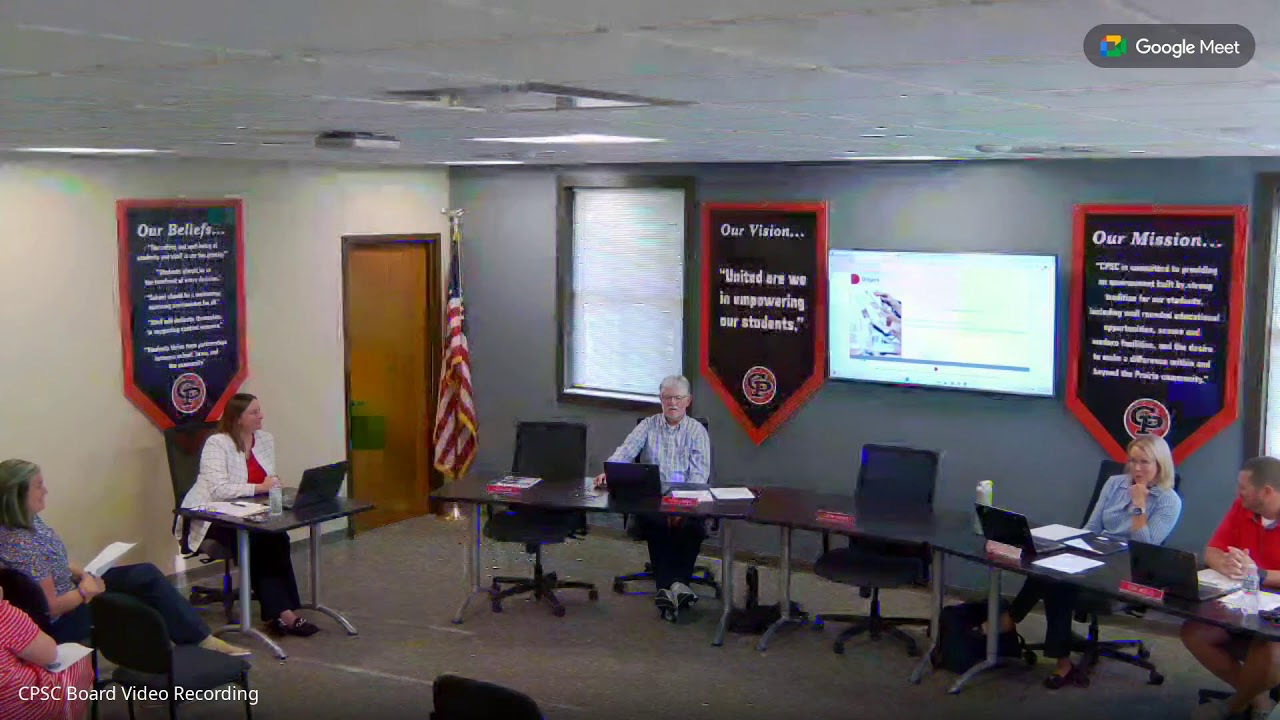
A state indoor air quality evaluation at Clinton Prairie revealed that carbon dioxide levels in one classroom exceeded state limits, prompting immediate corrective actions, while overall fungal (mold) concentrations within the school were found to be lower than outdoor levels. The findings of the report, dated September 4, 2025, were a central topic at the September 15, 2025, Clinton Prairie school board meeting, where issues of transparency and communication with parents were raised. (image/YouTube)

FRANKFORT, Ind. (September 16, 2025) — A state indoor air quality evaluation at Clinton Prairie revealed that carbon dioxide levels in one classroom exceeded state limits, prompting immediate corrective actions, while overall fungal (mold) concentrations within the school were found to be lower than outdoor levels.

The evaluation, conducted by the Indiana State Department of Health on August 26, 2025, was initiated following a request from a concerned citizen regarding health concerns potentially linked to indoor air quality at the school. The findings of the report, dated September 4, 2025, were a central topic at the Monday night Clinton Prairie school board meeting, where issues of transparency and communication with parents were raised.

CO2 Levels Exceed Limits in One Classroom
The highest carbon dioxide (CO2) reading recorded was 1401 parts per million (ppm) in classroom E-22 according to the report. This measurement exceeded the state’s allowable limit of 1100 ppm, which is defined as 700 ppm over the outdoor concentration. Melissa Hodson-Ostler, Administrator for the Clinton County Board of Health, explained that elevated carbon dioxide concentrations indicate too much occupant exhaust and a need for increased fresh air circulation.

Rick Plew, an Industrial Hygienist with the Indiana State Department of Health, recommended checking the damper in classroom E-22 to ensure an adequate supply of outside air. School officials confirmed that the faulty outdoor air damper actuator in the classroom has since been replaced and tested to ensure proper functionality and outside air supply. This issue was described as an “easy fix” and the only “actionable item” identified in the report.

Indoor Mold Lower Than Outdoors, Pre-School Remediation Detailed
Despite community concerns and social media rumors about mold, the evaluation found that fungal (mold) concentrations inside the school were consistently lower than the outdoor concentration. While there are no established acceptable limits for indoor fungal counts, guidelines generally recommend fewer counts indoors than outdoors. Hodson-Ostler noted that measurable mold is common, particularly in agricultural areas like Indiana, and can be tracked indoors.

Clinton Prairie School Corporation Superintendent Dr. Rebecca Boddicker and Hodson-Ostler clarified that initial issues, including a new chiller unit causing condensation and mold discovery in a new hallway, were addressed before students began the school year. Maintenance Director Kurtis Camp had adjusted new chiller unit settings, and affected moldy items were removed, and areas cleaned. Precautionary measures, taken in consultation with the Board of Health, included removing compromised tiles and insulation, and utilizing air scrubbers in the halls. Hodson-Ostler emphasized that these proactive steps meant “nothing occurred because of it” once school started. The school’s design, where individual rooms ventilate to the outside rather than to adjacent rooms, further helps prevent the spread of air quality issues throughout the building.

Humidity Levels Within State Guidelines
Indoor relative humidity during the evaluation ranged from 53% to 58%, while the outdoor relative humidity was measured at 44%. State regulations (410 IAC 33-4-4) set a maximum relative humidity level of 65% in air-conditioned schools during student occupancy, indicating the school’s levels were within acceptable limits. The U.S. Environmental Protection Agency (EPA) recommends maintaining humidity below 60%, ideally between 30-50%, as high humidity can promote the growth of allergens like dust mites or mold.

Parents Raise Transparency Concerns
A significant concern raised by parents at the school board meeting was the lack of transparency regarding the initial issues and the state’s evaluation. Parents questioned why the report was not proactively shared via email, suggesting it could have alleviated “chaos” and addressed the “rumor mill” that had developed on social media.

Dr. Boddicker acknowledged the feedback, explaining that because the initial issues were fully mitigated before school began and the state report found no widespread concerns, school officials did not initially perceive a need for a broad communication. However, she conceded, “I probably would have sent the report out in an email saying the report says there are no quality of air quality or mold issues”.

Reporting Requirements and Next Steps
Under the School Indoor Air Quality rule (410 IAC 33-6-2), the state report and any response from the school must be posted within five days of receipt and remain posted for 14 consecutive days both at the school building and on its website. The school is also required to report any actions taken based on the report within 60 days. An FAQ document, compiled with the assistance of the Clinton County Board of Health, is also being prepared for publication on the school’s website to address common questions.

Officials noted that the state’s evaluation resulted in a “very low level interior finding” and was generally considered a “good report” with the exception of the single CO2 modification. The school conducts annual maintenance, including checking and cleaning the entire air system, such as dampers, and replacing filters every summer.

Frankfort Utilities Board: Unique Aquifer Discovery

Frankfort Utilities Board: Unique Aquifer Discovery
A significant development emerged from an aquifer study, which is expected to be finalized by September. Engineers conducting pump tests discovered a rare hydrological phenomenon where the community sits on two completely independent aquifers, separated by approximately 150 feet of clay.

FRANKFORT, Ind. (September 15, 2025) – The Frankfort Utility Service Board voted to uphold its 4 p.m. meeting schedule, prioritizing staff convenience, while also hearing about a “very unique” aquifer study revealing independent water sources. The board addressed a range of operational and administrative matters, including water utility updates, and ongoing infrastructure projects.

The decision to retain the 4 p.m. meeting time came after an inquiry raised concerns about public accessibility due to work schedules. Board members acknowledged the feedback but emphasized the efficiency gained by allowing employees to attend directly from work, avoiding a return trip for a later meeting. They also highlighted that meetings are live-streamed and archived online, and that written statements or special evening meetings could accommodate public input. A motion to continue with the 4 p.m. schedule passed, framed as aligning with “the voice of the business.”

Unique Aquifer Discovery Boosts Water Outlook

A significant development emerged from an aquifer study, which is expected to be finalized by September. Engineers conducting pump tests discovered a rare hydrological phenomenon where the community sits on two completely independent aquifers, separated by approximately 150 feet of clay. “When they pump from the top, the bottom one levels rise. When they pump from the bottom aquifer, you would think that the top aquifer would lower, but it actually increases in recovers,” Todd Corrie, general manager of FMU explained. This “very, very good news” indicates robust and independent water resources. The water plant currently operates at around 46% of its 9 million gallons per day capacity, with a “firm capacity” of 7.2 million gallons per day, allowing “a lot of headroom” for future needs.

Water Works Reports and Public Safety Warning

The Water Works department reported consistent operations, with a monthly average of 3,672,350 gallons for August, and a high day of 4.27 million gallons, comparable to figures from the past three years. Efforts to upgrade infrastructure include the replacement of 133 residential meters in just over two weeks and ongoing work to address difficult-to-shut-off old iron lines.

A public safety alert was issued regarding an individual in a van on the southwest side of town, reportedly going door-to-door telling residents their water was unsafe and offering to perform checks. The board clarified that this is not a waterworks or utility-identified individual and advised residents not to allow them on their property.

Infrastructure and Operational Updates

Preparations are underway for the annual truck testing scheduled for Monday, which will assess the dielectric strength of booms and “hot sticks” used in electrical work. Ongoing projects include full change-outs on the east side of the county and the replacement of portal cutouts prone to cracking.

The board addressed a question about utility poles being used to hold stop signs at some intersections, noting this practice often occurs where space is limited for standalone stop sign poles.

On the administrative side, the utility sent out 9,986 bills in August, welcomed 52 new customers, and issued 1,777 disconnect notices. A quote is being sought for cloud-based video recording to provide backup beyond the current 10-day limit, which is insufficient for addressing long-standing customer complaints. The implementation of an Interactive Voice Response (IVR) system for payments is anticipated by the end of the month, offering customers more direct payment options.

Commissioners Will Not Decide on Data Center at next Commissioners Meeting

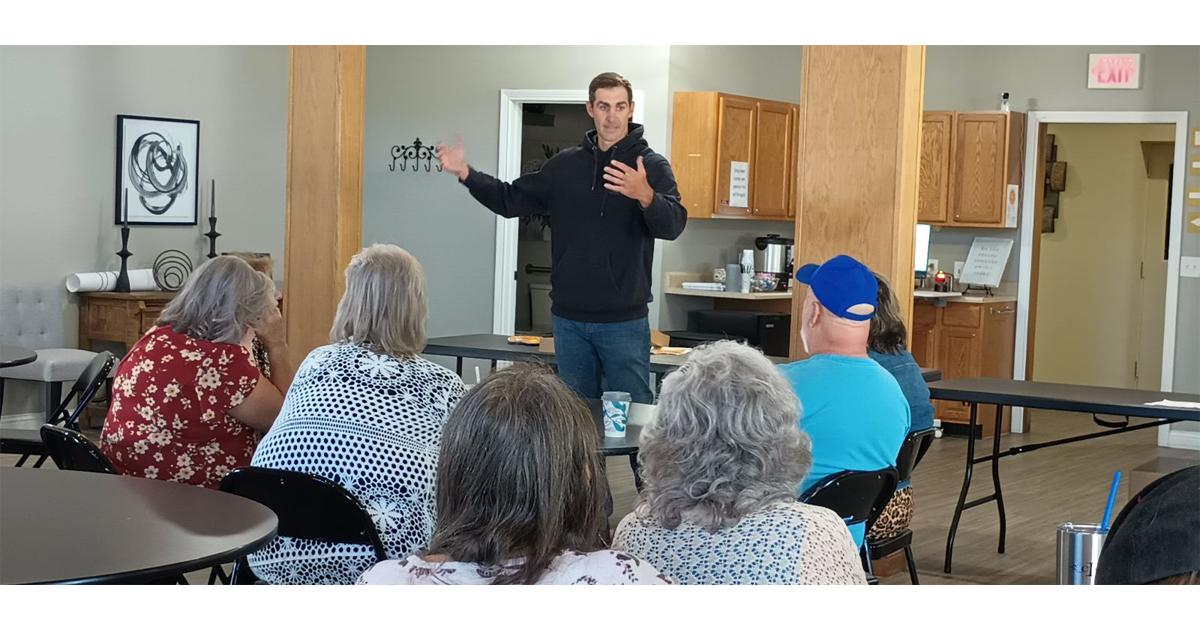
Clinton County Commissioner Jordan Brewer speaking to a group at the Paul Phillippe Resource Center Wednesday morning September 10, 2025, informed those in attendance that he intends to vote "no" on the proposed data center project. (photo/Brett W. Todd)

FRANKFORT, Ind. (September 10, 2025) — Clinton County Commissioner Jordan Brewer speaking to a group at the Paul Phillippe Resource Center Wednesday morning informed those in attendance that the Clinton County Commissioners will not be voting on the data center September 16.

He said the reason not to vote is due to his not being in attendance and the desire that all three Commissioners need to be present. Liz Stitzel, area plan director for the county, will attend the September 16th meeting to present the “no” or “neutral” recommendation of the area plan commission to the commissioners. Indiana law requires the recommendation to be presented and the commissioners then have 90 days to vote on the measure.

Brewer further stated that the topic will come up at either the first or second meeting in October. His personal feelings are Doug Swain, the developer of the data center project, “cannot be trusted” and will be voting “no” when the topic does come up.

The data center project, initially presented to the city-county PIP (Partners in Progress) board in a brief 20-30 minute “speed dating” style of meeting in May, involves the rezoning of 115 acres by the city. Brewer highlighted that the developer proceeded with city planning meetings in July without informing county commissioners, leading to a breakdown of trust. He recounted telling the developer in a July 25th meeting that the developer had “effed this whole thing up” by making commissioners appear dishonest to the public.

A key concern for Brewer is the unknown “end user” of the data center. He stated the county’s consistent stance against rezoning without knowing who they are dealing with, as changes become “limited” once rezoning occurs. He gave a hypothetical example of a developer proposing one-story buildings, only for an end-user to demand 50-story structures, which would be difficult to stop once zoning is approved.

The developer of the data center is hosting a public meeting on Monday, September 15, 6 pm, at Willow Creek Barn located at 1575 Kirklin Brick Rd., Frankfort.

Several other matters were discussed at the public gathering.

Senior Services Funding: The Paul Phillippe Senior Center received $5,900 from the county this year, part of $100,000 allocated by the County Council for various community requests that typically exceed $150,000. Overall funding for the Senior Center primarily comes from United Way, totaling $19,000 annually.

A committee at the Senior Center prepared a report which highlighted that other counties provide significantly more, with some supporting senior services with hundreds of thousands of dollars. The county’s funding originates from landfill tipping fees, which provide roughly $1 million per year, though the portion allocated to commissioners has remained stagnant since 2017-2018. A renegotiated contract will introduce CPI (consumer price index) increases every other year starting in 2026.

Annex Building Construction: The county’s new annex building is slated for an October move-in, though the timeline was not met due to “craftsmanship” issues and what Brewer described as a lack of “pride in our ability to do things well anymore.” Many “little things” required fixing by subcontractors, not structural issues. The project manager for the annex will not oversee the courthouse renovation due to a perceived failure in holding subcontractors accountable; however, Envoy will continue on and serve as general contractor for the courthouse renovation. Brewer mentioned significant time was spent on minute details like interior signage to meet ADA and braille requirements.

Hydroponics Lettuce Development: A proposed hydroponics lettuce development south of NHK on I-65 has been in discussion for one and a half to two years. While it has a broader vision for an “ag tech park” designated by the Indiana Department of Agriculture, it has not yet secured a commitment letter and has not asked for abatements. Brewer noted that the project is largely automated, leading to few jobs.

Its funding, tied to an insurance company in China, has reportedly been held up due to US-China relations. The project is expected to use 300,000 gallons of water per day, which would help circulate water in an empty water tower in the area. Frankfort Utilities has kept the tower empty due to having to dump water from the tower due to lack of water usage in the area.

Kellys, Sommer Legal Battle Moves Forward After Appeals Court Reinstatement

A long-running public dispute between Clinton County Sheriff Richard Kelly (right in photo) and County Prosecutor Anthony Sommer is progressing in court, with the parties recently ordered to establish case management deadlines following an appeals court decision to reverse an earlier dismissal. The Boone County Circuit Court has directed both sides to submit an Agreed Case Management Order within 30 days of August 26, 2025, after a scheduled telephonic pre-trial conference was not attended by either party. (photo/Facebook)

FRANKFORT, Ind. – A long-running public dispute between Clinton County Sheriff Richard Kelly and County Prosecutor Anthony Sommer is progressing in court, with the parties recently ordered to establish case management deadlines following an appeals court decision to reverse an earlier dismissal. The Boone County Circuit Court has directed both sides to submit an Agreed Case Management Order within 30 days of August 26, 2025, after a scheduled telephonic pre-trial conference was not attended by either party.

Case Background:

The legal battle stems from a deterioration of the relationship between Sheriff Kelly and Prosecutor Sommer, which began shortly after Kelly took office in January 2019. Initially friendly, their relationship soured over disputes regarding law enforcement authority in Clinton County. Prosecutor Sommer later campaigned against Sheriff Kelly in the 2022 election and contributed to his opponent.

A key point of contention arose when Sheriff Kelly appointed his wife, Ashley Kelly, as both Jail Matron and Jail Commissary Manager. Under this arrangement, Mrs. Kelly received $1,500 per week for each role, totaling $3,000 weekly. Sommer raised concerns about this arrangement and requested an investigation by the Indiana State Board of Accounts (SBOA) into the jail commissary setup and operation.

In October 2021, local journalist Brett Todd published an article on RadioMom-fm regarding the SBOA investigation, quoting County Commissioner Josh Uitts, who stated that Mrs. Kelly was paid $1,500 per week to manage the commissary, an amount he considered inappropriate. “So we don’t feel that is appropriate amount of money for that type of work. You do the math – that is $1,500 a week for 52 weeks. That’s more money than any county employee makes. This is a contractor – an appointed person by the sheriff, so we don’t feel it’s appropriate.”

Todd’s article, however, also noted that six other Clinton County employees earned in excess of $1,500 per week in 2020.

Prosecutor Sommer, believing the reported salary information for Mrs. Kelly was incomplete because it did not include her matron salary from the county, contacted the journalist to “correct the record and provide additional information in order to keep things balanced.” During an October 8, 2021 meeting, Sommer clarified that Mrs. Kelly’s total compensation was $3,000 per week, accounting for both roles. Sommer provided Todd with a “Commissary Transaction Summary for the first half of 2021,” which he stated was a Council document prepared from numbers reported by the Sheriff’s Office. The Kellys claim this document was “fake” and appeared to show “transfers and disappearances of millions of dollars.” Sommer denies the report was fake or showed such disappearances, acknowledging only one error (an extra digit) he was unaware of at the time.

Sommer also informed Todd that he did not want to be recorded or quoted in any story and that he was not providing information or comment on the ongoing audit and criminal investigation because they were confidential and ongoing. He further stated that if criminal wrongdoing were found, the Clinton County Prosecutor’s office would refer the case to a Special Prosecutor, and it would not be him weighing in on the matter.

The Lawsuit and Appeal:

Richard and Ashley Kelly subsequently filed a lawsuit against Anthony Sommer, alleging defamation and intentional infliction of emotional distress. They claimed Sommer engaged in a political scheme, coordinated with Attorney Thomas Little, to defame them by sharing a fabricated report. Sommer denies these allegations, denying any coordination with Attorney Little and stating he was not attempting to control the media narrative. He also asserts that all statements he made were accurate, honest, and truthful.

Sommer moved to dismiss the complaint, asserting common law prosecutorial immunity and immunity under the Indiana Tort Claims Act (ITCA). The trial court granted the dismissal, finding Sommer’s actions were protected by common law immunity.

However, on March 5, 2025, the Indiana Court of Appeals reversed the trial court’s dismissal. The appellate court determined that the application of immunity hinged on disputed factual questions about the nature and scope of Sommer’s conduct as it related to his prosecutorial function, which remain unresolved. The court noted that, viewing the pleaded facts in the light most favorable to the Kellys, Sommer used his official position to share allegedly fabricated documents about an investigation his office was not handling, while disclaiming official involvement and requesting an off-the-record meeting. Such actions, the court found, “appear more aligned with personal interests than any legitimate prosecutorial duty.” The court also concluded that whether Sommer’s conduct fell within the scope of his employment for ITCA immunity purposes remains a question of fact for a jury.

Current Status:

Following the Court of Appeals’ certification of its opinion on May 2, 2025, Sommer filed a motion on June 4, 2025, to set a deadline for his answer to the complaint, which the court granted, setting the deadline for July 3, 2025. Sommer filed his comprehensive answer, affirmative defenses, and demand for a jury trial on that date, denying the plaintiffs’ allegations of defamation and intentional infliction of emotional distress and asserting various defenses, including prosecutorial immunity.

On August 11, 2025, Sommer’s counsel filed a motion to set an initial telephonic pretrial conference to establish case management deadlines. While a conference was scheduled for August 26, 2025, neither party participated. Consequently, the Boone County Circuit Court issued an order on August 26, 2025, directing the parties to submit an Agreed Case Management Order within 30 days. This order requires the parties to address the jury trial timeframe and anticipated length, discovery cut-off dates, witness and exhibit list exchange, motions in limine, proposed jury instructions, written stipulations, and whether mediation is requested.

The case is now proceeding towards the establishment of a trial schedule and discovery, with the factual disputes surrounding Sommer’s conduct to be further explored.

Note: The journalist mentioned in the article is the author of this article.

Clinton County Area Plan Commission Delivers ‘Neutral’ Stance on Logix Reality Data Center Rezoning

Members of the Clinton County Area Plan Commission has opted to send a "no" or "neutral" recommendation to the Clinton County Commissioners regarding a contentious request by Logix Reality LLC to rezone a 154.92-acre agricultural parcel for a potential data center. The decision was reached after a lengthy public hearing at the Clinton County courthouse on September 2, 2025. In the photo from left to right are: Dan Sheets, Jeff Chynoweth, Kevin Myers and Walt Minnick. (photo/Brett W. Todd)

FRANKFORT, Ind. (September 2, 2025) — The Clinton County Area Plan Commission has opted to send a “no” or “neutral” recommendation to the Clinton County Commissioners regarding a contentious request by Logix Reality LLC to rezone a 154.92-acre agricultural parcel for a potential data center. The decision was reached after a lengthy public hearing at the Clinton County courthouse this evening.

The application, CC-2025-00787 (Docket # 15-25-RZ), sought to rezone land from the A-1 Agricultural Zoning District to the I-1 Light Industrial Zoning District. The proposed site is located on the south side of County Road 100 North, between 450 West and 300 West, in Washington Township. It is adjacent to a railroad and the ConAgra industrial park, with surrounding land zoned a mix of agricultural and industrial.

Liz Stitzel, Clinton County Area Plan Director, presented a detailed report outlining several considerations.

The staff report noted that the site’s location is appropriate for industrial zoning, given its adjacency to Frankfort’s corporate line, existing industrial areas, and the railroad. It also benefits from available sewer, water, and electrical capacity. The site is within a Tax Increment Financing (TIF) district, where development is anticipated to fund infrastructure improvements.

Significant concerns were raised about the readiness of drainage infrastructure, with no comfortable plan submitted to the county surveyor. County Road 100 North, a single-lane gravel road, was deemed insufficient for heavier or higher industrial traffic volumes, and no plan for its upgrade had been provided.

The report highlighted the need for plans to mitigate potential effects on four existing homes to the north and two legal non-conforming homes to the south that are currently zoned industrial.

A proposed new substation to the south, while not directly on the rezoning site, was noted as important for the project’s success, with questions about the acquisition of two legal non-conforming homes it would replace.

Staff initially recommended a one-month continuance to allow the applicant to address these critical information gaps. If no continuance, a nuanced negative recommendation was suggested, acknowledging comprehensive plan support but citing infrastructure unreadiness and unaddressed mitigation for incompatible uses.

Applicant’s case and public response made by John Moore, attorney for Logix Reality LLC, and Doug Swain of Logix Reality, emphasized the potential benefits of a data center.

Swain projected about $1.5 billion in investment, generating approximately $265 million in gross property tax revenue over 25 years and $6.3 million in local income tax. He estimated around 170 full-time employees with an average salary of $85,000 per year, noting a strong incentive for some to live locally, up to 35-percent of the workforce could live in the county.

Swain described data centers as a “cleanest, most simplest form of industrial,” producing no pollution, minimal noise (around 65 dB), and not much water use due to modern closed-loop cooling systems. He stressed that power would come from dedicated lines with costs borne by the developer/user, not local citizens.

The applicant’s representatives expressed willingness to work on drainage, improve County Road 100 North, provide buffering beyond ordinance requirements for residents, and limit certain industrial uses on the site. Swain apologized for not contacting residents earlier, acknowledging it was a mistake.

Swain stated the primary tax incentives are state-granted sales and use tax exemptions for equipment, which is state revenue, not local. He stated that Logix Realty LLC has not approached city and county officials regarding property tax abatements. However, he acknowledged that the end users might ask for local property tax abatements given the large investment.

The meeting saw a turnout of approxiamtely 125 residents with strong public opposition and concerns.

Residents expressed a desire to preserve the land as farm ground and emphasized Clinton County’s identity as a “farming community.” Concerns about water supply were prominent, with fears of wells running dry and the non-recyclable nature of water used. Electricity burden and potential brownouts were also cited.

Another resident claimed data centers produce about 92 dB of noise, comparable to a motorcycle. While another resident raised concerns about light pollution impacting the Prairie Grass Observatory.

Many speakers criticized the lack of information provided to the public and homeowners, stating they felt excluded from the process. Concerns were raised about tax abatements and the need for independent studies.

Two speakers argued that using public money for economic development, such as data centers, is unlawful and without constitutional authority, citing Supreme Court cases and state constitutions.

After hearing the comments from the public and the applicant, the Area Plan Commission first denied a motion for a 30-day continuance made by member Jeff Chynoweth for lack of a second. A subsequent motion to send a negative recommendation to the County Commissioners failed with a 3-1 vote, as four “yes” votes were required for action.

After further discussion on the options as presented by Stitzel, including the possibility of sending “no” recommendation, the board ultimately voted unanimously to pass a “neutral” or “no” recommendation to the County Commissioners. The County Commissioners, who have broader discretion in considering all factors, have 90-days to make a final decision on the rezoning request.

The next regularly scheduled meeting of the Clinton County Commissioners will be September 16th at 9 a.m. in the courthouse.

Go to Top