Category archive

Clinton County

County Council Approves $135,000 in Jail Repairs, Hardy Hills Tax Abatement
clinton county council
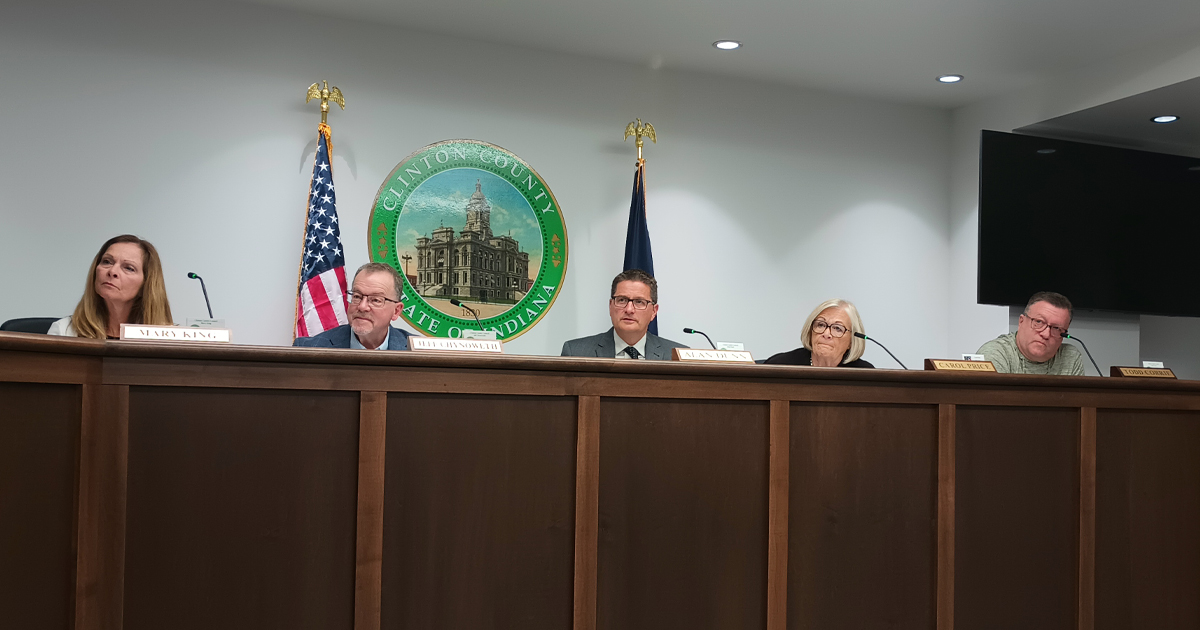
Members of the Clinton County Council listen Wednesday morning, May 13, 2026, as member of the Kirklin Town Board share concerns over recent flooding in town.

CLINTON COUNTY, Ind. (May 13, 2026) – The Clinton County Council moved to address critical infrastructure needs and expand public health services during its Wednesday morning meeting at the County Annex, approving more than $135,000 for jail repairs and authorizing a wide-ranging slate of opioid settlement funding.

Jail Infrastructure and Public Safety
Acting Sheriff Shawn Mayfield presented the council with several urgent requests for the Clinton County Jail, most notably an elevator system with obsolete parts that has become a recurring failure point. After discussion, the council approved $135,000 from the Jail LIT budget to cover a comprehensive repair package.

This funding includes $99,625 for the elevator overhaul, $28,511 for HVAC-related plumbing repairs, and $3,723 for a generator exerciser clock.

Opioid Settlement and Recovery Efforts
The council also gave a consensus approval for $68,650 in recommendations from the county’s opioid settlement committee, presented by Lorra Archibald.

The funding will support a variety of local initiatives, including:

$16,900 for evidence-based “recovery cafes” for teens, men, women, and couples;
$15,000 for an emergency application to provide mental health services for Sheriff’s Department and jail staff;
$18,750 for transition housing through We Care of Clinton County, a figure lowered by the use of volunteer labor from probationers and JCAP participants; and
$2,000 for a new vape disposal program at the Wildcat Solid Waste District to mitigate fire risks in sanitation trucks caused by lithium-ion batteries.

Infrastructure and Local Development
In a 5-0 vote, the council granted $35,000 in CEDIT (county economic development income tax) funds to the Town of Kirklin for a comprehensive storm water survey.

Members of the Kirklin Town Council explained that the town faces significant flooding issues because several county tiles within town limits are not properly mapped, making it impossible to determine flow direction or capacity.

The town will also apply for an OCRA (Indiana Office of Community & Rural Affairs) grant worth $30,000 later this summer.

The council approved a tax abatement compliance report (CF-1) for the Hardy Hills solar park. The project has successfully added $238 million in assessed value to the county and is fulfilling its economic development agreement by paying the county approximately $473,000 annually in economic development payments in lieu of traditional property taxes during its ten-year abatement period.  The tax abatement calls for the first eight years to be abated at 100%, with the remaining two years at 75%.

Public Health and Administrative Changes
Health Department Administrator Melissa Ostler provided an update on a departmental reorganization stating the department is moving to create a deputy health administrator position to ensure a clear chain of command and stability.

Ostler also reported that the department has distributed over 600 bottles of sunscreen and 450 toothbrushes this spring as part of its community outreach efforts, which reached over 670 residents through various mobile screenings and services.

Finally, the council directed the county attorney to draft an ordinance creating a non-reverting fee fund for the Area Plan office. This move is required by a new Indiana law which mandates that planning fees be kept separate from the general fund starting January 1, 2027.

Landfill Deal to Generate Over $60,000 in New Community Revenue in 2026

A renegotiated contract with the Walnut Creek Landfill is set to deliver more than $60,000 in new revenue to Clinton County in 2026, providing a financial boost for local infrastructure and community service projects.

CLINTON COUNTY, Ind. (February 4, 2026) – A renegotiated contract with the Walnut Creek Landfill is set to deliver more than $60,000 in new revenue to Clinton County in 2026, providing a financial boost for local infrastructure and community service projects.

The agreement, originally approved by the Clinton County Commissioners in 2024, increased the landfill’s tipping fee from $2.00 to $2.05 per ton of waste. The fee had remained stagnant since 2017, causing the county to lose purchasing power over time, according to a press release issued Tuesday by the County. With the landfill processing approximately 500,000 tons of waste annually, the five-cent increase is expected to generate an additional $25,000 in revenue for both 2026 and 2027.

County officials stated that the revenue is used to lower the demand on tax dollars while supporting essential services and the Community Service Grant program, which aids local non-profit organizations.

“The previous contract had gone many years without being revisited, and it was important for us to make sure it reflected current conditions,” said Jordan Brewer, president of the Clinton County Commissioners. “By renegotiating that agreement, we were able to secure terms that are more favorable to the County”.

The new contract also addresses the physical impact of waste disposal operations on local infrastructure. Walnut Creek Landfill is now required to pay a $20,000 annual road maintenance fee, double the previous amount, to offset the wear and tear caused by heavy truck traffic on county roads.

In addition to infrastructure support, the commissioners negotiated a $25,000 annual contribution specifically for community service projects. In 2025, the first of these payments was utilized to fund cemetery restoration projects throughout the county.

Looking ahead, the contract ensures that the county’s revenue will keep pace with inflation. The tipping fee is scheduled for another increase in 2028 based on the Consumer Price Index (CPI).

Rising Insurance Costs and Audit Reforms Lead Clinton County Commissioners Meeting

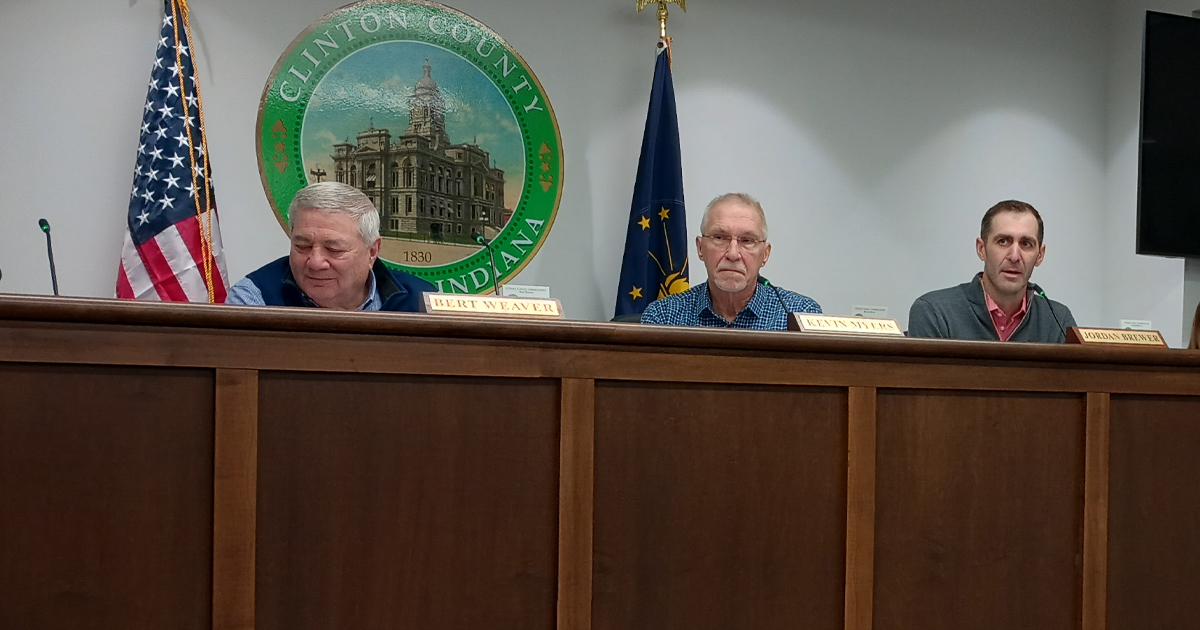
Members of the Clinton County Commissioners listen to a presenter during its Tuesday, February 3, 2026, board meeting at the Clinton County Annex. Pictured from left to right, Bert Weaver, Kevin Member, Jordan Brewer. (Photo/Brett W. Todd)

CLINTON COUNTY, Ind. (February 4, 2026) – The Clinton County Board of Commissioners moved forward with historical designation efforts and tightened financial oversight during their meeting on February 3, while receiving a glowing year-end report from the local Humane Society.

Humane Society Reports Record Success
The meeting was highlighted by a comprehensive 2025 year-end report from the Clinton County Humane Society, which reported a live release rate of 95%. Executive Director Cheyenne Taylor noted that for the first time in the shelter’s history, dog adoptions (342) outpaced cat adoptions (317). The shelter also successfully reduced the average length of stay for dogs to just 43 days, down from an earlier goal of 60.

The organization highlighted significant building improvements funded by grants, including an $80,000 grant from the Community Foundation of Clinton County to replace dog kennels. Additionally, the shelter participated in a high-profile rescue involving 47 dogs removed from a dog-fighting operation in South Carolina through the Humane World for Animals program. The shelter received some of the dogs from this rescue.

Historical Designation for Fairgrounds
The commissioners granted permission to Skip Davis of the Clinton County Fairgrounds history project to proceed with an application for national historic designation. Davis detailed the site’s rich history, noting that a 1872 court fight involving the grounds eventually reached the U.S. Supreme Court, which set a national precedent allowing counties to own land for the purpose of holding fairs.

The project focuses on the 1909 administration building, constructed with the same bricks used to pave the Indianapolis Motor Speedway that same year. Davis noted that the designation could increase tourism for the county.

Financial Oversight and Insurance Hikes
In a move to improve auditing transparency, the board passed Resolution 2026-1, establishing new procedures for online credit purchases. The auditor’s office will now require detailed identifiers, such as photos or specific item descriptions, for purchases made on platforms like Amazon to ensure they are legitimate county expenses.

The board also approved an insurance renewal that saw a 14.8% increase in premiums year-over-year. Commissioners noted that the market for municipal insurance is shrinking, with several companies declining to bid due to the county’s loss history, the presence of a county home, and ongoing litigation involving the sheriff and jail matron. Excess liability coverage surged by 82%, rising from approximately $50,000 to over $92,000.

Commissioners also noted an additional cost for insurance for the newly opened, $17 million County Annex.

Contested Claims and Department Updates
The commissioners took the rare step of denying two specific financial claims from the Sheriff’s Office. One claim for camera repair at the jail was rejected because the commissioners still lack access to the camera system following a password change last summer. A second claim for “dress boots” for the sheriff was denied after being deemed “excessive” and inappropriate for a standard uniform item.

Other key moments from the meeting included:
Highway Department: Superintendent Rick Campbell reported on recent snow removal efforts, noting that while some mailboxes were damaged by heavy snow, the priority remained keeping roads open for emergency services and schools.

Health Department: Officials announced upcoming lung cancer screenings on Feb. 11 and emphasized measles preparedness as infection rates rise in other states.

Purdue Extension: A contractual service agreement was postponed to the next meeting to ensure specific Clinton County amendments from the previous year were included.

The next Board of Commissioners meeting is scheduled for February 17.

Data Center Receives ‘Favorable’ Recommendation From APC, County Commissioners to Make Final Decision

The Clinton County Area Plan Commission (APC) voted Tuesday, January 6, 2026, to send a favorable recommendation to the County Commissioners to rezone approximately 714.55 acres of land in Washington and Union Townships from agricultural to light industrial. The project, spearheaded by Logix Realty LLC with DataOne as the intended user, is envisioned as a three-part "campus" featuring a high-tech data center, a pre-cast concrete manufacturing plant, and a symbiotic hydroponic "gigafarm".

CLINTON COUNTY, Ind. (January 7, 2026) — Local planning officials on Tuesday moved forward with a massive rezoning request that could pave the way for a multi-billion dollar data center campus, despite concerns from residents about the potential impact on the county’s rural character and natural resources.

The Clinton County Area Plan Commission (APC) voted to send a favorable recommendation to the County Commissioners to rezone approximately 714.55 acres of land in Washington and Union Townships from agricultural to light industrial. The project, spearheaded by Logix Realty LLC with DataOne as the intended user, is envisioned as a three-part “campus” featuring a high-tech data center, a pre-cast concrete manufacturing plant, and a symbiotic hydroponic “gigafarm”.

Proponents of the development estimate the initial investment at $10 billion to $12 billion, with the potential to reach $50 billion over time. Supporters who spoke during the marathon public hearing argued the project would provide a transformative tax base to fund local schools and first responders.

However, the proposal faced stiff opposition from neighbors worried about the scale of the expansion. Residents raised concerns regarding aquifer depletion, noise pollution, and the loss of farmland.

To address these quality-of-life issues, the developer conceptually agreed to 14 legally binding commitments. These include a 65-decibel sound limit at the property line, a requirement for closed-loop recirculating water systems to prevent groundwater waste, and a decommissioning plan backed by financial security to ensure abandoned buildings are removed at the developer’s expense.

“Staff would strongly caution against any favorable recommendation without a full set of clear commitments,” said Liz Stitzel, the APC’s executive director, noting that the safeguards were essential given the “unprecedented” size of the site.

The site is located north of Frankfort’s city limits, adjacent to an existing railroad and industrial park. While approximately 0.5% of the county’s total farmland would be converted to industrial use, officials noted the location is consistent with long-term land-use plans that discourage residential growth near the nearby county landfill.

“Sooner or later, it is likely some sort of industrial or commercial development is the best use for this land,” the staff report noted, citing the area’s proximity to land already zoned for infrastructure.

The final decision now rests with the Clinton County Commissioners who have 90-days to vote on the favorable recommendation. The next scheduled meeting of the Commissioners is set for January 20 at the Clinton County Annex.

County APC Rezoning Hearing for Proposed Data Center Set

CLINTON COUNTY, Ind. (December 16, 2025) – The Clinton County Area Plan Commission (APC) is preparing to hear comments on a proposed data center located just north of Conagra. The petitioner is Logistix / Logix Realty who pulled their original petition prior to the Clinton County Commissioners could vote on the APC recommendation in November.

The new hearing is set for January 6, 2026, at 6pm in the Frankfort Library Skanta Theatre.

At least 700 acres is being requested to be rezoned from Agriculture to Light Industrial. The reported end user of this development is DataOne.

Letters informing home owners in the impacted area should go out in the next week or two.

Clinton County Commissioners Table Data Center Vote, Split Over Last-Minute Data Center Site Visit

Amid intense local opposition and a rapidly approaching legislative deadline, Clinton County commissioners are undertaking urgent efforts at due diligence concerning a massive proposed data center project, including a planned trip to an operational site in New Jersey. The controversy centers on the proposed rezoning of agricultural land for a project being developed by DataOne and Logistix partner Doug Swain. (photo/Brett W. Todd)

CLINTON COUNTY, Ind. (November 5, 2025) — Amid intense local opposition and a rapidly approaching legislative deadline, Clinton County commissioners are undertaking urgent efforts at due diligence concerning a massive proposed data center project, including a planned trip to an operational site in New Jersey. The controversy centers on the proposed rezoning of agricultural land for a project being developed by DataOne and Logistix partner Doug Swain.

The urgency stems from the fact that the commission has a 90-day period to act on the rezoning recommendation; if no decision is reached by approximately November 18th, the request dies. The time constraints have fueled commissioner disagreement over the feasibility of adequate research.

The New Jersey site visit, scheduled for today, Wednesday, following the Tuesday commissioner meeting, targets a DataOne development located in Vineland, New Jersey. Scott Wolf, an Indiana businessman associated with Logistix, presented DataOne as the company intending to come to Clinton County. The purpose of the trip is to allow officials to meet the real people on the other end of the transaction and gain first-hand information on infrastructure and community impact.

“We’re going to take a number of people out to do due diligence [Wednesday],” Wolf stated. The delegation plans to speak with officials in Vineland regarding power rates, water consumption, and noise, and to “actually meet the real people on the other end who are to do the development.”

The flight manifest of the trip, obtained by Clinton County Today, reflects a broad cross section of Clinton County and City of Frankfort elected officials, appointed officials as well as employees along with community members. The manifest identifies the following individuals as scheduled to make the trip: Kevin Myers, Bert Weaver, Alan Dunn, Carol Price, Todd Corrie, Dan Sheets, Liz Stitzel, Mary King, Tammy Sander, Russ Kaspar, Kimberly Black, Jeff Chynoweth, Steve Beardsley, Clarence Warthan, Robert Joe Stevens, Eric Woods, Joe Palmer, John Virtue, and Shan Sheridan.

Two commissioners identified in the manifest voiced support for participating in the trip, emphasizing the need for comprehensive research before making a final determination.

Commissioner Bert Weaver confirmed his intent to travel, stating he felt obsessed with the issue and was still gathering information. “I am going on the trip to New Jersey tomorrow because I want to find out this stuff,” he said. He noted that while the project was handled poorly initially, he is “not prepared to make a decision today.”

Another commissioner, Commissioner Kevin Myers, who had previously been wary of the project, explained that communication with the New Jersey location had altered his perspective. “We have an opportunity to visit a like plant that’s going there. We have an opportunity to visit with the mayor. We have an opportunity to meet with the commissioners of that location. We have an opportunity to see and listen to the people They’re there,” he commented, stressing the importance of doing their due diligence before a vote.

However, Commissioner Jordan Brewer, who has been highly critical of the developer’s handling of the process, strongly disagreed with the value of a rushed, last-minute trip.

“I’m not doing that for the record,” Brewer said regarding the trip. He argued that attempting to complete the necessary research in the time remaining is futile, given the project’s scope. Brewer cited new estimates suggesting the project could be worth as much as $50 billion—three times the size of the nearby LEAP project—making a decision by November 18th virtually impossible.

“How can you then do enough due diligence from now until November 18th for a size and scope of a project this large? It’s just not possible,” Brewer asserted. He believes that undertaking due diligence under current circumstances “provide no benefit.”

The board ultimately voted 2-1 to table the resolution, with Brewer being the ‘no’ vote, continuing to take no action on the rezoning request and allowing the remaining days of the 90-day period for research to elapse. If they fail to act by the deadline, the rezoning request will automatically expire.

Editor’s note: Dan Sheets provided a statement that he “did not attend the meeting in New Jersey today.”

County Commissioners Delay Data Center Decision Amid Heated Public Scrutiny; Burn Ban Issued

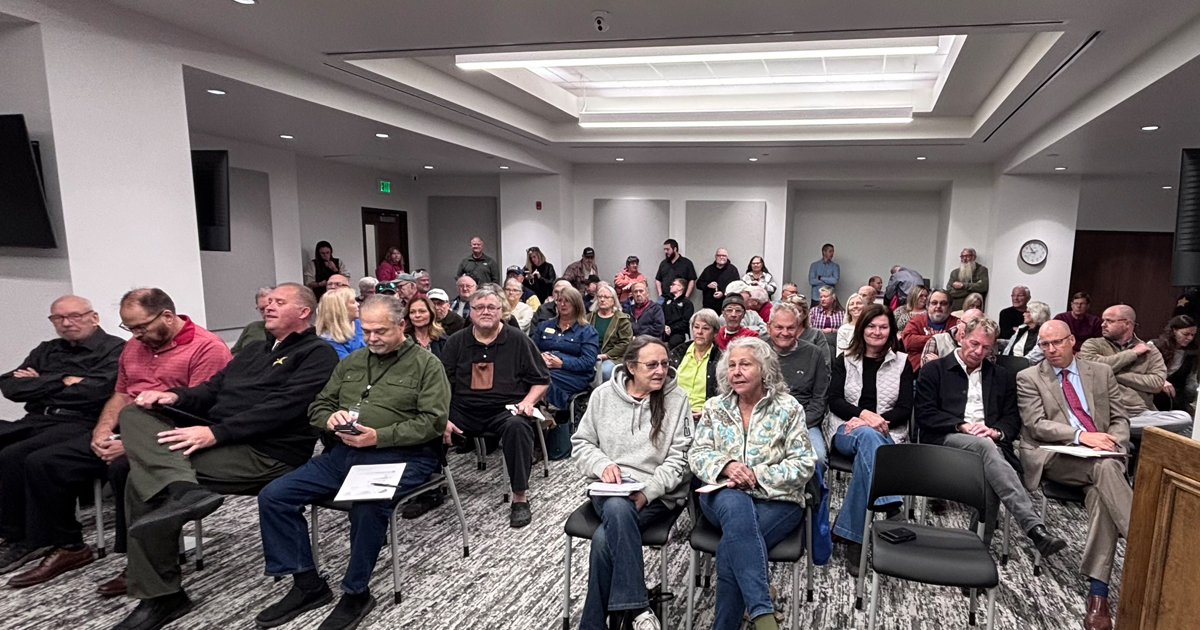
County commissioners convened Monday, confirming that a highly controversial vote regarding a proposed data center development will be postponed until mid-November, despite significant public presence at the meeting. Commissioners stated they need additional time to complete individual research and fact-finding regarding the proposal as well as not all commissioners were present.

CLINTON COUNTY, Ind. (October 7, 2025) – County commissioners convened Monday, confirming that a highly controversial vote regarding a proposed data center development will be postponed until mid-November, despite significant public presence at the meeting. Commissioners stated they need additional time to complete individual research and fact-finding regarding the proposal as well as not all commissioners were present.

Public comment was dominated by residents expressing strong opposition and frustration over the lack of a decision and the absence of a third commissioner, commissioners president Jordan Brewer.

Katelyn Greeno delivered 53 signed affidavits, claiming the signees attest to the claims under penalty of perjury. The resident emphasized the concept of “public good,” arguing that the government cannot approve a project that goes against the community’s well-being or customs.

Another resident, Nathaniel Webb, warned that the data center would result in “more harm than good” economically, creating an eyesore, increasing litter and traffic, and ultimately scaring away high-means residents who might otherwise invest in the county. He suggested that the proposal is based purely on hype and lacks tangible value.

MaryLynn Peter, another outspoken resident, questioned why the developer has not disclosed the identity of the project’s end-user, noting that an NDA (non-disclosure agreement) is associated with the project. She suggested the end-user could be entities such as Google, Amazon, or even China, and urged commissioners to research the developer, Mr. (Doug) Swain, alleging he is providing “spin stories”.

Commissioner Bert Weaver responded to criticism by stating that he is committed to studying both sides of the issue and represents 35,000 people, not just those present to voice opposition. The commissioners reiterated that they will take their 90 days to conduct due diligence and will post the item on the official agenda when it is ready for discussion and a vote. Residents were advised to check the county’s official websites (clintonco.com or clintoncountyin.gov) for official meeting agendas, rather than relying on social media groups like Facebook.

Emergency Actions Taken
In immediate action, the commissioners approved an executive order issuing a county-wide burn ban. Renee Crick, the Director of EMA and Central Dispatch, reported dry conditions persist, with limited forecast relief. Since October 1st, the county has recorded 17 fires, including six grass fires and nine illegal burns. The burn ban was approved by a 2-0 vote as Executive Order Number 2025-01, effective until rescinded by the commission.

In other EMA-related business, the commissioners approved a motion for $2,000 to complete concrete work at the county’s training center, a facility recently used for grain engulfment and propane training. They also approved the donation of a 2005 Chevy Malibu with flat tires to the firefighter training class for extrication practice.

Annex Move-in Scheduled
The county is preparing to move staff into the new annex building. The anticipated target date for moving office staff is October 20th, with moving activities scheduled through October 31st.

Stephen Deckard, director of EMS, announced that Active Shooter training will be conducted for staff members on October 17th-19th, with a repeat session scheduled for October 31st-November 2nd, involving the Sheriff’s Office, Frankfort Police, and Fire Departments. Frankfort Police will host the October 17th classroom session while Rossville Schools will host the October 18th and October 19th. Deckard is working with the Community School of Frankfort to secure a location for the November 1st and 2nd dates.

The next scheduled regular meeting for the commissioners is October 21st.

Will The Digital Frontier Come to Frankfort? A Call for ‘Suspension of Disbelief’

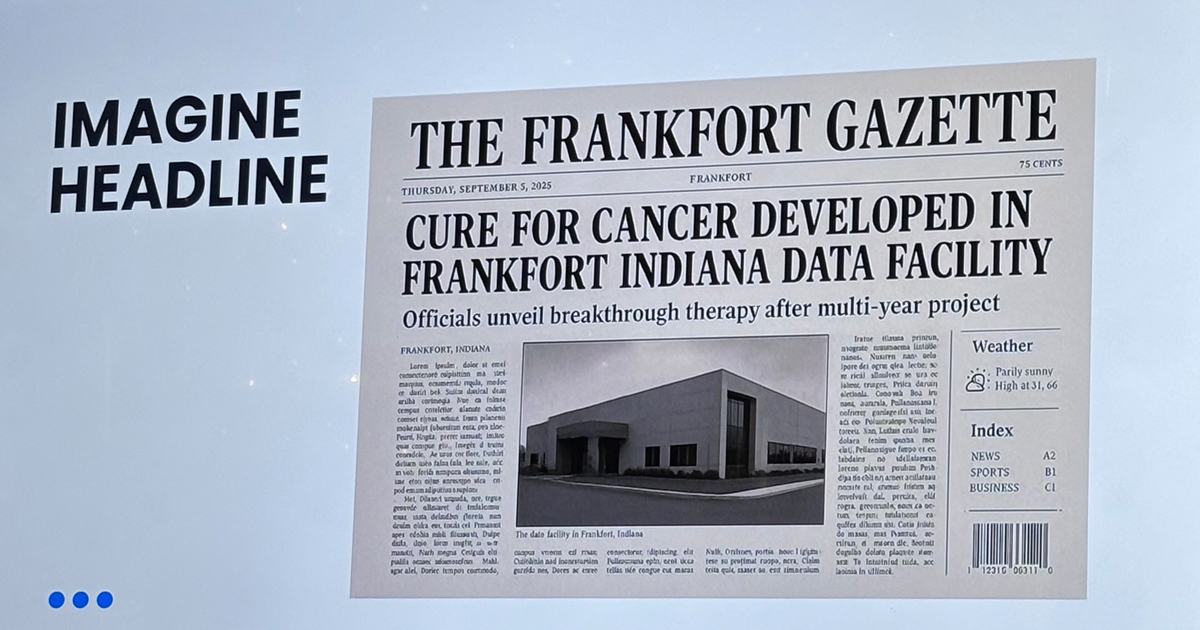
Doug Swain, president of Logistix, who at a recent public gathering held at Willow Creek Barn on September 15th, shared his vision on the rezoning of 154 acres north of ConAgra for a massive data center development. His pitch isn't just about servers and fiber optics; it's about a headline-grabbing future: "Cure for cancer developed in Frankfort, Indiana data facility." While he admits this won't happen next year, he puts forward that as AI evolves into quantum computing, these facilities are "widely expected to generate cures for some widely known diseases, medical advances, advanced technology." It sounds like science fiction, but Swain insists it's "not really beyond the realm of possibility." (photo/Brett W. Todd)

Frankfort, Ind. (September 29, 2025) – The air in Clinton County, usually thick with the scent of agriculture and the rhythm of rural life, is now buzzing with a different kind of current: the promise of a digital revolution. Doug Swain, a seasoned developer with a vision as expansive as the Indiana cornfields, stands at the forefront, pitching a future where Frankfort isn’t just a dot on the map, but a nexus of quantum computing and artificial intelligence. But like any bold venture, this one comes with a chorus of questions, concerns, and a healthy dose of skepticism from a community wary of trading their peace for progress.

Swain, president of Logistix, who at a recent public gathering held at Willow Creek Barn on September 15th, shared his vision on the rezoning of 154 acres north of ConAgra for a massive data center development. His pitch isn’t just about servers and fiber optics; it’s about a headline-grabbing future: “Cure for cancer developed in Frankfort, Indiana data facility.” While he admits this won’t happen next year, he puts forward that as AI evolves into quantum computing, these facilities are “widely expected to generate cures for some widely known diseases, medical advances, advanced technology.” It sounds like science fiction, but Swain insists it’s “not really beyond the realm of possibility.”

The Hum of Progress: A Vision of Prosperity

What exactly are data centers? Swain describes them as being “most like industrial warehouses” but housed with “a lot of processing units, GPUs, CPUs” that process vast amounts of data. They are the silent powerhouses behind everything from your daily ChatGPT query to cloud services like Google, Apple, and Facebook. The companies involved are “hyperscalers” like Amazon (AWS), Meta (Facebook), Google, and Microsoft, or “collocation” facilities serving multiple enterprise users. These are not small players; companies like Digital Realty boast market caps of $56 billion.

The economic promise, according to Swain, is substantial. An economic impact analysis, based on similar projects, projects nearly $1.5 billion invested to build 1.4 million square feet. Over a quarter-century, this could generate $265 million in gross property taxes and $6.3 million in new local income taxes. The project is slated to create 170 direct full-time positions within the data center, with an average wage of $85,000, almost 40% higher than Indiana’s average. Beyond that, over 300 indirect jobs and a thousand-plus construction jobs are anticipated.

“This is a new industry sector to Indiana that’s already advanced elsewhere in the country, and we have a chance now to change our game,” quoted a director of economic development from Morgan County, Indiana, describing a similar project. Swain points to examples in Hamilton and New Albany, Ohio, where mayors and economic directors lauded “significant” economic impact, “real growth not just in jobs but in the tax base.”

Furthermore, the proposed site lies within a TIF (Tax Increment Financing) district, meaning the generated property tax revenue could be funneled by the county’s redevelopment commission into infrastructure that supports housing development, a critical need exacerbated by property tax reductions from Senate Bill One. This, Swain believes, would encourage data center employees, who require 24/7 proximity to their work, to live locally.

Beyond the raw numbers, these companies are presented as committed community partners. Google, for instance, has given over $14 million in philanthropic grants in Ohio, focusing on STEM education and workforce development. AWS and Microsoft have similar programs, aiming to train local talent for high-paying tech jobs that are “expected to be there for a long long time.”

“We think it’s a game changer for the community,” Swain concludes, envisioning “quality development,” “high paying jobs,” and a “clean industry” that will lead to “other housing, retail, other opportunities” while maintaining Frankfort’s charm.

Shadows of Uncertainty: The Community’s Unanswered Questions
But the vision of a gleaming digital future casts long shadows of concern for Frankfort’s residents. At a public meeting, the mood was tense, with one resident openly declaring, “You sound like a used car salesman. I’m not buying your car.” The skepticism is palpable, rooted in fears about resources, health, and the unknown.

The Power Problem: A central concern revolves around energy. While Swain assures that the project will be powered by a dedicated transmission line and a 15-year-plus power agreement, with no costs anticipated to be borne by the community for utilities. Residents recall comments from Indiana’s governor about power grid strain and the possibility of nuclear reactors. Swain swiftly dismisses the nuclear option as “extremely expensive” and “not practical,” citing heavy regulation and logistical challenges. He clarifies that the grid is heavily regulated by MISO (Midcontinent Independent System Operator) to prevent strain and that utility companies are actively seeking clean energy solutions like natural gas and fuel cells to supplement the grid. Rick Gunyon, a Frankfort Utility Service Board member, corroborates this, stating, “We have more than enough electrical energy available for this data center and then some well into the future.” The location even offers redundancy with two different electric companies, Frankfort Municipal Power and Tipmont, and the option for natural gas generators as backup.

The Water Worry: “We hear a lot about the water,” Swain concedes, acknowledging widespread concerns. Residents are troubled by reports of data centers consuming “a million gallons or 2 million gallons a day.” Swain argues that these figures are based on older designs. The current “trend in data centers is to move away from these water intensive towers towards more sustainable closed loop system that recirculates and reuses the water,” with a goal of “near zero” water utilization. He cites examples like Vantage and Aligned data centers that use “highly efficient closed loops water systems” or “waterless cooling technologies.” However, residents question if these advanced systems will definitively be implemented in Frankfort and what happens during hot summer days. There’s also anxiety about potential aquifer depletion, especially for those outside city water limits who rely on private wells. Swain states they are working with the city and county to ensure comfort with water usage, and the utility company will monitor and ensure capacity isn’t harmed.

The Noise Nuisance: Another significant concern is constant noise. Residents report that similar facilities in other towns cause “non-stop” noise, leading to health issues like “anxiety and thousands of people” and even physical illness. Swain’s proposal suggests a 65 dB noise level, which he equates to “street traffic when you’re standing on a corner.” Mitigation efforts include increased setbacks, landscaping, and mounting around residences.

Jobs and Tax Breaks: The promise of 170 direct jobs is met with skepticism, with one resident claiming centers house only “12 to 50” people. Swain clarifies that 170 is for a fully operational facility of this specific type, not smaller enterprise data centers. The idea of “thousand plus construction jobs” is also questioned, given the common practice of bringing in out-of-state specialized contractors. Swain counters that while general contractors might be from out of town, they employ local staff and subcontractors for various trades, and workers will spend money in the local economy.

The mention of tax incentives further fuels resident frustration. While the state offers a “data center sales tax exemption” for 25-50 years on equipment, local property tax abatements are also on the table. Residents question how the community will benefit if these centers receive substantial tax breaks, essentially “stealing from us anyway” regarding state sales tax. Swain explains that local property tax abatements (typically 10 years, 50% reduction) are a local decision and part of a competitive landscape to attract investment. He reiterates the TIF district’s role in local infrastructure development as a primary benefit.

Transparency and Health: The “chicken and egg” problem of requiring zoning approval before revealing a specific buyer deeply frustrates residents, who want to “know before they make the vote.” Concerns about potential health issues, including cancer among workers and nearby residents, were also voiced, though Swain said he had “not seen any information” on such concerns with data centers.

A Community at a Crossroads

Rick Gunyon, the utility board member and long-time resident, offers a historical perspective, reminding the community of past anxieties about new technologies like McDonald’s or the railroad. “We’ve had this conversation before. The subjects have changed over the years and it’s very natural for everyone to have different points of view of this,” he says, encouraging “suspension of disbelief” and seeing the project as an opportunity.

Doug Swain and his team are attempting to navigate a complex landscape, balancing the allure of a high-tech, high-revenue future with the deep-seated concerns of a community clinging to its character. The meetings are ongoing, the questions are plentiful, and the answers are, for many, still insufficient. Frankfort, like many communities across the country, stands at a crossroads, weighing the tangible risks against the tantalizing promise of the digital frontier. Whether it’s a cure for cancer or simply a new economic engine, the decision will shape the community’s identity for decades to come.

Next Up

The Clinton County Commissioners will have the final say on the rezoning request. By Indiana law, the commissioners were presented with the Area Plan Commission’s “neutral” recommendation at its September 16th meeting and have 90-days to make a decision. Commissioners president Jordan Brewer stated that the topic will come up at either the first or second meeting in October. His remarks came while speaking to community member at Paul Phillippe Resource Center on September 10th.

The commissioners are next scheduled to meet on October 7th at 9am in the Courthouse.

Clinton County Jail is ICE Detention Facility

The Clinton County Jail is an ICE Detention Facility; that fact came to light during the Tuesday county council budget hearing. Though the specifics of the agreements and the exact number of detainees remain largely unknown to local county leaders, Clinton County is reportedly one of four counties in Indiana that house ICE detainees, according to an article published by The Indianapolis Star on August 25. The other three are Clay, Clark and Marion County. However, both Brewer and Dunn each expressed difficulty accessing detailed breakdowns, noting that they only see the amount deposited into the federal inmate fund and not the specific number of individuals or the compensation agreement. (photo/Brett W. Todd)

CLINTON COUNTY, Ind. (September 24, 2025) – The Clinton County Jail is an ICE Detention Facility; that fact came to light during the Tuesday county council budget hearing.

“What is the cost of having ICE detainees in our jail right now intermixing with local inmates,” asked Commissioners’ president Jordan Brewer to members of the county council. Afterwards, in the hallway outside the meeting room, Brewer stated he was only sharing “what I have been told.”

Clinton County president Alan Dunn stated that a report from a single month, possibly April or May, showed an additional $85,000 generated from fees associated with housing ICE detainees when asked during a beak in the budget hearing. According to Dunn, this money represents a supplemental additional fee received when a federal inmate is also an ICE detainee.

The revenue increase coincided with a new contract amount for federal inmates that started around February 1st of this year, raising the per-inmate rate to approximately $90. The previous contract rate was $68. After the initial jump from the rate increase, a “secondary jump” was observed in May related to a portion of those inmates being ICE detainees according to Dunn.

Though the specifics of the agreements and the exact number of detainees remain largely unknown to local county leaders, Clinton County is reportedly one of four counties in Indiana that house ICE detainees, according to an article published by The Indianapolis Star on August 25. The other three are Clay, Clark and Marion County. However, both Brewer and Dunn each expressed difficulty accessing detailed breakdowns, noting that they only see the amount deposited into the federal inmate fund and not the specific number of individuals or the compensation agreement.

Sheriff Defends Partnership, Warns of Program Instability
The Sheriff’s office confirmed its participation in the ICE program. Clinton County Sheriff Richard Kelly stated his agency will “continue to partner with our federal agencies to continue to do a fantastic job of detention and humanely get these folks transported to where they need to be transported.” The Sheriff emphasized that the office will not “pick and choose what we enforce” and is following what the President of the United States has asked, positioning the county as part of a working law enforcement program.

Sheriff Kelly took issue with Brewer, stating that comments made could place the facility and employees “in danger of protesters.” Kelly continued: “He is putting our community at risk. He’s putting our facility and employees at risk. And he gladly accepts the money for pet projects and everything else under the sun that we pay for.”

The federal inmate revenue has brought “well over a million dollars” into the facility and is currently viewed as an “absolute necessity” for budgets, funding deputy and corrections positions, and covering upkeep on the 30-year-old facility added Kelly.

However, the Sheriff cautioned that the program introduces financial volatility. The program “can end by my choice, by the federal government’s choice,” potentially disappearing in just 30 days. This instability complicates planning for facility upgrades or replacement, especially since the funding for a new facility is often tied to the federal inmate program.

Facility Strain and Controversy
Concerns were raised about the physical impact of the increased population. Brewer noted that having 225 people in the facility wears it down quicker than 150 people.

The Indianapolis Star noted that Clay County conducted an analysis and added approximately 285 beds to its existing facility. Through seven months of this year, ICE had sent more than 3,000 detainees thru the Clay County jail at $85 per day for each immigration detainee.

Clinton County Reviews Multi-Year Fiscal Impact of SB1 Tax Overhaul

The Clinton County Council received a preliminary fiscal impact study on its first of three days of budget hearings detailing the deep effects of state tax reform legislation, Senate Enrolled Act 1 (SEA 1, SB1), which is projected to shrink the county's property tax base while reshaping local revenue streams over the next six years.

CLINTON COUNTY, Ind. (September 23, 2025) – The Clinton County Council received a preliminary fiscal impact study on its first of three days of budget hearings detailing the deep effects of state tax reform legislation, Senate Enrolled Act 1 (SEA 1, SB1), which is projected to shrink the county’s property tax base while reshaping local revenue streams over the next six years.

The analysis, presented by financial advisor Emma Adlam of Baker Tilly on September 9 showed that SB1 introduces significant changes across property taxes and local income taxes (LIT). These changes begin phasing in starting in 2026 and continue through 2031.

For the immediate 2026 budget year, the county is operating under a constraint imposed by SB1: the Maximum Levy Growth Quotient (MLGQ) is capped at 4%, down from an estimated 5.6% it would have been under the standard formula.

Property Tax Base Shrinkage
The new law introduces several automatic deductions expected to reduce the county’s net assessed value (NAV).

The current $48,000 Standard Deduction for homestead properties will be phased down starting in 2027 and will reach zero by 2031. Concurrently, the Supplemental Homestead Deduction will increase to 66.7% by 2031. These changes are projected to decrease the NAV of an average Indiana home from $120,446 (2025) to $80,158 (2031).

Non-homestead residential, agricultural, and long-term care properties (classified as “2% properties”) will receive automatic deductions, starting at 6% in 2026 and rising to 33.4% by 2031.

The de minimis exemption for Business Personal Property (BPP) will increase substantially from $80,000 to $2 million starting with the 2027 assessment. It is estimated that approximately 21% of the county’s current BPP Net Assessed Value may be eliminated under this new exemption. Furthermore, the 30% depreciation floor for new equipment placed in service after January 1, 2025, will be removed, allowing for greater depreciation (with exceptions for existing TIF areas).

The net result of these property tax changes is a shrinking tax base for the county.

Income Tax Structure Overhaul
SB1 also mandates an overhaul of local income tax distribution, significantly impacting property tax relief.

Clinton County currently dedicates a 0.50% Local Income Tax to Property Tax Relief Credit (PTRC). This credit is applied directly to the property owner’s gross tax bill, which has the secondary effect of lowering the Circuit Breaker losses allocated to local taxing units. Pursuant to SB1, this income tax expires following 2027.

The current complex LIT expenditure structure will be eliminated and replaced starting in 2028. Under the new structure, the County Council is given the authority to adopt up to 1.2% for general County Services. Baker Tilly’s illustrative estimates show that a 1.2% County Services LIT could generate approximately $10.6 million, which is higher than the county’s $9.6 million estimated total LIT distribution for 2026 under the current structure.

Fiscal Outlook

Despite the changes, long-term modeling conducted by Baker Tilly, extending projections through 2031, indicates that the county’s net levy is still expected to grow, albeit at a slower rate than if SB1 had not been enacted.

The Legislative Services Agency (LSA) model, which forecasts through 2028, also estimated that the county will see an increase in its net levy.

However, the immediate 2026 budget forecast indicates tight margins: the $320,985 in additional levy gained from the capped MLGQ, combined with a $119,333 increase in certified shares, is largely offset by a projected $300,000 reduction in interest income due to anticipated federal interest rate cuts. This leaves the county with a net gain of only $140,300 in additional general revenue for the 2026 budget.

You may download the presentation by clicking here.

Watch the presentation on YouTube here.

1 2 3 25
Go to Top