Category archive

Clinton County Sheriff’s Office

County Council Approves $135,000 in Jail Repairs, Hardy Hills Tax Abatement
clinton county council
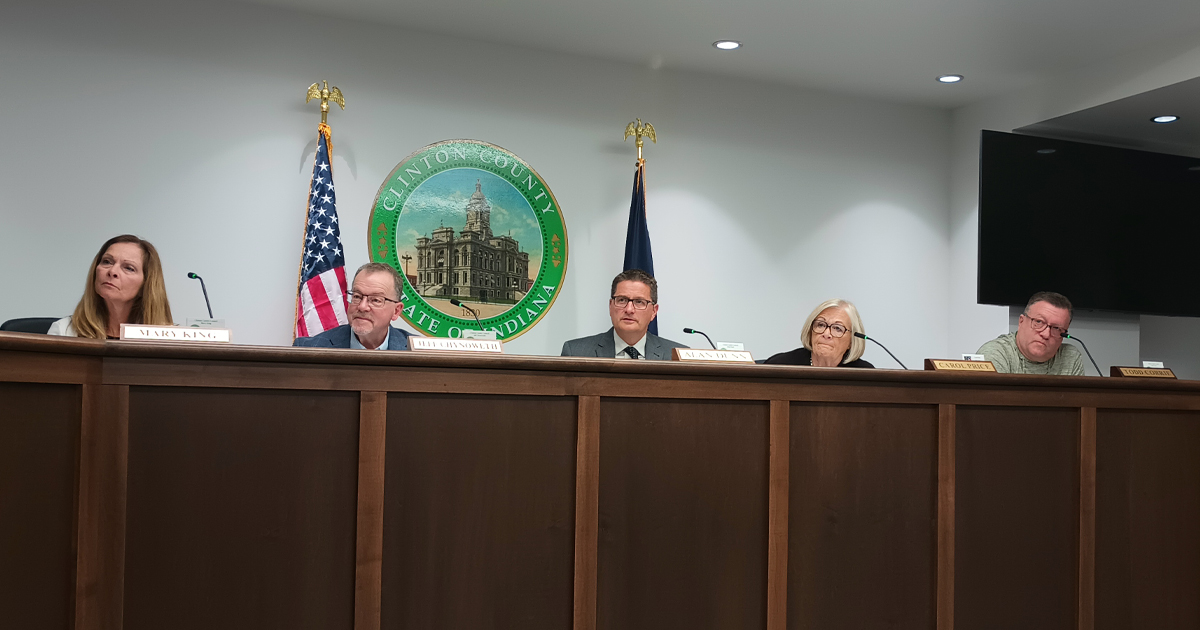
Members of the Clinton County Council listen Wednesday morning, May 13, 2026, as member of the Kirklin Town Board share concerns over recent flooding in town.

CLINTON COUNTY, Ind. (May 13, 2026) – The Clinton County Council moved to address critical infrastructure needs and expand public health services during its Wednesday morning meeting at the County Annex, approving more than $135,000 for jail repairs and authorizing a wide-ranging slate of opioid settlement funding.

Jail Infrastructure and Public Safety
Acting Sheriff Shawn Mayfield presented the council with several urgent requests for the Clinton County Jail, most notably an elevator system with obsolete parts that has become a recurring failure point. After discussion, the council approved $135,000 from the Jail LIT budget to cover a comprehensive repair package.

This funding includes $99,625 for the elevator overhaul, $28,511 for HVAC-related plumbing repairs, and $3,723 for a generator exerciser clock.

Opioid Settlement and Recovery Efforts
The council also gave a consensus approval for $68,650 in recommendations from the county’s opioid settlement committee, presented by Lorra Archibald.

The funding will support a variety of local initiatives, including:

$16,900 for evidence-based “recovery cafes” for teens, men, women, and couples;
$15,000 for an emergency application to provide mental health services for Sheriff’s Department and jail staff;
$18,750 for transition housing through We Care of Clinton County, a figure lowered by the use of volunteer labor from probationers and JCAP participants; and
$2,000 for a new vape disposal program at the Wildcat Solid Waste District to mitigate fire risks in sanitation trucks caused by lithium-ion batteries.

Infrastructure and Local Development
In a 5-0 vote, the council granted $35,000 in CEDIT (county economic development income tax) funds to the Town of Kirklin for a comprehensive storm water survey.

Members of the Kirklin Town Council explained that the town faces significant flooding issues because several county tiles within town limits are not properly mapped, making it impossible to determine flow direction or capacity.

The town will also apply for an OCRA (Indiana Office of Community & Rural Affairs) grant worth $30,000 later this summer.

The council approved a tax abatement compliance report (CF-1) for the Hardy Hills solar park. The project has successfully added $238 million in assessed value to the county and is fulfilling its economic development agreement by paying the county approximately $473,000 annually in economic development payments in lieu of traditional property taxes during its ten-year abatement period.  The tax abatement calls for the first eight years to be abated at 100%, with the remaining two years at 75%.

Public Health and Administrative Changes
Health Department Administrator Melissa Ostler provided an update on a departmental reorganization stating the department is moving to create a deputy health administrator position to ensure a clear chain of command and stability.

Ostler also reported that the department has distributed over 600 bottles of sunscreen and 450 toothbrushes this spring as part of its community outreach efforts, which reached over 670 residents through various mobile screenings and services.

Finally, the council directed the county attorney to draft an ordinance creating a non-reverting fee fund for the Area Plan office. This move is required by a new Indiana law which mandates that planning fees be kept separate from the general fund starting January 1, 2027.

Clinton County Jail is ICE Detention Facility

The Clinton County Jail is an ICE Detention Facility; that fact came to light during the Tuesday county council budget hearing. Though the specifics of the agreements and the exact number of detainees remain largely unknown to local county leaders, Clinton County is reportedly one of four counties in Indiana that house ICE detainees, according to an article published by The Indianapolis Star on August 25. The other three are Clay, Clark and Marion County. However, both Brewer and Dunn each expressed difficulty accessing detailed breakdowns, noting that they only see the amount deposited into the federal inmate fund and not the specific number of individuals or the compensation agreement. (photo/Brett W. Todd)

CLINTON COUNTY, Ind. (September 24, 2025) – The Clinton County Jail is an ICE Detention Facility; that fact came to light during the Tuesday county council budget hearing.

“What is the cost of having ICE detainees in our jail right now intermixing with local inmates,” asked Commissioners’ president Jordan Brewer to members of the county council. Afterwards, in the hallway outside the meeting room, Brewer stated he was only sharing “what I have been told.”

Clinton County president Alan Dunn stated that a report from a single month, possibly April or May, showed an additional $85,000 generated from fees associated with housing ICE detainees when asked during a beak in the budget hearing. According to Dunn, this money represents a supplemental additional fee received when a federal inmate is also an ICE detainee.

The revenue increase coincided with a new contract amount for federal inmates that started around February 1st of this year, raising the per-inmate rate to approximately $90. The previous contract rate was $68. After the initial jump from the rate increase, a “secondary jump” was observed in May related to a portion of those inmates being ICE detainees according to Dunn.

Though the specifics of the agreements and the exact number of detainees remain largely unknown to local county leaders, Clinton County is reportedly one of four counties in Indiana that house ICE detainees, according to an article published by The Indianapolis Star on August 25. The other three are Clay, Clark and Marion County. However, both Brewer and Dunn each expressed difficulty accessing detailed breakdowns, noting that they only see the amount deposited into the federal inmate fund and not the specific number of individuals or the compensation agreement.

Sheriff Defends Partnership, Warns of Program Instability
The Sheriff’s office confirmed its participation in the ICE program. Clinton County Sheriff Richard Kelly stated his agency will “continue to partner with our federal agencies to continue to do a fantastic job of detention and humanely get these folks transported to where they need to be transported.” The Sheriff emphasized that the office will not “pick and choose what we enforce” and is following what the President of the United States has asked, positioning the county as part of a working law enforcement program.

Sheriff Kelly took issue with Brewer, stating that comments made could place the facility and employees “in danger of protesters.” Kelly continued: “He is putting our community at risk. He’s putting our facility and employees at risk. And he gladly accepts the money for pet projects and everything else under the sun that we pay for.”

The federal inmate revenue has brought “well over a million dollars” into the facility and is currently viewed as an “absolute necessity” for budgets, funding deputy and corrections positions, and covering upkeep on the 30-year-old facility added Kelly.

However, the Sheriff cautioned that the program introduces financial volatility. The program “can end by my choice, by the federal government’s choice,” potentially disappearing in just 30 days. This instability complicates planning for facility upgrades or replacement, especially since the funding for a new facility is often tied to the federal inmate program.

Facility Strain and Controversy
Concerns were raised about the physical impact of the increased population. Brewer noted that having 225 people in the facility wears it down quicker than 150 people.

The Indianapolis Star noted that Clay County conducted an analysis and added approximately 285 beds to its existing facility. Through seven months of this year, ICE had sent more than 3,000 detainees thru the Clay County jail at $85 per day for each immigration detainee.

Clinton County Sheriff Richard Kelly, Wife Ashley Kelly to Pay Over $329K in Jail Commissary Case

A Tipton Court special judge has granted summary judgment against Clinton County Sheriff Richard Kelly, Ashley Kelly, and their company, Leonne, LLC, ordering them to pay a total of $329,360.47 for the improper issuance of funds from the Jail Commissary Fund.

CLINTON COUNTY, Ind. (September 22, 2025) — A Tipton Court special judge has granted summary judgment against Clinton County Sheriff Richard Kelly, Ashley Kelly, and their company, Leonne, LLC, ordering them to pay a total of $329,360.47 for the improper issuance of funds from the Jail Commissary Fund.

The court order, filed September 17, 2025, awarded the amount, which includes $219,634.65 in pecuniary damages and $109,725.82 in audit costs, to the Plaintiff, the State of Indiana. The judgment was granted jointly and severally against Richard Kelly, Ashley Kelly, and Leonne, LLC for Count I of the complaint, which related to misfeasance or nonfeasance.

The ruling follows a motion for summary judgment heard on August 21, 2025. The court found that there was no genuine issue of material fact regarding the claim.

Audit Findings Cited
The ruling relied heavily on findings set forth in the State Board of Accounts (SBOA) Special Investigation Report B57892, which examined the financial records of the Clinton County Sheriff’s Office and Jail Commissary for the period of January 1, 2019, to September 30, 2021. The SBOA, a state agency responsible for auditing public entities, concluded that funds totaling $219,634.65 were improperly issued and deposited from the Jail Commissary Fund to Ashley Kelly and Leonne LLC.

The couple created Leonne, LLC, in which Ashley Kelly held a 51% membership and Richard Kelly held a 49% membership, for the purpose of receiving profits from the sale of commissary items.

The court found that during the audit period, 85 checks totaling $190,916.61 were improperly issued from the Jail Commissary Fund to Leonne, LLC without a required written agreement to support or authorize the payments. Additionally, checks totaling $32,967.92 were issued directly from the fund to Ashley Kelly without required written authorization. These checks were calculated as 50 percent of commissary profits on merchandise sales.

The court noted that Richard Kelly and Ashley Kelly received their respective ownership shares of payments made to Leonne from the Jail Commissary Fund.

Binding Precedent Established
The Tipton Court found itself bound by related material facts and orders set forth in a separate Declaratory Judgment Action in Tippecanoe County Circuit Court (Cause 79001-2104-PL-000035) and the subsequent Indiana Court of Appeals Order (Case No. 22A-PL-2640).

The Indiana Court of Appeals affirmed the trial court’s finding that the County must approve contracts regarding the distribution of profits from the commissary fund. The Indiana Supreme Court denied a Petition to Transfer the case filed by Sheriff Richard Kelly and the County Sheriff’s Office on or about December 7, 2023.

Indiana Code § 36-8-10-21 provides for the Sheriff’s commissary fund, but dictates that for the Sheriff to disburse profits, there must also be County approval. The court found that at all relevant times, checks issued from the Jail commissary to Leonne, LLC lacked approval from the County fiscal body as required by Ind. Code § 36-8-10-21(d)(9).

The court concluded that intent was not material to granting summary judgment on Count I (misfeasance or nonfeasance). Citing prior Indiana case law, the court stated that if funds have been misappropriated or diverted, the State may seek and secure recovery of those funds “irrespective of whether the person who wrongfully received public money knew that he or she was not lawfully entitled to receive it.”

The Plaintiff orally withdrew its pursuit of summary judgment as to Count II for treble damages under the Crime Victim’s Relief Act (CVRA) for the purposes of this motion only, reserving all rights as to both Counts II and III and all other claims against the Defendants.

In response to the court’s order, the commissioners have demanded the immediate resignation of the sheriff and his wife.

The Kellys each face three Level 6 charges in criminal court relating to issues stemming from the operation of the jail commissary. The Boone County judge hearing the criminal case has set the trail to begin on May 11, 2026.

There are two additional legal cases pending involving the Kellys. The Kellys have filed suit against Clinton County Prosecutor Anthony Sommer in Boone County and a suit involving Clinton County Attorney Thomas Little in Tippecanoe County. Both cases remain pending at the time of this article according to online court documents.

Kellys, AG Rokita Legal Battle Heads to Tipton County Tuesday

A legal battle is unfolding in Clinton County, as the State of Indiana, led by Attorney General Todd Rokita, seeks to recover over $329,000 (plus treble damages pursuant to Indiana's Crime Victims Relief Act) from Clinton County Sheriff Richard Kelly, his wife Ashley Kelly, and their limited liability company, Leonne, LLC. The parties of this case will meet in Tipton County Circuit Court on Tuesday, July 8, 2025 at 2pm. (Photo by Derek Jensen/Wikipedia)

FRANKFORT, Ind. (July 6, 2025) – A legal battle is unfolding in Clinton County, as the State of Indiana, led by Attorney General Todd Rokita, seeks to recover over $329,000 (plus treble damages pursuant to Indiana’s Crime Victims Relief Act) from Clinton County Sheriff Richard Kelly, his wife Ashley Kelly, and their limited liability company, Leonne, LLC.

The State alleges misappropriation of public funds, malfeasance, misfeasance, and nonfeasance related to Ashley Kelly’s roles as Jail Matron and Commissary Manager, while the Kellys vehemently deny wrongdoing, asserting their actions were lawful and based on professional advice.

Due to the nature of this case a special judge from Tipton County has been named to oversee the case, Thomas R. Lett.

The parties of this case will meet in Tipton County Circuit Court on Tuesday, July 8 at 2pm.

A brief overview of the claims alleged by the Attorney General Rokita and the Kellys’ defenses.

The State’s Allegations: Misappropriation and Policy Violations

The lawsuit, filed in Clinton Circuit Court, stems from a Special Investigation Report by the State Board of Accounts (SBOA) covering January 1, 2019, to September 30, 2021. The SBOA report, cited as Exhibit 1 in the State’s complaint, alleges that public funds were “misappropriated, diverted, or unaccounted for,” “illegally received,” “illegally retained,” “obtained by fraud or in any unlawful manner,” and/or “wrongfully withheld from the public treasury”.

Key allegations from the State include:

* Nepotism Violations: Richard Kelly, as Sheriff, hired his spouse, Ashley Kelly, as both jail matron and commissary manager, which the State claims violated Clinton County’s anti-nepotism policy. The State also asserts the Kellys failed to properly disclose their ownership interest in Leonne, LLC, and their marital status on conflict disclosure forms.

* Improper Disbursements: The SBOA found that checks totaling $190,916.61 were improperly issued from the Jail Commissary Fund to Leonne, LLC, and $32,967.92 to Ashley Kelly, between January 1, 2019, and September 30, 2021, without written agreements to support or authorize these payments. These payments were calculated as 50% of commissary profit on merchandise sales.

* Dual Compensation and Undocumented Hours: Ashley Kelly received a salary as jail matron from the County General Fund and additional compensation as commissary manager from commissary profits. The State alleges her hours for these positions were not documented and that she may have been receiving disability pay from the Indiana State Police (ISP) concurrently.

* Pecuniary Loss and Audit Costs: The State claims Clinton County suffered a pecuniary loss of $219,634.65 due to these alleged breaches of duty, and the SBOA incurred $109,725.82 in additional audit costs, for a combined total of $329,360.47. The State is seeking this total amount, disgorgement of “ill-gotten gains,” and enhanced damages, including treble damages under Indiana’s Crime Victims Relief Act, which applies to losses resulting from certain criminal codes like conversion or theft.

* Surety Liability: Western Surety Company and RLI Insurance Company, as sureties for Richard and Ashley Kelly respectively, are also named as defendants, with potential liabilities of $90,000 and $15,000.

The Attorney General’s office argues that for Count I of the complaint (malfeasance, misfeasance, and nonfeasance), proof of criminal intent is not required for the State to recover funds. Citing the Indiana Court of Appeals case Montalvo v. State ex rel. Zoeller, the State contends that its authority to recover misappropriated or diverted public funds is “irrespective of whether the person who wrongfully received public money knew that he or she was not lawfully entitled to receive it”.

They define misfeasance as performing a lawful act in an unlawful manner, and nonfeasance as an omission to perform a required act, neither of which necessarily requires intent. The State notes that prior legal rulings have already established as undisputed facts that the Kellys created Leonne LLC to receive profits and that their agreements were not submitted to the County for approval.

The Kellys’ Defense: Good Faith, Reliance on Advice, and Alleged Retaliation

Richard and Ashley Kelly, represented by counsel Theodore J. Minch, contest the State’s claims, arguing they acted in good faith and that the lawsuit is part of a pattern of “selective enforcement, retaliatory actions, and unequal treatment”.

Their defense rests on several points:

* Reliance on Legal and Professional Advice:

Sheriff Richard Kelly states he sought legal counsel from Clinton County Attorney Thomas Little both prior to and after taking office regarding Ashley’s appointment and his own compensation. Attorney Little allegedly advised that appointing his wife as Jail Matron and Commissary Manager was lawful under Indiana statute and consistent with historical practice, referencing three prior sheriffs whose wives held similar roles and shared a 50/50 split of commissary profits with the County.

Little reportedly “affirmatively agreed to ‘set up’ and ‘take care of’ the arrangement,” including filing conflict-of-interest and nepotism forms. Richard Kelly later learned Little had drafted these documents but “neglected” to provide them.

Ashley Kelly consulted Nancy Ward and Wanda Mitchell, wives of former sheriffs, who confirmed the duties and the practice of receiving additional money from commissary operations. Nancy Ward reportedly informed Ashley that commissary monies would be “sizeable” and she would receive a 1099 from the County.

The Kellys’ CPA and financial advisor, Dennis Hayden, advised them to form Leonne, LLC, as a two-member LLC (Ashley 51%, Richard 49%) to minimize personal liability and optimize tax consequences for the 1099 income. They assert Leonne, LLC, actually enhanced transparency compared to prior methods.

* Beneficial Commissary Management: Ashley Kelly insists that only she performed the work of Commissary Manager, and the money earned was not funded by tax dollars, but rather from net proceeds of commissary sales, identical to her three predecessors. She claims to have significantly increased revenue “by tens of thousands of dollars” by adding products and securing a lucrative agreement with the U.S. Marshals Service to house federal detainees. These increased profits allowed the Sheriff’s Office to purchase essential equipment, such as a body scanner, K9 unit, snowplow, and other items, “without using taxpayer money”. She also obtained a Tobacco Sales Certificate to legally sell e-cigarettes, further boosting sales.

* Transparency and Compliance: Ashley Kelly states she provided semi-annual commissary fund reports to the Clinton County Council as required by law since 2019, and monthly bank statements were sent to the SBOA by the Records Clerk. She notes that the County Council President even praised her “numbers” and told her to “keep doing what you’re doing” after a report.

* Allegations of Animosity and Retaliation: The Kellys contend that Clinton County officials, including Commissioners and Attorney Thomas Little, have consistently opposed and undermined them since Sheriff Kelly’s election. Richard Kelly believes this animosity is partly due to his Filipino ethnicity. They assert that hostilities began when Sheriff Kelly questioned his proposed salary, which was below the statutory minimum for Clinton County’s size.

Ashley Kelly alleges that County Council President Alan Dunn “recreated a commissary report” and Prosecutor Anthony Sommer “falsely represented this fabricated report to journalist Brett Todd as the official report,” which contained “numerous accounting and mathematical errors”. They view the SBOA audit as a “sham and witch hunt” timed for the 2022 Sheriff election, noting that a nepotism violation alleged in the SBOA report was later “adjudicated in Tippecanoe County where we were found to NOT be in violation”. They also state that despite the Commissioners’ public awareness of her role and compensation, they failed to provide her a formal contract, and she has not been paid for commissary work since September 15, 2021, though she continues to perform the duties.

* Legal Interpretation of Intent: The Kellys’ counsel argues that malfeasance, misfeasance, and nonfeasance, particularly when related to criminal charges or penalties, require proof of “intentional acts” or a “conscious objective” to cause a loss. They contend that their good-faith reliance on the advice of a licensed attorney and CPA negates any unlawful intent, and a “mistake of fact” defense is applicable if they honestly believed their actions were lawful due to the information they received. They emphasize that the State has not proven they intentionally caused a loss, and the Kellys’ actions actually increased County funds. They also argue that treble damages, being punitive, require “willful or knowing misconduct,” which they say is absent given their good faith actions and reliance on counsel.

Ongoing Legal Dispute

The case was originally filed on March 30, 2023, with the State requesting summary judgement on September 16, 2024, arguing that the material facts for Count I are undisputed and the legal issues were already determined in its favor by the Court of Appeals. The State has also filed a motion to strike the Kellys’ affidavits and exhibits, citing improper designation, lack of authentication, and untimeliness. The Kellys maintain that genuine issues of material fact preclude summary judgment and that their intent, or lack thereof, is central to the claims.

Criminal charges are also pending against Richard and Ashley Kelly in a correlated case. In the criminal case, the State has dropped the charge of Conflict of Interest leaving three charges of Official Misconduct, though these cases remain “undecided” with a trial date set for October 14.

The Kellys have filed lawsuits against County Attorney Thomas Little in Tippecanoe County and Clinton County Prosecutor Anthony Sommer in Boone County. Each of those cases remain “undecided.”

Audio Between Prosecutor and Journalist Released, Indiana Appeals Court Revives Defamation Suit Against Prosecutor Over Jail Fund Comments

Clinton County Prosecutor Anthony Sommer and Clinton County Sheriff Richard Kelly
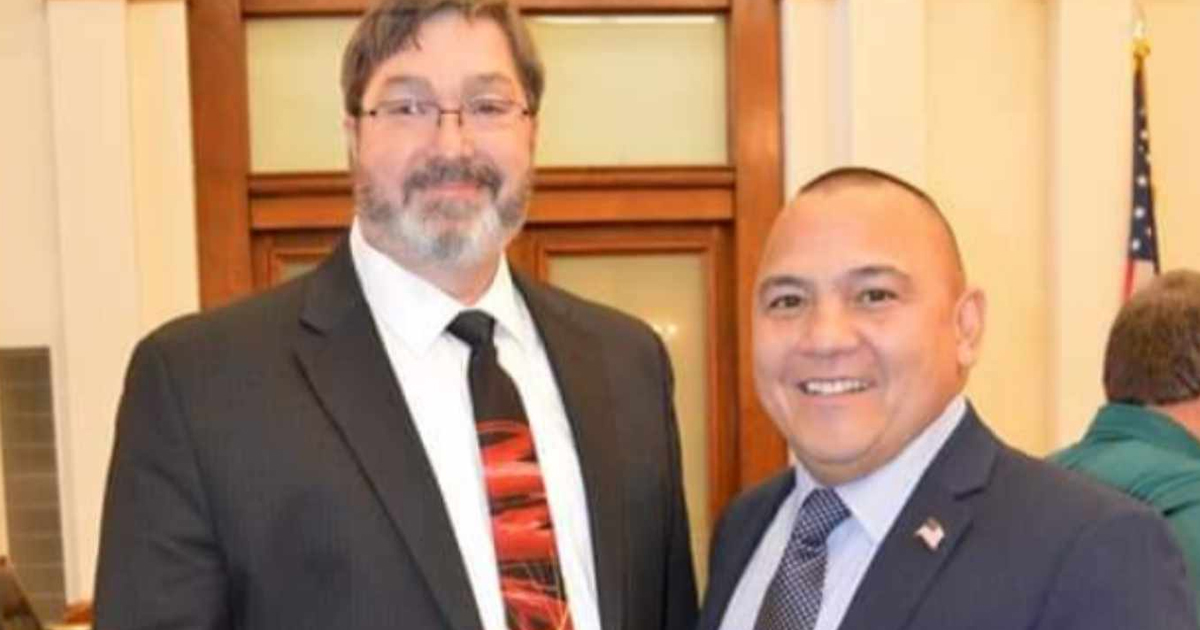
Clinton County Indiana Prosecutor Anthony Sommer (L) and Clinton County Indiana Sheriff Richard Kelly pose for a photo after the December 2018 swearing-in of elected officials held inside the Clinton County Indiana courthouse. (Photo/Facebook)

FRANKFORT, Ind. (March 26, 2025) — A recent ruling by the Indiana Court of Appeals has revived a defamation lawsuit filed by Clinton County Sheriff Richard Kelly and his wife, Ashley Kelly, against County Prosecutor Anthony Sommer. The appellate court reversed a lower court’s decision to dismiss the case, finding that questions remain regarding whether Sommer’s statements to the media about an investigation into the Kellys’ management of jail funds were protected by prosecutorial immunity.

Today, we released the audio between the prosecutor and the journalist.

The audio is from an October 8, 2021, encounter where Prosecutor Sommer invited the journalist to view a “publicly available commissary report” for the first six months of 2021 in his office.

However, it was not the publicly available commissary report as promised – it was a fabricated report.

Over the next week of October 2021, the actual report submitted by Sheriff Richard Kelly during the July 13, 2021, County Council meeting was requested from both the county auditor and sheriff’s office revealing the report provided by the prosecutor was fabricated.

The fabricated report showed incorrect disbursements, incorrect deposits, a wrong check number, a missing check number and even a million dollar change in balance.

As a note, the fabricated report was uploaded as evidence in the county’s lawsuit against Sheriff Kelly and Matron Ashley Kelly on October 25, 2021, 79C01-2104-PL-000035. In the motion to dismiss its case, the county – through their attorney Tom Little – wrote: “Defendants submitted a detailed report of the Clinton County Sheriff’s Commissary Fund with listed activity for the first six months of 2021 to the Clinton County Council, attached here to as “Exhibit A”

An email dated December 27, 2021, between County Council President Alan Dunn and county attorney Little – in which the journalist was copied on – Dunn wrote to Little, “… I spent some time yesterday going over the spreadsheet and I did find several errors, which I have corrected in the version that is attached. … I was not aware at the time that my work would be submitted to the Court as an official County document, so now knowing that it has been I think we need to submit this corrected version as soon as possible. If you could do so, I would really appreciate it.”

The journalist is the author of this post.

Click here to be directed to Spotify or listen to the audio below:

Commissioner Bert Weaver Passes Note: “Ask for a 10-Minute Break”

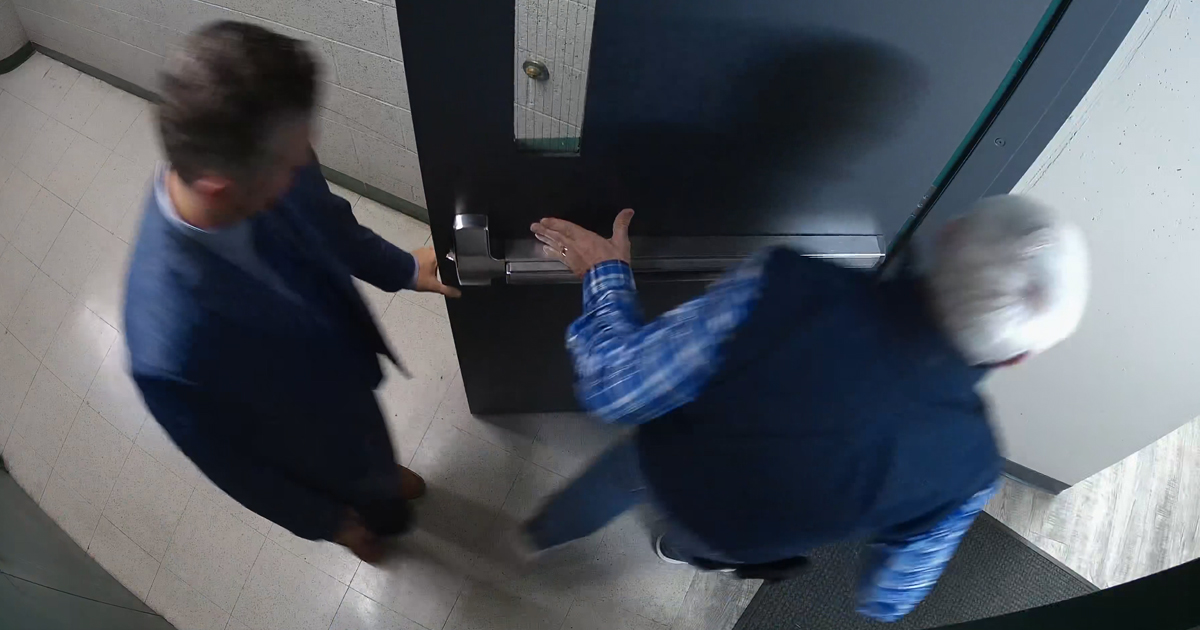
Clinton County Commissioner Bert Weaver, right, holds the door open for Clinton County Deputy Melissa Trump's attorney Adam Brower. Weaver passed a note to Brower during the October 16th Merit Board hearing so he could talk to him. The meeting took place inside Central Dispatch in the basement of the Clinton County Sheriff's Office. (Image from video obtained by CCT via Indiana Access to Public Records Act)

FRANKFORT, Ind. (November 18, 2024) – Since the conclusion of the Clinton County Commissioners meeting on November 7th – where commissioner Bert Weaver criticized sheriff Rich Kelly for his handling of the investigation of Deputy Melissa Trump along with the reassignment of her K9 partner, Tiko, to another Deputy plus the costs of the investigation that Weaver estimates exceeds $100,000 – Weaver has admitted to passing a note to Deputy Trump’s attorney during the Merit Board hearing conducted on October 16th.

Weaver told Clinton County Today the note he handed to Adam Brower read, “ask for a 10-minute break.” Weaver wanted the break so he could address a statement by Brower at the beginning of the hearing regarding whether or not the commissioners and the sheriff got into an argument during a commissioners meeting.

Weaver indicated he and Brower spoke in a secured area of the Sheriff’s Office – specifically, Central Dispatch. A review of the Merit Board hearing confirms Brower asked for the break saying, “do you want to take a break,” during a pause in testimony of Detective Dan Roudebush.

Video from the Central Dispatch door camera, obtained under the Indiana Access to Public Records Act, shows Weaver opening the door and beginning to enter Central Dispatch while pressing the door open allowing Brower to enter behind him.

The admission by Weaver came after CCT asked Weaver if he had been in contact with Brower regarding the return of Tiko to Deputy Trump.

During the November 7th commissioners meeting, Deputy Trump shared publicly Brower told her at some point after the Merit Board hearing “it sounds like you’re getting your dog back… you just need to be quiet about it.”

Commissioner Uitts asked Deputy Trump, “I am curious how your attorney gained that knowledge?” Deputy Trump replied, “I’m not sure. He just told me to kind of not talk about it.”

Weaver told CCT he has not had any conversations with Brower regarding Tiko; however, Weaver is supporting the return of K9 Tiko to Deputy Trump.

Regarding the $100,000 or more in costs associated with the investigation into the alleged actions of Deputy Trump, Weaver shared the items consisting of that figure include salary and benefits paid to Deputy Trump as well as overtime costs associated with covering Deputy Trump’s shifts while she has been on either administrative duties or paid administrative leave.

A document provided by the Clinton County Auditor’s office to CCT details how Weaver came to the amount he shared. The amount for eight months (March 26th – November 30th) is $62,193.50 for Deputy Trump; including salary, medical and life insurance (county’s portion), county’s match on taxes and pension contribution.

The document contains information for overtime to cover shifts that Deputy Trump was not on the road and is a very broad range from $53,431.26 to $80,155.79 that would add to the cost.

CCT has asked the Sheriff’s Office and Auditor’s Office how much of the overtime budget has been used in 2024 and how that amount compares to previous years as well as how much of the overtime was the result of covering Deputy Trump’s shift currently. CCT is working to determine the answer.

Commissioner Jordan Brewer shared the situation has been mismanaged and should have been handled within the Sheriff’s Office and not have to escalate to the Commissioners adding if Deputy Trump had been allowed to resign and purchase Tiko, the county could have avoided the costs associated with her suspension and the merit board hearings.

Brewer stated, “I’m stepping back and looking at it from a county perspective. If I’m making a financial decision and if this individual has offered me – making the assumption all this is true – offered to resign, will purchase the dog for $6,000. So now, I get money to get a new dog and I am now x amount of months ahead in the hiring process of getting somebody [new].

“Obviously [the sheriff] took charges to remove her from her position so they don’t want her at the department anymore. Now you can hire someone new to be in that place and you’ve expedited the whole process instead of taking eight months like it has.

“I’m just stepping back as a business person – that’s how I look at it. Okay it cost me, I get rid of you know the ‘bad apple’ if that’s how I feel as the decision maker; they’re going to pay for the dog, I get to go get a new dog and hire a new person so that my Department’s not under manned.

“That’s how I would look at it instead of wanting to go through a whole process that is all fair but then ultimately has to come to us and we really don’t even need to be a part of it.”

Regarding the offer of Deputy Trump to resign and purchase Tiko in the quote above. Brewer and CCT spoke as to whether or not the comment was made by her in the meeting. A review of the meeting reveals Deputy Trump did not mention “resign.”

She said, “I, through my lawyer Adam Brower, asked the sheriff’s office if I could purchase Tiko. I was told no because they had too much invested in him.”

CCT followed-up by phone with Deputy Trump to clarify the offer to resign and purchase Tiko in exchange for Merit Board charges to be dropped.

Deputy Trump shared that the sheriff’s attorney – Tonya Bond – called her attorney asking about resignation twice. The second inquiry is when Deputy Trump reportedly asked about resigning but only if she could purchase Tiko – she could not recall the timeline as to when that offer was made.

K9 Tiko has been reassigned to Deputy Preston Hillman for the past two months. The two have recently achieved certification from the North American Police Work Dog Association (NAPWDA).

Deputy Trump surrendered K9 Tiko on May 31st.

Sheriff Kelly responded to Deputy Trump’s statements by emphasizing that the situation was purely about disciplinary issues – not a personal vengeance. He stated that when the Sheriff’s Office receives complaints about officers’ behavior or discipline, they must uphold the rules and regulations outlined in the Sheriff’s Office policies and Merit rules. He attributed the extended timeframe of the investigation to the need for both an internal and criminal investigation, with the latter taking precedence.

Kelly explained that finding an unbiased prosecutor outside the county further prolonged the process, and once the prosecutor decided not to file charges, the case was passed to the Merit board, who also needed time to conduct their own proceedings.

Kelly asserted that K9 Tiko was an asset meant to serve the community, not for “popularity votes” or “likes on the internet”. He argued that Deputy Trump was using the dog for personal gain, and that this behavior necessitated the K9’s reassignment.

Kelly highlighted that finding a volunteer to take on the responsibility of handling a K9 was an “extreme ask”, requiring significant personal and private commitment. He emphasized that K9 Tiko was not medically unfit for service and had several years of service left. He also addressed the cost of training K9s, noting that it had increased due to the need to use an outside facility. This cost included not only the initial purchase price of the dog but also man-hours, travel time, and housing for both the dog and the handler.

Kelly concluded by stating that K9 Tiko was a valuable asset to the community and that the decision to reassign him was made to ensure he could continue working. He expressed his willingness to discuss the timeline of the investigation with Commissioner Weaver at a later time.

Deputy Trump asked the commissioners at the November 7th meeting that K9 Tiko be retired and allow her to purchase him, adding “just name your price.”

The Clinton County Commissioners are scheduled to meet November 19th to decide the fate of K9 Tiko.

Background

Deputy Trump has been paid since March 2024 after allegations of underage drinking at her residence and dishonesty during the ensuing internal investigation. She also faced both an internal and criminal investigation into her alleged use of county assets in social media posts to either receive product and/or compensation. The social media investigation was forwarded to a special prosecutor for consideration of charges to be filed; however, no charges were filed.

At the October 16th Merit Board Hearing, sheriff Kelly’s attorney announced the social media charges had been removed, but stated sheriff Kelly would file those charges should Deputy Trump be allowed to keep her job.

The Merit Board found Deputy Trump violated four Merit Board Rules and Regulations of the five charges filed by Sheriff Kelly – including Truthfulness and Conduct Unbecoming to An Officer.

The Merit Board voted 3-1 to impose a disciplinary penalty of 30 working days without pay based on its preceding findings – equates to two months without pay. Deputy Trump begins her suspension on November 25.

Deputy Trump Discusses Merit Board Decision, Future Plans

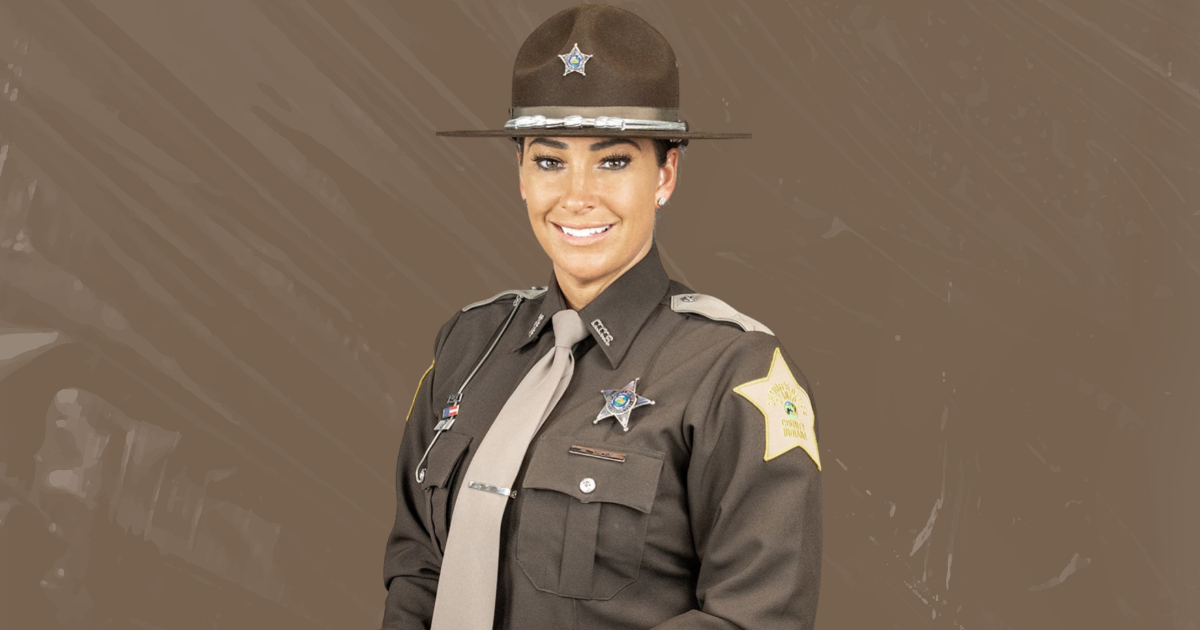
FRANKFORT, Ind. (October 28, 2024) – Clinton County Sheriff’s Deputy Melissa Trump sat down for an interview on October 24th to discuss the recent Merit Board hearing decision, ongoing investigations, and the future of her career. During the hour plus long conversation, Deputy Trump expressed mixed emotions about the outcome of the hearing and raised concerns about procedural issues regarding the arrest of her son during the hearing, potential bias against her, and the impact on her future in law enforcement.

The Merit Board found Deputy Trump violated four Merit Board Rules and Regulations of the five charges filed by Sheriff Rich Kelly.

The four charges Deputy Trump violated according to the Merit Board Findings of Fact, Conclusions, and Decision document are: Conduct Unbecoming to An Officer; Conformance to Laws; Individual Obligation and Duties of All Personnel; and Truthfulness. The charge of Testimony was not substantiated.

The Merit Board voted 3-1 to impose a disciplinary penalty of 30 working days without pay based on its preceding findings. Sheriff Kelly had asked for termination.

While the Merit Board’s decision to impose a 30 working day suspension without pay could be viewed as a victory, Deputy Trump expressed reservations, acknowledging the possibility of continued investigations and the financial burden of legal representation. She stated, “although this was a win, it still doesn’t really feel like a win because I don’t think I’m actually ever going to get to be a police officer after this. I don’t think that after my 30 days I just come back to work. I think I’m going to be under another investigation.”

When asked about the financial impact of the suspension, Deputy Trump noted a 30 working day suspension would financially equate to “losing two months of pay.”

Deputy Trump believes that the Merit Board mischaracterized her statements regarding her knowledge of underage drinking at a restaurant with her son’s girlfriend, Tess. She explained that while she was present when Tess was served alcohol, she did not provide it.

She learned Tess was not 21 approximately a week before attending the birthday. She expressed frustration that her testimony, including statements made during a polygraph examination, were taken out of context.

Deputy Trump shared what she was attempting to convey to both the Merit Board and polygrapher, saying:

“That wasn’t me allowing her to drink. So I thought that was kind of unfair. We’re at that restaurant, just because I didn’t dive across the table and, you know, super man that shot away from her – wasn’t me allowing.

“I thought that was just kind of unfair to use that against me, that these are things that I admitted during a polygraph to be as truthful as they could. And then those things just get used against me, it just seems very unfair and it feels like it was taken out of context.”

Furthermore, Deputy Trump addressed the Board’s finding that she expressed the viewpoint that minor consumption is a “bulls*** charge.” She clarified her stance, stating that while she acknowledges the illegality of underage drinking, she believes law enforcement officers have discretion in handling such offenses, especially when more serious crimes require their attention. She drew comparisons to other minor offenses, such as speeding and marijuana possession, where officers often choose not to make arrests.

During the October 16th Merit Board hearing, Deputy Trump testified to being dispatched to an underage drinking party where no arrests were made. She elaborated during our call on the discretion she has used and her thoughts on why discretion is necessary.

“(The Sheriff) knows there’s no way … he thinks we arrest every single person in Clinton County that commits a crime,” said Deputy Trump. “Our jail (wouldn’t) be big enough. We would have the majority of the county possibly in there.

“I don’t know. There’s times, so for example, some of these things that I guess they’re against the law but they can seem sort of minor and something that we maybe don’t typically arrest for.

“We have discretion. [referencing the underage drinking party] We didn’t arrest anybody there. We still handled the situation in a manner that we felt like we could still have an impact and not have to take all of these kids to jail.

“It wasn’t, it just didn’t seem, although yes it’s illegal to drink. It just did not seem serious enough, I guess.

“And all the times where I can think about where we pull people over and we’ve caught them with marijuana on them and you know we throw it out and we don’t arrest them or times where we pull people over for driving while suspended which is a misdemeanor and we don’t arrest them. We don’t arrest every single person that we know to commit a crime.”

Deputy Trump’s interview also shed light on the complexities of “Giglio” disclosures, which involve potential credibility issues that must be disclosed to defense attorneys in criminal cases. The interview revealed confusion surrounding the process and whether a Giglio designation had been made in her case – there was no mention of Giglio in the final report.

Clinton County Prosecutor Anthony Sommer testified in Deputy Trump’s Merit Board hearing stating he would wait until the conclusion of the Merit Board hearing and receiving its findings before making a final determination on a Giglio designation.

Deputy Trump also discussed the circumstances surrounding her son’s arrest on a warrant for failure to appear in court. She emphasized that the warrant was issued out of Marion County and was non-extraditable, meaning that typically, arrests could only be made within that county. Despite this, her son was arrested in Clinton County, two counties away. Deputy Trump expressed concern that this arrest, which involved a deputy in plain clothes who ordered her son, Blake Trump, out of the car, was an abuse of power and an act of retaliation. She also questioned the legality of special deputies serving warrants off government property; her son was parked on Harrison St. across from the Sheriff’s Office.

During the phone interview, Deputy Trump discussed the case of a former Clinton County K9 officer, Joey Mitchell, and his dog, Rip. She alleged that Sheriff Kelly gave a misleading account of Rip’s fate to the Commissioners, claiming that the dog was given to a company specializing in re-training police dogs when, in fact, he was given to a former jail officer who is the owner of the above referenced company. Deputy Trump expressed concern for Rip’s well-being and questioned the decision-making process that led to his reassignment.

Clinton County Today has not yet been able to independently verify the allegations made by Deputy Trump regarding former K9 Rip as well as the statements surrounding the enforcement of an outstanding warrant on her son.

Looking ahead, Deputy Trump acknowledged the uncertainty of her future with the Clinton County Sheriff’s Office. She indicated that if no further charges are filed, she would anticipate staying until retirement, but also acknowledged that the outcome of her EEOC complaint could impact her ability to remain with the department. She also expressed reservations about seeking employment with another agency due to the potential difficulty of obtaining a favorable recommendation from her current employer.

Deputy Trump concluded the interview by emphasizing her commitment to transparency and accountability. She stated, “I like being transparent. I like people, I don’t have anything to hide. So I don’t mind getting my story out there. And thank you for covering it.”

The audio of the interview can be found on Spotify or wherever you enjoy listening to podcasts.

Sheriff’s Merit Board Hears Deputy Trump’s Case, Audio Available

CLINTON COUNTY, Ind. (October 23, 2024) – The Clinton County Sheriff’s Office Merit Board convened on October 16, 2024, at the Clinton County Sheriff’s Office to hear arguments in the case of Deputy Melissa Trump, who faces termination following allegations of underage drinking at her residence and dishonesty during the ensuing internal investigation. The hearing showcased sharply contrasting narratives presented by the Sheriff Richard Kelly’s attorney, Tonya Bond, and Deputy Trump’s attorney, Adam Brower, with both sides leveraging witness testimony, body camera footage, and the results of a polygraph examination to bolster their arguments.

The Merit Board Membership and Role in the Hearing

The five member Merit Board is an administrative board made of three appointments by Sheriff Kelly and two appointments by the Merit Deputies.

The Merit Board rules for admission of evidence differs from a criminal hearing – most notably the admission of polygraph results. And, when making a decision the Merit Board must consider whether the Sheriff provided substantial, reliable, and probative evidence sufficient to reasonably support his recommendation of termination of Deputy Trump.

Sheriff’s Case Hinges on “Evasive” Conduct and Failed Polygraph

Attorney Bond argued that Deputy Trump had been “evasive” during the internal investigation conducted by Detective Roudebush, initially focusing on the technicality of physically handing alcohol to minors while downplaying her broader responsibility in facilitating underage drinking. She emphasized that Deputy Trump had failed to disclose her personal drinking that evening and had omitted a previous incident where she had been drinking with Tess – Teresa Short, the girlfriend of Deputy Trump’s son, Blake Trump – one of the underage individuals present at her home.

Attorney Bond further contended that Deputy Trump’s failure of the polygraph examination, administered by Officer Aaron Thompson from the West Lafayette Police Department, provided compelling evidence of her dishonesty. She highlighted inconsistencies between Deputy Trump’s statements to Detective Roudebush and her subsequent admissions during the pre and post-polygraph interviews with Officer Thompson.

Defense Emphasizes Procedural Errors and Lack of Concrete Evidence

Attorney Brower countered by focusing on procedural errors within the investigation and the lack of concrete evidence to support the allegations of lying. He pointed to inaccuracies in the initial reports filed by Noblesville Police Department officers, which had triggered the internal investigation, arguing that Detective Roudebush had relied on flawed information when questioning Deputy Trump. Attorney Brower also emphasized that Detective Roudebush had admitted to making a false statement to Deputy Trump during the internal investigation interview, further undermining the credibility of the investigation.

Attorney Brower challenged the reliability of the polygraph results, noting that even Detective Roudebush had acknowledged that a failed polygraph alone cannot definitively prove dishonesty. He argued that Deputy Trump’s confusion about the meaning of “providing” alcohol, coupled with her emotional distress and the pressure of the investigation, could have contributed to her deceptive responses during the polygraph.

Hypocrisy Claims Dominate Defense Argument

A recurring theme in Attorney Brower’s argument was the perceived hypocrisy of seeking Deputy Trump’s termination while Sheriff Kelly himself faced multiple felony charges and a civil lawsuit alleging financial mismanagement. Brower repeatedly pointed to the sheriff’s ongoing legal troubles, arguing that it was unfair to hold Deputy Trump to a higher standard than her boss, especially when the evidence against her remained unproven.

Sheriff Maintains Right to Enforce Rules Despite Own Legal Challenges

Sheriff Kelly defended his decision to pursue Deputy Trump’s termination, arguing that his own legal issues did not absolve him of his duty to uphold the standards of the Sheriff’s office. He maintained that Deputy Trump’s actions had eroded public trust and compromised her ability to effectively perform her duties as a law enforcement officer.

The Sheriff stated that although he is not under the rules of the Merit Board, he will stand in front of a judge and a jury of his peers to answer the charges that have been brought against him.

Testimony from the Clinton County Prosecutor

Clinton County Prosecutor Anthony Sommer’s testimony highlighted the strained relationship between his office and the Sheriff’s office. He expressed concern about the Sheriff’s failure to disclose Giglio information regarding other officers and stated Sheriff Kelly had presented only one Giglio notice to his office during the sheriff’s term and other notices he had to seek out himself.

Emotional Moment

Individuals who were identified as potential witnesses were held away from the hearing room.

So, when Attorney Brower called for Mr. Donovan Denham, Deputy Trump’s boyfriend, Denham entered the room and walked over to Deputy Trump and informed her her son had been arrested by the Clinton County Sheriff’s Office on an outstanding warrant from Marion County.

Blake Trump was in attendance to testify on behalf of his mother if needed. Blake Trump was released as a witness prior to testifying and was subsequently arrested. Deputy Trump testified she knew Blake had an outstanding warrant prior to coming to the hearing.

Decision

The Merit Board is expected to meet on Wednesday, October 23, 2024, to take a public vote on Deputy Trump’s fate.

Merit Board Hearing Audio Files

Nearly six hours of audio was recorded by Clinton County Today.

Note: The audio has been edited to enhance the audio level. No statements were edited.

Each audio session ends when a break is called and the next audio session begins when called to order.

There were a total of four breaks, yielding five separate audio files.

The audio is hosted on Spotify or wherever you get your podcasts – by searching Clinton County Today.

Spotify Player

Spotify Show Page

You may listen to the recordings below as well.

Audio 1

Notes for Audio 1.

What you will hear on the first recording:

Opening statement from Merit Board president John Wright followed by opening statements from:

Attorney Tonya Bond, representing Sheriff Kelly; and,

Attorney Adam Brower, representing Deputy Trump.

The first witness called by Attorney Bond was Clinton County Prosecutor Anthony Sommer.

Cross examination of Prosecutor Sommer by Attorney Brower

Re-direct of Prosecutor Sommer by Attorney Bond

Re-cross of Prosecutor Sommer by Attorney Brower

The second witness called by Attorney Bond was Clinton County Sheriff Office Detective Lieutenant Dan Roudebush. Detective Roudebush conducted the internal investigation.

This recording captures the audio from evidence introduced by Attorney Bond when played for the Merit Board.

The evidence included body camera footage provided by the Noblesville Police Department, in addition to audio from Detective Roudebush’s internal investigation interview of Deputy Trump and Deputy Trump’s pre-polygraph and post-polygraph interview with West Lafayette Police Officer Aron Thompson.

Audio from body camera – NPD Officer Lane Snyder

Audio from body camera – NPD Officer Krystal Watters

Audio from body camera – NPD Officer Christopher Heselschwerdt

Audio from body camera – NPD Officer Matt Whiles

Audio from body camera – NPD Officer Matt Lohrey

Audio from Lt. Roudebush internal investigation interview with Deputy Trump

Audio from WLPD Officer Thompson pre-polygraph interview with Deputy Trump

Audio from WLPD Officer Thompson post-polygraph interview with Deputy Trump

Audio 2

Notes for Audio 2.

What you will hear on the second recording:

Clinton County Sheriff Office Detective Lieutenant Dan Roudebush continues to give testimony of his internal investigation to Attorney Tonya Bond, representing Sheriff Kelly.

Attorney Adam Brower, representing Deputy Trump, begins cross-examination.

Attorney Bond re-direct of Lt. Roudebush.

Attorney Brower re-cross of Lt. Roudebush.

Attorney Bond calls Sheriff Kelly to testify.

Attorney Brower begins cross-examination of Sheriff Kelly.

Audio 3

Notes for Audio 3.

What you will hear on the third recording:

Prior to Mr. Donovan Denham taking the stand, the recording captures the moment Deputy Trump learns her son – Blake Trump had been arrested by the Clinton County Sheriff’s Office on an outstanding warrant from Marion County Indiana. Blake Trump was in attendance to testify on behalf of his mother if needed. Blake Trump was released as a witness prior to testifying and was subsequently arrested.

Attorney Adam Brower, representing Deputy Trump, calls Mr. Donovan Denham, the boyfriend of Deputy Trump, as a witness.

Attorney Tonya Bond, representing Sheriff Kelly, begins cross-examination.

Attorney Brower re-direct of Mr. Denham.

Audio 4

Notes for Audio 4.

What you will hear on the fourth recording:

Attorney Adam Brower, representing Deputy Trump, calls Ms. Teresa Short, the girlfriend of Deputy Trump’s son, as a witness.

Attorney Tonya Bond, representing Sheriff Kelly, begins cross-examination of Ms. Short.

Attorney Brower re-direct of Ms. Short.

Attorney Brower calls Mrs. Heather Dison as a witness.

Attorney Brower calls Mr. Jeffery Dison as a witness.

Attorney Brower calls Deputy Trump as a witness.

Attorney Bond begins cross-examination of Deputy Trump.

Audio 5

Notes for Audio 5.

What you will hear on the fifth recording:

Administrative Hearing Officer – Attorney Michelle Cooper – provides instructions for closing arguments

Attorney Adam Brower, representing Deputy Trump, begins closing arguments.

Attorney Tonya Bond, representing Sheriff Kelly, begins closing arguments.

Attorney Cooper provides instructions for deadlines to Attorney Brower and Attorney Bond.

Meeting adjourned by Merit Board president John Wright

Clinton County Sheriff’s Office Motorcycle Patrol Presence Leads to Arrest of Crawfordsville Man on Multiple Outstanding Warrants

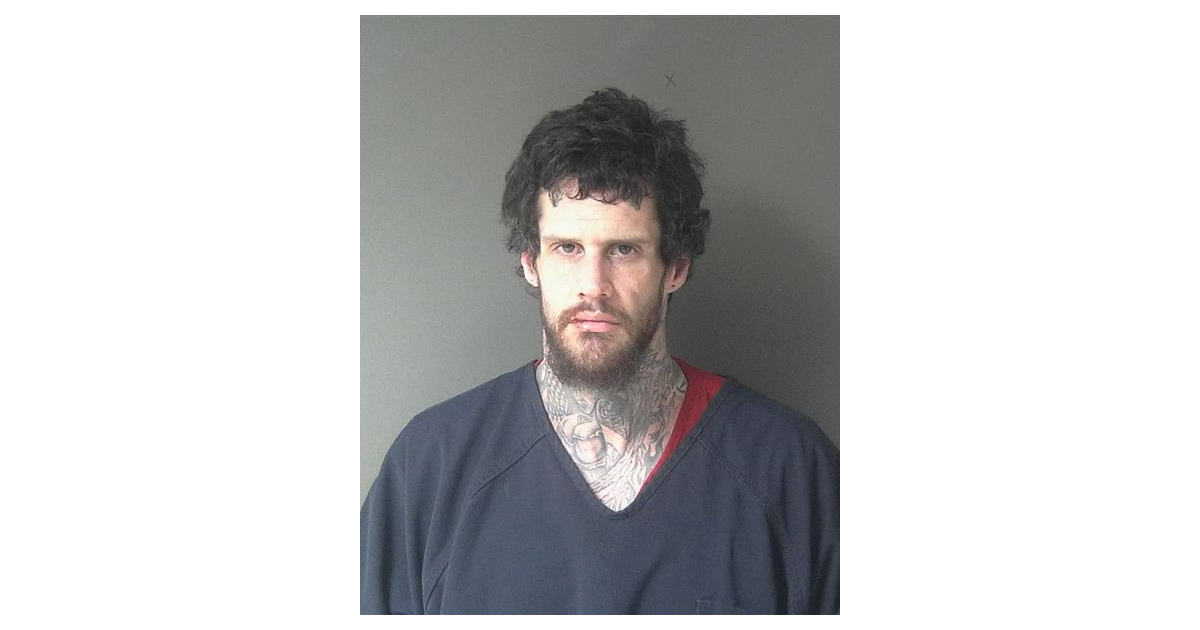
Michael Walker, 35, of Crawfordsville was arrested on outstanding warrants for FTA Possession of a Synthetic Narcotic (Montgomery County), Dealing Methamphetamine (Howard County) and Carrying a Handgun without a License (Howard County) on Wednesday, January 3, 2024, at approximately 3:30p.m. in Clinton County Indiana after a brief foot pursuit. (Photo: Clinton County Sheriff's Office)

CLINTON COUNTY, Ind. (January 8, 2024) – According to the Clinton County Sheriff’s Office (CCSO), Michael Walker, 35, of Crawfordsville was arrested on outstanding warrants for FTA Possession of a Synthetic Narcotic (Montgomery County), Dealing Methamphetamine (Howard County) and Carrying a Handgun without a License (Howard County) on Wednesday, January 3, 2024, at approximately 3:30p.m.

CCSO Sergeant Tom Farlow and Sergeant Thomas Pelling were returning to the Clinton County Sheriff’s Office on their Harley Davidson patrol motorcycles following the completion of a funeral escort, when they observed a suspicious vehicle in the area of County Roads 500N and 300E. The vehicle, a Black 1995 Dodge Dakota pickup truck pulled into a residence familiar to both sergeants. After notifying the homeowner, they learned the vehicle did not belong at the property. Deputy Nick Light and Deputy Nevin Creasy were also returning from the same funeral escort in their fully marked Tahoes and arrived on scene to assist.

Upon pulling into the residence, Sergeant Pelling observed a male subject fleeing the vehicle on foot. At this time, Sergeant Joey Mitchell (K9 Rip), Deputy Nevin Creasy, Detective Mark Pinkard and Detective Jon Greiner responded, along with Frankfort Police Department Unmanned Aerial Vehicle (UAV) Operator Officer Brett Waggoner.

Officer Waggoner deployed his UAV and quickly located the suspect. During the investigation, deputies determined the truck had been reported stolen out of Montgomery County.

Deputies have requested additional charges of Theft of a Motor Vehicle, Possession of a Syringe and Possession of Marijuana; formal charges are pending review by the Clinton County Prosecutor’s Office.

Former Clinton County Sheriff, Frankfort Police Chief Paul Underwood Dies

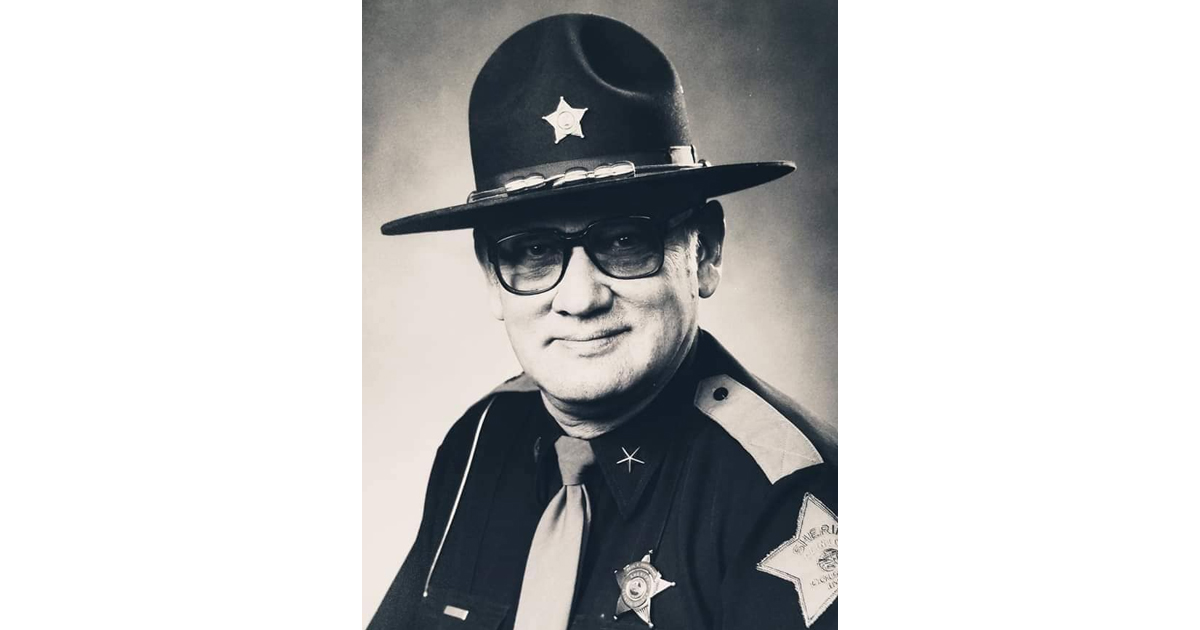
Former Clinton County Sheriff, Frankfort Police Chief Paul Underwood died January 5, 2024, at the age of 92. (Photo: Clinton County Sheriff's Office)

FRANKFORT, Ind. (January 8, 2024) – Former Clinton County Sheriff and Frankfort Police Chief Paul Underwood died January 5th at the age of 92.

Underwood joined the Frankfort Police Department in 1960 and served as chief from 1980 to 1984. Upon retirement from FPD in 1986, he was elected sheriff two-times serving from 1987 through 1994.

Prior to a career in law enforcement, Underwood served in the U.S. Army from 1951-1953, making the rank of Corporal.

Visitation will be from 12 Noon-3 p.m. Friday, January 12, 2024, at Goodwin Funeral Home, 200 S. Main St., Frankfort. Funeral service will begin at 3 p.m. at the funeral home. Burial will follow in Bunnell Cemetery.

Go to Top