FRANKFORT, Ind. (September 16, 2025) — A state indoor air quality evaluation at Clinton Prairie revealed that carbon dioxide levels in one classroom exceeded state limits, prompting immediate corrective actions, while overall fungal (mold) concentrations within the school were found to be lower than outdoor levels.
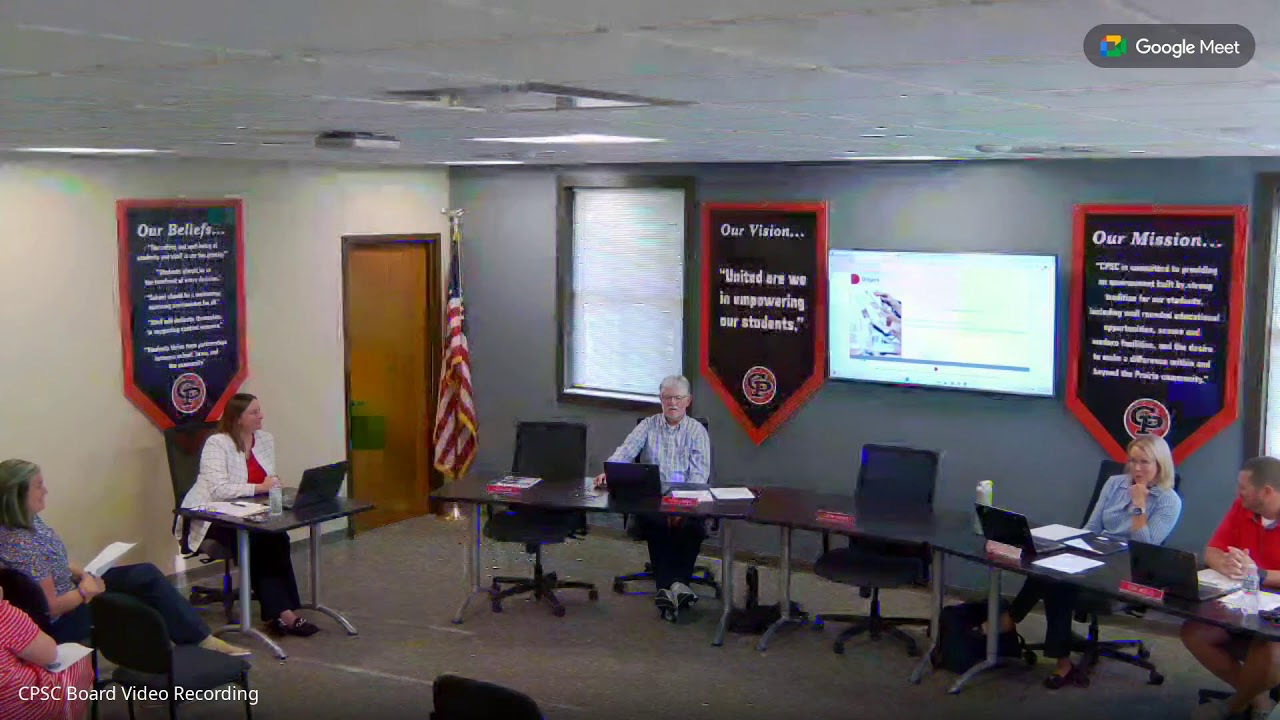
The evaluation, conducted by the Indiana State Department of Health on August 26, 2025, was initiated following a request from a concerned citizen regarding health concerns potentially linked to indoor air quality at the school. The findings of the report, dated September 4, 2025, were a central topic at the Monday night Clinton Prairie school board meeting, where issues of transparency and communication with parents were raised.
CO2 Levels Exceed Limits in One Classroom
The highest carbon dioxide (CO2) reading recorded was 1401 parts per million (ppm) in classroom E-22 according to the report. This measurement exceeded the state’s allowable limit of 1100 ppm, which is defined as 700 ppm over the outdoor concentration. Melissa Hodson-Ostler, Administrator for the Clinton County Board of Health, explained that elevated carbon dioxide concentrations indicate too much occupant exhaust and a need for increased fresh air circulation.
Rick Plew, an Industrial Hygienist with the Indiana State Department of Health, recommended checking the damper in classroom E-22 to ensure an adequate supply of outside air. School officials confirmed that the faulty outdoor air damper actuator in the classroom has since been replaced and tested to ensure proper functionality and outside air supply. This issue was described as an “easy fix” and the only “actionable item” identified in the report.
Indoor Mold Lower Than Outdoors, Pre-School Remediation Detailed
Despite community concerns and social media rumors about mold, the evaluation found that fungal (mold) concentrations inside the school were consistently lower than the outdoor concentration. While there are no established acceptable limits for indoor fungal counts, guidelines generally recommend fewer counts indoors than outdoors. Hodson-Ostler noted that measurable mold is common, particularly in agricultural areas like Indiana, and can be tracked indoors.
Clinton Prairie School Corporation Superintendent Dr. Rebecca Boddicker and Hodson-Ostler clarified that initial issues, including a new chiller unit causing condensation and mold discovery in a new hallway, were addressed before students began the school year. Maintenance Director Kurtis Camp had adjusted new chiller unit settings, and affected moldy items were removed, and areas cleaned. Precautionary measures, taken in consultation with the Board of Health, included removing compromised tiles and insulation, and utilizing air scrubbers in the halls. Hodson-Ostler emphasized that these proactive steps meant “nothing occurred because of it” once school started. The school’s design, where individual rooms ventilate to the outside rather than to adjacent rooms, further helps prevent the spread of air quality issues throughout the building.
Humidity Levels Within State Guidelines
Indoor relative humidity during the evaluation ranged from 53% to 58%, while the outdoor relative humidity was measured at 44%. State regulations (410 IAC 33-4-4) set a maximum relative humidity level of 65% in air-conditioned schools during student occupancy, indicating the school’s levels were within acceptable limits. The U.S. Environmental Protection Agency (EPA) recommends maintaining humidity below 60%, ideally between 30-50%, as high humidity can promote the growth of allergens like dust mites or mold.
Parents Raise Transparency Concerns
A significant concern raised by parents at the school board meeting was the lack of transparency regarding the initial issues and the state’s evaluation. Parents questioned why the report was not proactively shared via email, suggesting it could have alleviated “chaos” and addressed the “rumor mill” that had developed on social media.
Dr. Boddicker acknowledged the feedback, explaining that because the initial issues were fully mitigated before school began and the state report found no widespread concerns, school officials did not initially perceive a need for a broad communication. However, she conceded, “I probably would have sent the report out in an email saying the report says there are no quality of air quality or mold issues”.
Reporting Requirements and Next Steps
Under the School Indoor Air Quality rule (410 IAC 33-6-2), the state report and any response from the school must be posted within five days of receipt and remain posted for 14 consecutive days both at the school building and on its website. The school is also required to report any actions taken based on the report within 60 days. An FAQ document, compiled with the assistance of the Clinton County Board of Health, is also being prepared for publication on the school’s website to address common questions.
Officials noted that the state’s evaluation resulted in a “very low level interior finding” and was generally considered a “good report” with the exception of the single CO2 modification. The school conducts annual maintenance, including checking and cleaning the entire air system, such as dampers, and replacing filters every summer.